

Explore Videos by:

Play Video

Related Videos

Bobby Bowden: How Florida State Football Became a Dynasty

Show More

There is a version of the Bobby Bowden story where he spends two or three years in Tallahassee, fixes up a broken program just enough to look employable, and goes home to Alabama. That is exactly what he planned to do. He said as much: “When I went to Florida State, I was not planning on staying at Florida State. I went down there to get back home.” He wanted Alabama. He had always wanted Alabama. Florida State was supposed to be a stepping stone.

Instead he stayed for 34 years and won two national championships. He built one of the most dominant sustained runs in the history of college football, finishing in the AP top five 14 consecutive seasons. He did it at a school that had no men on its campus for four decades before football came back. I understand how improbable that is, and to tell it you have to start a long time before Bobby Bowden ever drove into Tallahassee. You have to start with a legislature, a reorganization, and the moment Florida State lost its football team entirely.

Florida State Football Before Bobby Bowden: A School Without Men

In 1902, a school called Florida State College in Tallahassee organized its first football team to play outside competition. They called themselves the Florida State College Eleven, and they were good. They were state champions in 1903 and state champions again in 1904 after beating the University of Florida at Lake City and beating Stetson. It was a small program in a small state, but they were playing and winning.

Then the Florida legislature stepped in. In 1905 the state reorganized its entire higher education system and consolidated six institutions into three. The university of the state of Florida, which would settle in Gainesville, was designated the school for white men. Florida State College in Tallahassee became the school for white women, first called the Florida Female College and eventually renamed the Florida State College for Women. The third school, for Black students, also sat in Tallahassee and became Florida A&M. When the men left Tallahassee for Gainesville, they took the football team with them. Just like that, it was gone.

The school spent the next four decades as one of the premier women’s colleges in the South. By the 1930s it was the third-largest women’s college in the entire country, and it was a serious academic institution. It just had no football and no men.

A war changed that. Returning veterans from World War II came home needing college educations, and the G.I. Bill made that possible on a scale nobody had quite anticipated. The pressure on Florida’s legislature was immediate. Men needed to go somewhere. In 1947 the governor signed an act returning Florida State College for Women to coeducational status and renaming it Florida State University. The newly coeducational university adopted the Seminoles name for its athletic teams.

Rebuilding From Nothing: 1947 to 1975

On October 18, 1947, for the first time since 1904, Florida State played a football game. Stetson came to Centennial Field in front of roughly 8,000 people and won 14-6. Florida State went 0-5 on the season. A university instructor named Ed Williamson coached a team assembled mostly from returning veterans who wanted to play football and happened to enroll at the only school in Tallahassee that was now letting them in. They lost all five games, and everybody called it a fine season anyway. What did you expect? The school had just started admitting men again.

The program grew in fits and starts. Don Veller took over in 1948 and won three straight Dixie Conference championships. His 1950 team went 8-0, and the program beat Wofford in the Cigar Bowl. But the Dixie Conference was small schools, and as the competition got harder, the wins got harder to find. Tom Nugent coached through most of the 1950s with moderate results. The program wasn’t bad. It just wasn’t anything. Nobody outside of Florida was paying attention.

That changed when Bill Peterson arrived in 1960. Peterson came from LSU, where he had been on the staff that won the 1958 national championship under Paul Dietzel. He was one of the early proponents of the pro-style passing game at the college level, and he spent 11 seasons in Tallahassee building a program that occasionally made national news.

His 1964 team went 9-1-1. It beat Kentucky, ranked fifth in the country, and it did not just beat them. It won 48-6. It beat Florida for the first time in the history of the series. It went to the Gator Bowl and beat Oklahoma 36-19. Fred Biletnikoff, who would spend a long career catching passes for the Raiders and eventually reach the Pro Football Hall of Fame, became Florida State’s first consensus All-American. By 1967 the Seminoles were back in the Gator Bowl and finished 15th in the coaches poll. That team was legitimate, though not elite.

Then the wheels came off. Peterson left after 1970 for Rice and then the Houston Oilers, and his 62-42-11 record stood as the best the program had seen. Larry Jones replaced him and went 8-4 in 1971, a season that included a Fiesta Bowl appearance and a top-20 ranking. 1972 was 7-4, which was acceptable. 1973 was 0-11, and Jones resigned four days before Christmas. A program that had played in a Fiesta Bowl two years earlier had gone winless.

Florida State went looking for a savior and found Darrell Mudra, a man who had won almost everywhere he had ever coached, at Division II powerhouses and small-college programs. He had a nickname, Dr. Victory. He was also famously a coach who preferred to watch games from the press box rather than prowl the sideline, which was unusual then and did not endear him to a fan base already in full panic mode.

Mudra went 1-10 in 1974 and 3-8 in 1975. That was four wins in two years. The athletic department was running a deficit, and the stands at Doak Campbell Stadium were embarrassingly empty. Burt Reynolds, FSU’s most famous alumnus at the time, a former halfback turned movie star, helped raise money. In the winter of 1975, the question being asked openly in Tallahassee was whether Florida State should keep playing football at all.

In January 1976 Florida State dismissed Mudra. The school announced it was looking for a coach with a solid national reputation, which was a polite way of saying it needed a name that could sell tickets.

Bobby Bowden’s Road From Birmingham to Tallahassee

Bobby Bowden grew up close enough to the Woodlawn High School football field in Birmingham, Alabama, that he could climb onto the roof of his house and watch the team practice. His father, Bob, was a bank teller. When Bobby was 13 he came home from school with knee pain and swelling. He had rheumatic fever. He spent six months in the hospital and then a little over a year confined to bed at home. Most of two years of his adolescence just stopped. He lay flat on his back listening to the radio, to World War II reports and, on Saturday mornings, to University of Alabama football.

He came out of that illness with two things: a deep Baptist faith that would anchor everything he did for the rest of his life, and a bone-deep love of football that you do not develop by watching from the bleachers. He heard it through a speaker and reconstructed it in his head during the long months when he could not leave his bedroom. That kind of attachment does not fade.

When he recovered, he became the quarterback at Woodlawn and earned all-state honors. He graduated in January 1949 and enrolled at the University of Alabama that spring, fulfilling the dream he had built in that sickroom. He lasted one semester. Alabama had a rule against married players, and Bobby Bowden wanted to marry his high school sweetheart, Ann. He chose Ann over the Crimson Tide and married her on April 1. He transferred to Howard College in Birmingham, now Samford, and played quarterback there. He was good enough to earn Little All-America recognition.

After his playing career he stayed in coaching. He was an assistant at Howard, then athletic director and head coach at South Georgia College, where he ran the department and coached both the football and baseball teams. Then it was back to Howard as head coach, where he went 31-6 over four seasons, with two of those years ending in only one loss each.

In 1963 Bill Peterson called and asked him to come to Florida State as the wide receivers coach. Bowden packed up the family and went to Tallahassee. He learned what a major college football program looked like from the inside and stayed three years. Then West Virginia called him to be offensive coordinator, and when the head coach left for Texas Tech after the 1969 season, Bowden got the job. He was 40 years old, a head coach at a major program for the first time.

In his first season at West Virginia, a plane carrying the Marshall University football team crashed into a hillside near Huntington and killed everyone on board. Bowden spent part of his first year as a major college head coach watching a community bury its football team. He coached West Virginia for six seasons, went 42-26, and won a Peach Bowl berth. By 1975 he was one of the better coaches in the country, proven, poised and still hungry.

He also had an aging mother and mother-in-law in Birmingham, and Morgantown, West Virginia, in January is not Birmingham in January. When Florida State came calling on January 12, 1976, with a four-year contract and a salary of $37,500, Bowden’s reasons for saying yes were at least partly geographic. He was honest about that later, which was very Bobby Bowden. He told people plainly that he took the job to get closer to home. Florida State was a waypoint. “That’s exactly what my thoughts were,” he said. He planned to stay two or three years, win enough to look attractive, and wait for Alabama to call.

The Alabama job never came when he was ready to leave. By the time it was offered, something unexpected had happened. Bobby Bowden had fallen in love with the mess he had been handed.

Turning Florida State Football Around, and the Alabama Job That Never Came

When Bowden took the job in January 1976, the program had won four games in three seasons. The facilities were inadequate. The talent level was thin enough that the roster was, in his assessment, made up of what everybody else had already passed over. Doak Campbell Stadium held around 40,000 people, and on most Saturdays a significant number of those seats were empty.

The 1976 season opened with three straight losses: Memphis State on the road, a trip to Miami that ended 47-0, and then Oklahoma in Norman. Oklahoma was ranked fourth in the country. Florida State started six freshmen and lost 24-9. Nothing catastrophic happened, and they looked like a real team. They beat Kansas State in the home opener to get into the win column and then won four more to finish 5-6. That was the only losing season of Bowden’s entire Florida State career. One and done. He was already doing something even if the record did not show it plainly: recruiting, establishing a culture, convincing players this program was going somewhere.

Year two, 1977, went 10-2 with a Tangerine Bowl victory over Texas Tech, 40-17, and a final ranking of 14th in the AP poll. It was the first double-digit win season in Florida State history. It also included the first win over rival Florida in a decade, a 37-9 beat-down, the kind of statement game a program pins to its bulletin board for years. A program that had been considering discontinuing football two years earlier went 10-2 and beat Florida by 28 points.

The 1978 and 1979 seasons continued the ascent. By 1979 Florida State was undefeated in the regular season, 11 wins and not a single loss, and finished ranked sixth in the final AP poll after losing to Oklahoma in the Orange Bowl. Bowden had two quarterbacks sharing time, Jimmy Jordan and Wally Woodham, and a nose guard named Ron Simmons, a consensus All-American who finished ninth in the Heisman voting as a defensive lineman. Simmons became one of the anchors of the rising program. Florida State had been thinking about quitting three years earlier. Now it was finishing in the top 10, and the job offers started coming in from hot programs, big schools, programs with resources. Florida State could not match them. Bowden turned them down, though not all of them were easy to turn down.

After the 1986 season, Alabama’s head coach left. Florida State was in Birmingham for the All-American Bowl, and Bowden got word that the Alabama university president wanted to see him. Expecting to be handed the job he had spent his whole life wanting, Bowden went to what he called a secret hideout. He opened the door and found about 17 people sitting in the room. The president told him they would be in touch later. “He didn’t offer me the job,” Bowden recalled. “I think, uh-oh, I better get my name out of this.” Alabama hired Bill Curry, and Bobby Bowden went back to Tallahassee.

Three years later, in January 1990, Alabama came back. The board of trustees voted almost unanimously to go get him, and this time the athletic director called. There was no committee and no room full of strangers. Bowden was in Japan coaching an all-star game when the phone rang. He thought about it for an hour and said no. He was 60 years old. Alabama hired Gene Stallings instead.

Something had shifted. He had built something in Tallahassee that was now clearly his own: not a waypoint, not a résumé entry, not a path back to Alabama. When the thing he had waited for his whole life finally arrived, he did not need it anymore.

14 Straight Top-Five Finishes and the Miami Problem

The early 1980s were good but not outstanding. Florida State had talented players, and Bowden had established a wide-open offense, a physical defense, and a recruiting approach that was beginning to reach into elite territory. Then in 1985 a kid from Fort Myers enrolled at Florida State. Deion Sanders was a freshman cornerback that fall, and on October 19 against Tulsa at Doak Campbell, he had already brought back two punts, 37 yards and 34 yards, both setting up scores. Early in the fourth quarter, Tulsa quarterback Steve Gage threw a pass toward the Florida State goal line. Sanders stepped in front of it, caught it standing in his own end zone, and ran it back 100 yards. It was the first interception of his college career and the first touchdown of his college career. It was also the longest interception return in the history of Florida State football. The record he broke belonged to Fred Biletnikoff, who had taken one back 99 yards more than 20 years earlier. Sanders beat it by a yard.

He was a cornerback, a punt returner, a baseball player and a sprinter, sometimes in the same week. In the fall of 1987 against Tulane, he held the Green Wave’s best receiver to 39 yards, intercepted a pass, and returned a punt 49 yards for a touchdown. That was a normal Saturday.

That 1987 team went 11-1. It beat Nebraska in the Fiesta Bowl 31-28 and finished second in the country. Sanders was a unanimous All-American. Mickey Andrews, who had been running the Florida State defense since 1984, built a unit that allowed 13.6 points per game. The only loss was a 26-25 heartbreaker to Miami, in which Bowden made the gutsy call to go for two at the end rather than kick the extra point for a tie. It did not convert.

That 1987 season was the first of 14 consecutive seasons in which Florida State finished in the top five of the Associated Press poll. In 1988 Florida State was ranked number one in the preseason and opened with a 31-0 loss to Miami in the Orange Bowl. By the time the 1991 season arrived, the Hurricanes had knocked Florida State out of the national championship race four times in five years.

That brings us to November 16, 1991. Florida State was number one and Miami was number two. It was the 26th meeting in the history of the AP poll between the top two teams in the country and only the second time both came from the same state. A crowd of 63,000 packed Doak Campbell, with Keith Jackson on the call. It came down to a 34-yard field goal with 29 seconds left. Jerry Thomas had already made three field goals that afternoon. This one went wide right by about the length of a football, in a season where the NCAA had just narrowed the uprights by nearly five feet. Miami won 17-16 and went on to win the AP national championship while the Miami players threw their helmets in the air. Bobby Bowden stood on the sideline with his hands on his hips, staring at the goalposts. The next day he told reporters that when he died, they could put it on his headstone: “At least he played Miami.”

Ten and a half months later, on October 3, 1992, Florida State went down to the Orange Bowl to play them again, number three against number two. Miami had won 58 straight games in that stadium, an NCAA record. Both teams were undefeated. Tamarick Vanover took the opening kickoff 94 yards for a touchdown. Dan Mowrey kicked a 22-yarder in the second quarter, a 38-yarder in the third and a 41-yarder early in the fourth. Florida State led 16-10 with nine minutes to play in the one stadium in America where nobody beat Miami.

Miami answered with Gino Torretta’s 33-yard touchdown pass to Lamar Thomas to take a 17-16 lead. Then came one of the strangest plays in the rivalry. Corey Sawyer fielded a punt deep in Florida State territory, retreated into the end zone, and as he was being tackled, tried to throw the ball forward. Illegal forward pass. Safety. Miami 19, Florida State 16.

Charlie Ward drove the Seminoles 59 yards to the Miami 22 as the clock ran down. Mowrey came on for a 39-yard attempt on the final play, a kicker who had not missed all day, in a situation very nearly identical to the one Jerry Thomas had stood in 11 months earlier. Wide right. Miami went to the Sugar Bowl undefeated and ranked number one, where it lost to Alabama. Gene Stallings, in his third year, the man Alabama hired after Bobby Bowden turned them down, won the national championship that January against the team that had just beaten Florida State on a kick that missed by a yard.

“As good as we were,” Bowden said later, “we didn’t win a national championship until 1993, mainly because we kept losing to Miami on missed kicks.” He handled it the way he handled everything, with a stubborn, faithful calm that his players describe as genuinely contagious. You did not feel like the program was falling apart when Bowden was standing in front of the room. You felt like something was still coming.

Charlie Ward, Nebraska and the 1993 National Championship

In 1993 Florida State was the preseason number one team in the country, and it arrived at that ranking with some justification. Charlie Ward was the quarterback. He had played in the Elite Eight on the basketball team the previous spring, and he would later spend 11 seasons in the NBA. In 1993 he was also the best college football player in America. Bowden was so sure of it that he told his sports information director not to run a Heisman campaign. Leave him alone, he said, and he will win this thing by himself. He was right. Ward completed nearly 70 percent of his passes for 27 touchdowns against four interceptions and won the Heisman in a landslide, by 1,622 points, the second-largest margin in the award’s history at that point.

The season was not clean. Florida State lost at Notre Dame 31-24 on November 13. The loss seemed to knock the Seminoles out of the national title picture. They were ranked second behind Notre Dame and needed help. The following week Notre Dame went to Boston College and lost, a stunning upset that handed Florida State a reprieve. Nobody had expected it. That same day Florida State piled up 62 points against NC State, 62-3, and the path to the title was open again.

The Orange Bowl pitted Florida State against Nebraska, the declared national championship game under the Bowl Coalition format. Nebraska was undefeated. Florida State had one loss and was favored by 17½ points. It was not a 17½-point game. Nebraska kicked a 27-yard field goal with a minute and 16 seconds left to take a 16-15 lead. Charlie Ward drove the offense down the field, and Scott Bentley kicked a 22-yard field goal with 21 seconds remaining. Florida State led 18-16.

Nebraska got the ball back and drove to the Florida State 28-yard line as time expired. The officials ruled the receiver down with one second left and put it back on the clock. Nebraska lined up for a 45-yard field goal attempt. Byron Bennett had the distance. He missed it wide left.

A Nebraska Footnote

My freshman year at the University of Nebraska was 1980. On October 4, a few months into my college career, the Florida State Seminoles came into Lincoln and beat my beloved Huskers 18-14. Those were the days in which Nebraska did not lose many home games. My fellow students and I were on our feet at the end of the game. Nebraska loves great college football, and the game that day was excellent. We gave Bowden and his team a standing ovation, and Bowden later wrote a letter congratulating us on our great sportsmanship.

My dorm floor mates were already taking note that I seemed to know a lot more about college football than they did. They asked me about Bobby Bowden, and I said that Bowden guy is going to build something great at Florida State. I don’t think I had honestly heard of Florida State or Bobby Bowden, but I was lying in typical freshman, I’m-going-to-take-over-the-world fashion.

Bowden and Florida State did become something great. There are a lot of great games between Nebraska and Florida State, and maybe I will touch on those in a later video. I hated that Bowden got his first national title against Nebraska, but over the years it seemed fitting. Tom Osborne learned to match the speed that Bowden had, and because of Bowden’s influence, Osborne got his national titles too.

Bobby Bowden died on August 8, 2021. He left six children and 21 great-grandchildren, after 91 years of life. I hope Nebraska and Florida State figure out their problems and become great football programs once again, so that we can meet like we did in the old days.

There is a version of the Bobby Bowden story where he spends two or three years in Tallahassee, fixes up a broken program just enough to look employable, and goes home to Alabama. That is exactly what he planned to do. He said as much: “When I went to Florida State, I was not planning on staying at Florida State. I went down there to get back home.” He wanted Alabama. He had always wanted Alabama. Florida State was supposed to be a stepping stone.

Instead he stayed for 34 years and won two national championships. He built one of the most dominant sustained runs in the history of college football, finishing in the AP top five 14 consecutive seasons. He did it at a school that had no men on its campus for four decades before football came back. I understand how improbable that is, and to tell it you have to start a long time before Bobby Bowden ever drove into Tallahassee. You have to start with a legislature, a reorganization, and the moment Florida State lost its football team entirely.

Florida State Football Before Bobby Bowden: A School Without Men

In 1902, a school called Florida State College in Tallahassee organized its first football team to play outside competition. They called themselves the Florida State College Eleven, and they were good. They were state champions in 1903 and state champions again in 1904 after beating the University of Florida at Lake City and beating Stetson. It was a small program in a small state, but they were playing and winning.

Then the Florida legislature stepped in. In 1905 the state reorganized its entire higher education system and consolidated six institutions into three. The university of the state of Florida, which would settle in Gainesville, was designated the school for white men. Florida State College in Tallahassee became the school for white women, first called the Florida Female College and eventually renamed the Florida State College for Women. The third school, for Black students, also sat in Tallahassee and became Florida A&M. When the men left Tallahassee for Gainesville, they took the football team with them. Just like that, it was gone.

The school spent the next four decades as one of the premier women’s colleges in the South. By the 1930s it was the third-largest women’s college in the entire country, and it was a serious academic institution. It just had no football and no men.

A war changed that. Returning veterans from World War II came home needing college educations, and the G.I. Bill made that possible on a scale nobody had quite anticipated. The pressure on Florida’s legislature was immediate. Men needed to go somewhere. In 1947 the governor signed an act returning Florida State College for Women to coeducational status and renaming it Florida State University. The newly coeducational university adopted the Seminoles name for its athletic teams.

Rebuilding From Nothing: 1947 to 1975

On October 18, 1947, for the first time since 1904, Florida State played a football game. Stetson came to Centennial Field in front of roughly 8,000 people and won 14-6. Florida State went 0-5 on the season. A university instructor named Ed Williamson coached a team assembled mostly from returning veterans who wanted to play football and happened to enroll at the only school in Tallahassee that was now letting them in. They lost all five games, and everybody called it a fine season anyway. What did you expect? The school had just started admitting men again.

The program grew in fits and starts. Don Veller took over in 1948 and won three straight Dixie Conference championships. His 1950 team went 8-0, and the program beat Wofford in the Cigar Bowl. But the Dixie Conference was small schools, and as the competition got harder, the wins got harder to find. Tom Nugent coached through most of the 1950s with moderate results. The program wasn’t bad. It just wasn’t anything. Nobody outside of Florida was paying attention.

That changed when Bill Peterson arrived in 1960. Peterson came from LSU, where he had been on the staff that won the 1958 national championship under Paul Dietzel. He was one of the early proponents of the pro-style passing game at the college level, and he spent 11 seasons in Tallahassee building a program that occasionally made national news.

His 1964 team went 9-1-1. It beat Kentucky, ranked fifth in the country, and it did not just beat them. It won 48-6. It beat Florida for the first time in the history of the series. It went to the Gator Bowl and beat Oklahoma 36-19. Fred Biletnikoff, who would spend a long career catching passes for the Raiders and eventually reach the Pro Football Hall of Fame, became Florida State’s first consensus All-American. By 1967 the Seminoles were back in the Gator Bowl and finished 15th in the coaches poll. That team was legitimate, though not elite.

Then the wheels came off. Peterson left after 1970 for Rice and then the Houston Oilers, and his 62-42-11 record stood as the best the program had seen. Larry Jones replaced him and went 8-4 in 1971, a season that included a Fiesta Bowl appearance and a top-20 ranking. 1972 was 7-4, which was acceptable. 1973 was 0-11, and Jones resigned four days before Christmas. A program that had played in a Fiesta Bowl two years earlier had gone winless.

Florida State went looking for a savior and found Darrell Mudra, a man who had won almost everywhere he had ever coached, at Division II powerhouses and small-college programs. He had a nickname, Dr. Victory. He was also famously a coach who preferred to watch games from the press box rather than prowl the sideline, which was unusual then and did not endear him to a fan base already in full panic mode.

Mudra went 1-10 in 1974 and 3-8 in 1975. That was four wins in two years. The athletic department was running a deficit, and the stands at Doak Campbell Stadium were embarrassingly empty. Burt Reynolds, FSU’s most famous alumnus at the time, a former halfback turned movie star, helped raise money. In the winter of 1975, the question being asked openly in Tallahassee was whether Florida State should keep playing football at all.

In January 1976 Florida State dismissed Mudra. The school announced it was looking for a coach with a solid national reputation, which was a polite way of saying it needed a name that could sell tickets.

Bobby Bowden’s Road From Birmingham to Tallahassee

Bobby Bowden grew up close enough to the Woodlawn High School football field in Birmingham, Alabama, that he could climb onto the roof of his house and watch the team practice. His father, Bob, was a bank teller. When Bobby was 13 he came home from school with knee pain and swelling. He had rheumatic fever. He spent six months in the hospital and then a little over a year confined to bed at home. Most of two years of his adolescence just stopped. He lay flat on his back listening to the radio, to World War II reports and, on Saturday mornings, to University of Alabama football.

He came out of that illness with two things: a deep Baptist faith that would anchor everything he did for the rest of his life, and a bone-deep love of football that you do not develop by watching from the bleachers. He heard it through a speaker and reconstructed it in his head during the long months when he could not leave his bedroom. That kind of attachment does not fade.

When he recovered, he became the quarterback at Woodlawn and earned all-state honors. He graduated in January 1949 and enrolled at the University of Alabama that spring, fulfilling the dream he had built in that sickroom. He lasted one semester. Alabama had a rule against married players, and Bobby Bowden wanted to marry his high school sweetheart, Ann. He chose Ann over the Crimson Tide and married her on April 1. He transferred to Howard College in Birmingham, now Samford, and played quarterback there. He was good enough to earn Little All-America recognition.

After his playing career he stayed in coaching. He was an assistant at Howard, then athletic director and head coach at South Georgia College, where he ran the department and coached both the football and baseball teams. Then it was back to Howard as head coach, where he went 31-6 over four seasons, with two of those years ending in only one loss each.

In 1963 Bill Peterson called and asked him to come to Florida State as the wide receivers coach. Bowden packed up the family and went to Tallahassee. He learned what a major college football program looked like from the inside and stayed three years. Then West Virginia called him to be offensive coordinator, and when the head coach left for Texas Tech after the 1969 season, Bowden got the job. He was 40 years old, a head coach at a major program for the first time.

In his first season at West Virginia, a plane carrying the Marshall University football team crashed into a hillside near Huntington and killed everyone on board. Bowden spent part of his first year as a major college head coach watching a community bury its football team. He coached West Virginia for six seasons, went 42-26, and won a Peach Bowl berth. By 1975 he was one of the better coaches in the country, proven, poised and still hungry.

He also had an aging mother and mother-in-law in Birmingham, and Morgantown, West Virginia, in January is not Birmingham in January. When Florida State came calling on January 12, 1976, with a four-year contract and a salary of $37,500, Bowden’s reasons for saying yes were at least partly geographic. He was honest about that later, which was very Bobby Bowden. He told people plainly that he took the job to get closer to home. Florida State was a waypoint. “That’s exactly what my thoughts were,” he said. He planned to stay two or three years, win enough to look attractive, and wait for Alabama to call.

The Alabama job never came when he was ready to leave. By the time it was offered, something unexpected had happened. Bobby Bowden had fallen in love with the mess he had been handed.

Turning Florida State Football Around, and the Alabama Job That Never Came

When Bowden took the job in January 1976, the program had won four games in three seasons. The facilities were inadequate. The talent level was thin enough that the roster was, in his assessment, made up of what everybody else had already passed over. Doak Campbell Stadium held around 40,000 people, and on most Saturdays a significant number of those seats were empty.

The 1976 season opened with three straight losses: Memphis State on the road, a trip to Miami that ended 47-0, and then Oklahoma in Norman. Oklahoma was ranked fourth in the country. Florida State started six freshmen and lost 24-9. Nothing catastrophic happened, and they looked like a real team. They beat Kansas State in the home opener to get into the win column and then won four more to finish 5-6. That was the only losing season of Bowden’s entire Florida State career. One and done. He was already doing something even if the record did not show it plainly: recruiting, establishing a culture, convincing players this program was going somewhere.

Year two, 1977, went 10-2 with a Tangerine Bowl victory over Texas Tech, 40-17, and a final ranking of 14th in the AP poll. It was the first double-digit win season in Florida State history. It also included the first win over rival Florida in a decade, a 37-9 beat-down, the kind of statement game a program pins to its bulletin board for years. A program that had been considering discontinuing football two years earlier went 10-2 and beat Florida by 28 points.

The 1978 and 1979 seasons continued the ascent. By 1979 Florida State was undefeated in the regular season, 11 wins and not a single loss, and finished ranked sixth in the final AP poll after losing to Oklahoma in the Orange Bowl. Bowden had two quarterbacks sharing time, Jimmy Jordan and Wally Woodham, and a nose guard named Ron Simmons, a consensus All-American who finished ninth in the Heisman voting as a defensive lineman. Simmons became one of the anchors of the rising program. Florida State had been thinking about quitting three years earlier. Now it was finishing in the top 10, and the job offers started coming in from hot programs, big schools, programs with resources. Florida State could not match them. Bowden turned them down, though not all of them were easy to turn down.

After the 1986 season, Alabama’s head coach left. Florida State was in Birmingham for the All-American Bowl, and Bowden got word that the Alabama university president wanted to see him. Expecting to be handed the job he had spent his whole life wanting, Bowden went to what he called a secret hideout. He opened the door and found about 17 people sitting in the room. The president told him they would be in touch later. “He didn’t offer me the job,” Bowden recalled. “I think, uh-oh, I better get my name out of this.” Alabama hired Bill Curry, and Bobby Bowden went back to Tallahassee.

Three years later, in January 1990, Alabama came back. The board of trustees voted almost unanimously to go get him, and this time the athletic director called. There was no committee and no room full of strangers. Bowden was in Japan coaching an all-star game when the phone rang. He thought about it for an hour and said no. He was 60 years old. Alabama hired Gene Stallings instead.

Something had shifted. He had built something in Tallahassee that was now clearly his own: not a waypoint, not a résumé entry, not a path back to Alabama. When the thing he had waited for his whole life finally arrived, he did not need it anymore.

14 Straight Top-Five Finishes and the Miami Problem

The early 1980s were good but not outstanding. Florida State had talented players, and Bowden had established a wide-open offense, a physical defense, and a recruiting approach that was beginning to reach into elite territory. Then in 1985 a kid from Fort Myers enrolled at Florida State. Deion Sanders was a freshman cornerback that fall, and on October 19 against Tulsa at Doak Campbell, he had already brought back two punts, 37 yards and 34 yards, both setting up scores. Early in the fourth quarter, Tulsa quarterback Steve Gage threw a pass toward the Florida State goal line. Sanders stepped in front of it, caught it standing in his own end zone, and ran it back 100 yards. It was the first interception of his college career and the first touchdown of his college career. It was also the longest interception return in the history of Florida State football. The record he broke belonged to Fred Biletnikoff, who had taken one back 99 yards more than 20 years earlier. Sanders beat it by a yard.

He was a cornerback, a punt returner, a baseball player and a sprinter, sometimes in the same week. In the fall of 1987 against Tulane, he held the Green Wave’s best receiver to 39 yards, intercepted a pass, and returned a punt 49 yards for a touchdown. That was a normal Saturday.

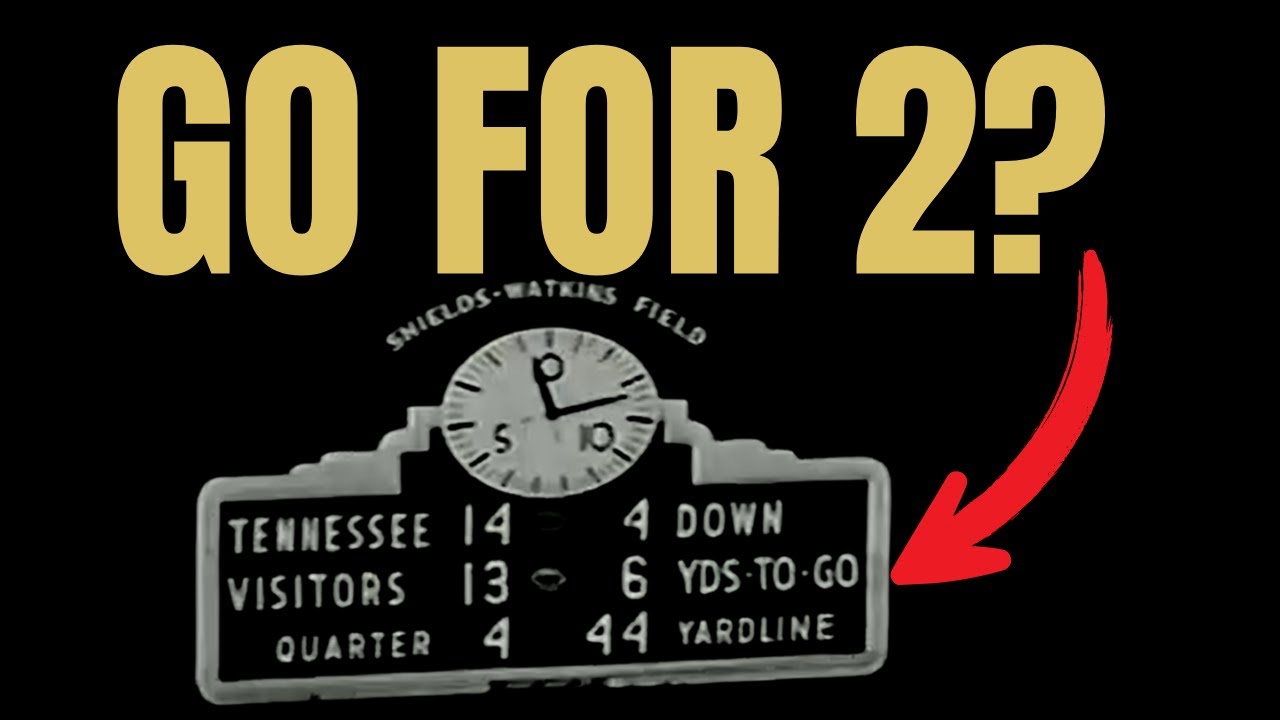
That 1987 team went 11-1. It beat Nebraska in the Fiesta Bowl 31-28 and finished second in the country. Sanders was a unanimous All-American. Mickey Andrews, who had been running the Florida State defense since 1984, built a unit that allowed 13.6 points per game. The only loss was a 26-25 heartbreaker to Miami, in which Bowden made the gutsy call to go for two at the end rather than kick the extra point for a tie. It did not convert.

That 1987 season was the first of 14 consecutive seasons in which Florida State finished in the top five of the Associated Press poll. In 1988 Florida State was ranked number one in the preseason and opened with a 31-0 loss to Miami in the Orange Bowl. By the time the 1991 season arrived, the Hurricanes had knocked Florida State out of the national championship race four times in five years.

That brings us to November 16, 1991. Florida State was number one and Miami was number two. It was the 26th meeting in the history of the AP poll between the top two teams in the country and only the second time both came from the same state. A crowd of 63,000 packed Doak Campbell, with Keith Jackson on the call. It came down to a 34-yard field goal with 29 seconds left. Jerry Thomas had already made three field goals that afternoon. This one went wide right by about the length of a football, in a season where the NCAA had just narrowed the uprights by nearly five feet. Miami won 17-16 and went on to win the AP national championship while the Miami players threw their helmets in the air. Bobby Bowden stood on the sideline with his hands on his hips, staring at the goalposts. The next day he told reporters that when he died, they could put it on his headstone: “At least he played Miami.”

Ten and a half months later, on October 3, 1992, Florida State went down to the Orange Bowl to play them again, number three against number two. Miami had won 58 straight games in that stadium, an NCAA record. Both teams were undefeated. Tamarick Vanover took the opening kickoff 94 yards for a touchdown. Dan Mowrey kicked a 22-yarder in the second quarter, a 38-yarder in the third and a 41-yarder early in the fourth. Florida State led 16-10 with nine minutes to play in the one stadium in America where nobody beat Miami.

Miami answered with Gino Torretta’s 33-yard touchdown pass to Lamar Thomas to take a 17-16 lead. Then came one of the strangest plays in the rivalry. Corey Sawyer fielded a punt deep in Florida State territory, retreated into the end zone, and as he was being tackled, tried to throw the ball forward. Illegal forward pass. Safety. Miami 19, Florida State 16.

Charlie Ward drove the Seminoles 59 yards to the Miami 22 as the clock ran down. Mowrey came on for a 39-yard attempt on the final play, a kicker who had not missed all day, in a situation very nearly identical to the one Jerry Thomas had stood in 11 months earlier. Wide right. Miami went to the Sugar Bowl undefeated and ranked number one, where it lost to Alabama. Gene Stallings, in his third year, the man Alabama hired after Bobby Bowden turned them down, won the national championship that January against the team that had just beaten Florida State on a kick that missed by a yard.

“As good as we were,” Bowden said later, “we didn’t win a national championship until 1993, mainly because we kept losing to Miami on missed kicks.” He handled it the way he handled everything, with a stubborn, faithful calm that his players describe as genuinely contagious. You did not feel like the program was falling apart when Bowden was standing in front of the room. You felt like something was still coming.

Charlie Ward, Nebraska and the 1993 National Championship

In 1993 Florida State was the preseason number one team in the country, and it arrived at that ranking with some justification. Charlie Ward was the quarterback. He had played in the Elite Eight on the basketball team the previous spring, and he would later spend 11 seasons in the NBA. In 1993 he was also the best college football player in America. Bowden was so sure of it that he told his sports information director not to run a Heisman campaign. Leave him alone, he said, and he will win this thing by himself. He was right. Ward completed nearly 70 percent of his passes for 27 touchdowns against four interceptions and won the Heisman in a landslide, by 1,622 points, the second-largest margin in the award’s history at that point.

The season was not clean. Florida State lost at Notre Dame 31-24 on November 13. The loss seemed to knock the Seminoles out of the national title picture. They were ranked second behind Notre Dame and needed help. The following week Notre Dame went to Boston College and lost, a stunning upset that handed Florida State a reprieve. Nobody had expected it. That same day Florida State piled up 62 points against NC State, 62-3, and the path to the title was open again.

The Orange Bowl pitted Florida State against Nebraska, the declared national championship game under the Bowl Coalition format. Nebraska was undefeated. Florida State had one loss and was favored by 17½ points. It was not a 17½-point game. Nebraska kicked a 27-yard field goal with a minute and 16 seconds left to take a 16-15 lead. Charlie Ward drove the offense down the field, and Scott Bentley kicked a 22-yard field goal with 21 seconds remaining. Florida State led 18-16.

Nebraska got the ball back and drove to the Florida State 28-yard line as time expired. The officials ruled the receiver down with one second left and put it back on the clock. Nebraska lined up for a 45-yard field goal attempt. Byron Bennett had the distance. He missed it wide left.

A Nebraska Footnote

My freshman year at the University of Nebraska was 1980. On October 4, a few months into my college career, the Florida State Seminoles came into Lincoln and beat my beloved Huskers 18-14. Those were the days in which Nebraska did not lose many home games. My fellow students and I were on our feet at the end of the game. Nebraska loves great college football, and the game that day was excellent. We gave Bowden and his team a standing ovation, and Bowden later wrote a letter congratulating us on our great sportsmanship.

My dorm floor mates were already taking note that I seemed to know a lot more about college football than they did. They asked me about Bobby Bowden, and I said that Bowden guy is going to build something great at Florida State. I don’t think I had honestly heard of Florida State or Bobby Bowden, but I was lying in typical freshman, I’m-going-to-take-over-the-world fashion.

Bowden and Florida State did become something great. There are a lot of great games between Nebraska and Florida State, and maybe I will touch on those in a later video. I hated that Bowden got his first national title against Nebraska, but over the years it seemed fitting. Tom Osborne learned to match the speed that Bowden had, and because of Bowden’s influence, Osborne got his national titles too.

Bobby Bowden died on August 8, 2021. He left six children and 21 great-grandchildren, after 91 years of life. I hope Nebraska and Florida State figure out their problems and become great football programs once again, so that we can meet like we did in the old days.

Leave a Reply

Your email address will not be published. Required fields are marked *