
Explore Videos by:

Play Video

Related Videos

How American Football Began: From Mob Soccer to the Gridiron (1869–1890)

College football history began in 1869 when the first intercollegiate college football game was played between Princeton and Rutgers.
Show More

The history of American football doesn’t start with a quarterback dropping back in the pocket or a running back breaking through the line. It starts with 50 men chasing a round ball across a field in New Jersey, kicking and butting it with their heads, with no carrying allowed. It starts, in other words, with something that barely resembled football at all.

On November 6, 1869, Princeton and Rutgers played the first intercollegiate football game in American history. The rules were borrowed from the London Football Association. Each side had 25 players. Six goals won the game. Carrying the ball was forbidden. Rutgers won, 6–4. And from that strange, chaotic beginning, one of America’s greatest sports was born.

The Rugby Fork in the Road

For the next several years, American colleges were split between two visions of the game — one closer to soccer, one closer to rugby. The turning point came in 1874, when McGill University of Montreal traveled to Cambridge to play Harvard. They agreed to play two games: one under Harvard’s soccer-style rules, one under McGill’s rugby rules. When it was over, Harvard decided rugby was far more exciting and never looked back.

That single series of games redirected the trajectory of American football. When Harvard and Yale played in 1875, Harvard’s rugby-style game overwhelmed Yale’s soccer approach. Yale converted. And with Yale came a young player named Walter Camp, who would go on to become the most influential figure in the history of American football.

Walter Camp and the Rules That Made Football Football

By the late 1870s, Yale, Harvard, Princeton, and Columbia were all playing rugby and spreading it to schools around them. But Camp wasn’t satisfied with simply playing rugby. He wanted something new.

In 1880, Camp succeeded in getting the most important rule change in the history of the sport passed: the concept of possession. In rugby, the ball emerges from a scrum by chance — neither team knows who will get it. Camp’s rule gave the ball to one team, who put it in play by snapping it back from a scrimmage. Suddenly, football had a line of scrimmage. Suddenly, football had strategy.

But possession alone created a new problem: block games. The most notorious came in 1881, when Yale and Princeton played to a scoreless tie — not because neither team could score, but because neither team tried. Princeton held the ball for the entire first half, running plays backward rather than risk losing possession. Yale did the same in the second half. An estimated 10,000 to 15,000 spectators stood shivering in the November cold watching what one Buffalo newspaper called “a wrestling match between two college elevens.”

The Rules That Built the Modern Game

The backlash was immediate. In 1882, the Intercollegiate Association passed the down-and-distance rule: if a team failed to gain five yards in three consecutive downs, they surrendered the ball. Block games were dead. And to enforce the new yardage requirement, the field was marked with lines every five yards in both directions — creating the gridiron pattern that gives the game one of its most enduring nicknames.

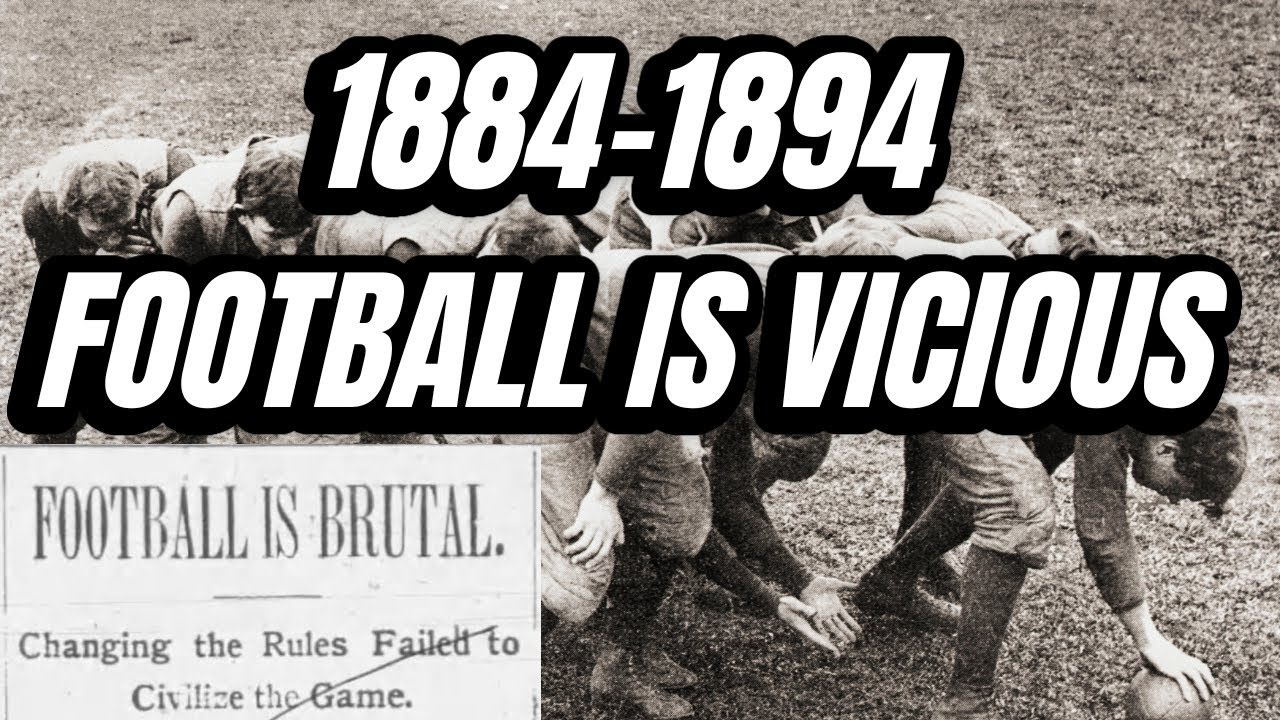
Scoring was formalized in 1883, replacing a confusing system of comparative scoring with actual point values. Formations tightened in 1888 when tackling below the waist was legalized, and blocking in front of the ball carrier — originally called interference — was introduced. The wide-open, rugby-influenced game began compressing into something more physical, more strategic, and more distinctly American.

The Foundation Is Set

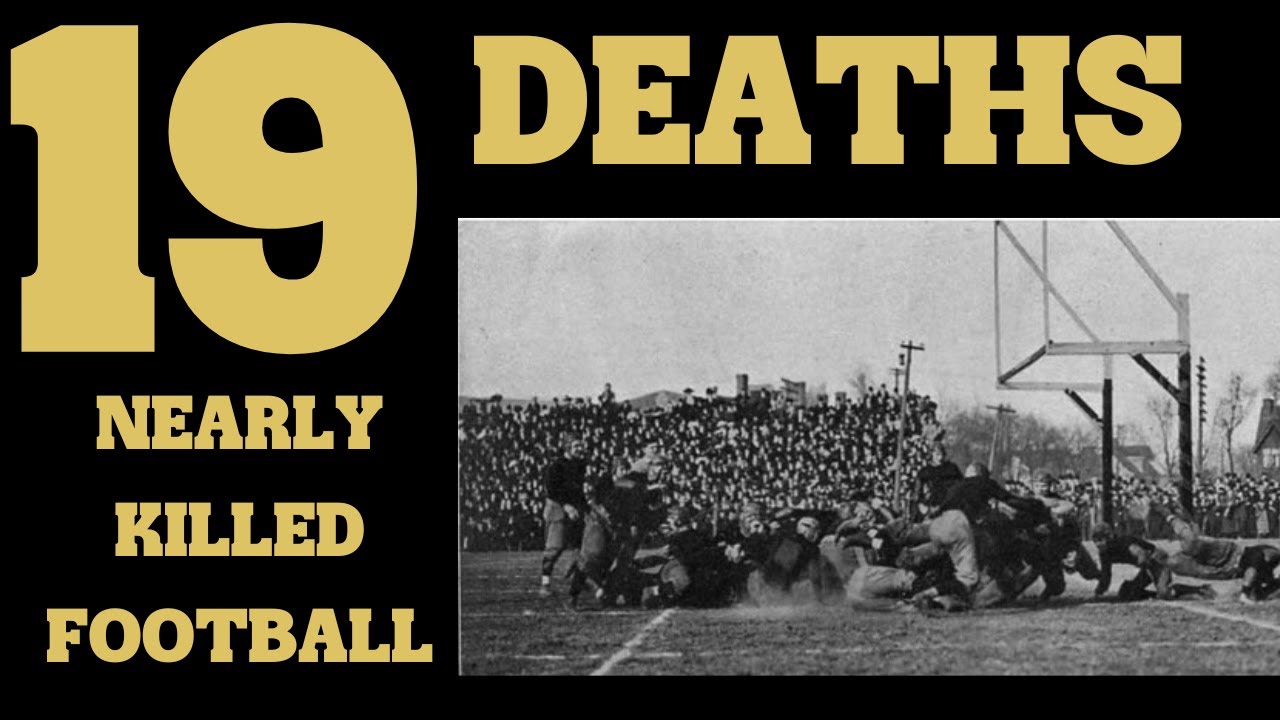
By 1890, American football had possession, a line of scrimmage, a system of downs, numerical scoring, and an emerging running game built on formations and blocking schemes. The forward pass was still illegal. Mass momentum plays were on the horizon — and with them, a wave of injuries that would threaten the sport’s very existence. But that’s a story for another video.

What happened between 1869 and 1890 is the true origin story of how football began — not a single invention by a single genius, but a messy, contested, fascinating evolution driven by rivalries, rule changes, and the relentless push to make a great game even greater.

Hardcore College Football History covers the forgotten stories and foundational moments that shaped college football. Subscribe for more documentary-style deep dives into the history of the game.
The history of American football doesn’t start with a quarterback dropping back in the pocket or a running back breaking through the line. It starts with 50 men chasing a round ball across a field in New Jersey, kicking and butting it with their heads, with no carrying allowed. It starts, in other words, with something that barely resembled football at all.

On November 6, 1869, Princeton and Rutgers played the first intercollegiate football game in American history. The rules were borrowed from the London Football Association. Each side had 25 players. Six goals won the game. Carrying the ball was forbidden. Rutgers won, 6–4. And from that strange, chaotic beginning, one of America’s greatest sports was born.

The Rugby Fork in the Road

For the next several years, American colleges were split between two visions of the game — one closer to soccer, one closer to rugby. The turning point came in 1874, when McGill University of Montreal traveled to Cambridge to play Harvard. They agreed to play two games: one under Harvard’s soccer-style rules, one under McGill’s rugby rules. When it was over, Harvard decided rugby was far more exciting and never looked back.

That single series of games redirected the trajectory of American football. When Harvard and Yale played in 1875, Harvard’s rugby-style game overwhelmed Yale’s soccer approach. Yale converted. And with Yale came a young player named Walter Camp, who would go on to become the most influential figure in the history of American football.

Walter Camp and the Rules That Made Football Football

By the late 1870s, Yale, Harvard, Princeton, and Columbia were all playing rugby and spreading it to schools around them. But Camp wasn’t satisfied with simply playing rugby. He wanted something new.

In 1880, Camp succeeded in getting the most important rule change in the history of the sport passed: the concept of possession. In rugby, the ball emerges from a scrum by chance — neither team knows who will get it. Camp’s rule gave the ball to one team, who put it in play by snapping it back from a scrimmage. Suddenly, football had a line of scrimmage. Suddenly, football had strategy.

But possession alone created a new problem: block games. The most notorious came in 1881, when Yale and Princeton played to a scoreless tie — not because neither team could score, but because neither team tried. Princeton held the ball for the entire first half, running plays backward rather than risk losing possession. Yale did the same in the second half. An estimated 10,000 to 15,000 spectators stood shivering in the November cold watching what one Buffalo newspaper called “a wrestling match between two college elevens.”

The Rules That Built the Modern Game

The backlash was immediate. In 1882, the Intercollegiate Association passed the down-and-distance rule: if a team failed to gain five yards in three consecutive downs, they surrendered the ball. Block games were dead. And to enforce the new yardage requirement, the field was marked with lines every five yards in both directions — creating the gridiron pattern that gives the game one of its most enduring nicknames.

Scoring was formalized in 1883, replacing a confusing system of comparative scoring with actual point values. Formations tightened in 1888 when tackling below the waist was legalized, and blocking in front of the ball carrier — originally called interference — was introduced. The wide-open, rugby-influenced game began compressing into something more physical, more strategic, and more distinctly American.

The Foundation Is Set

By 1890, American football had possession, a line of scrimmage, a system of downs, numerical scoring, and an emerging running game built on formations and blocking schemes. The forward pass was still illegal. Mass momentum plays were on the horizon — and with them, a wave of injuries that would threaten the sport’s very existence. But that’s a story for another video.

What happened between 1869 and 1890 is the true origin story of how football began — not a single invention by a single genius, but a messy, contested, fascinating evolution driven by rivalries, rule changes, and the relentless push to make a great game even greater.

Hardcore College Football History covers the forgotten stories and foundational moments that shaped college football. Subscribe for more documentary-style deep dives into the history of the game.

Leave a Reply

Your email address will not be published. Required fields are marked *