
Explore Videos by:

Play Video

Related Videos

The Forgotten Crisis: Early Football Deaths and the 1909 Season That Nearly Ended the Sport

In 1909, college football faced a devastating crisis when several players suffered serious injuries and deaths on the field.
Show More

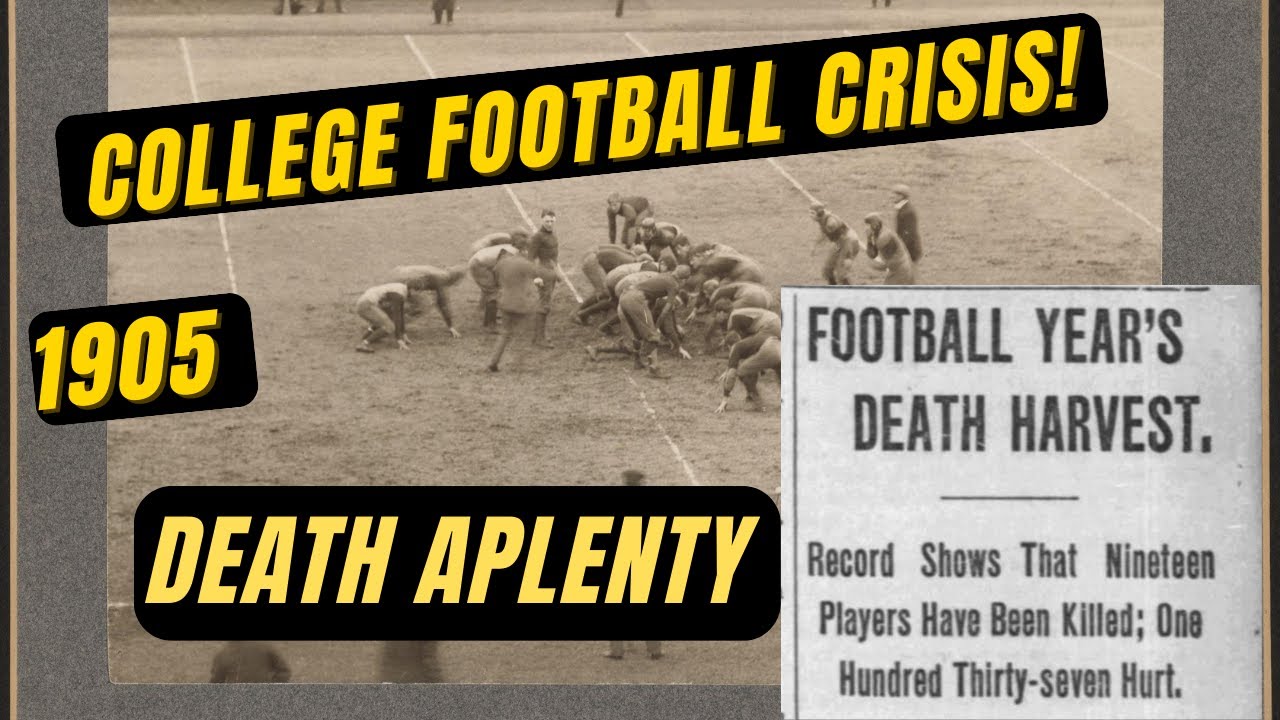
Most people who know anything about the near-death of college football know about 1905. They know about the death harvest, the muckraking journalists, and the story — largely mythologized — of Teddy Roosevelt saving the game with a meeting at the White House. What almost nobody talks about is 1909.

The 1909 football crisis is the forgotten crisis. It doesn’t have a presidential legend attached to it. It doesn’t have a catchy nickname. What it has is three high-profile deaths in five weeks, a New York Times editorial demanding immediate abolition or reform, schools across the nation canceling their seasons, and the most damning indictment the sport had ever faced — that this time, the players dying weren’t unprepared mill hands or unsupervised schoolboys. They were skilled, trained, coached athletes playing for some of the most prestigious institutions in the country. And the game was killing them anyway.

Three Deaths in Five Weeks

The 1909 crisis announced itself with brutal efficiency. On October 16th, Navy quarterback Earl Wilson was playing against Villanova when he made a flying tackle and the back of his neck struck the ground. The fracture between his fourth and fifth cervical vertebrae paralyzed him from the shoulders down. He fought for six months before dying on April 16, 1910.

Two weeks later, on October 30th, Army tackle Eugene Byrne was on the field against Harvard. Harvard had been running mass plays directly at Byrne for much of the game. Umpire Edward K. Hall later recalled that Byrne was virtually dead on his feet — the play had been steadily directed at him and he was exhausted. The referee sent word to the Army coach to remove him. The Army coach left him in. Byrne took a hit on a short forward pass play, then Harvard ran directly at him again. He went down and did not get up. Only immediate artificial respiration kept him alive on the field. He regained consciousness during the night and slipped back into a coma, dying at 6 a.m. the following morning. An x-ray taken after his death showed a dislocation of the vertebrae in his neck that had destroyed the nerve center controlling his breathing.

Two weeks after Byrne’s death, University of Virginia halfback Archer Christian broke through Georgetown’s left side for an eight-yard gain, was tackled, and had players fall on top of him. He did not get up. Barely conscious on the sideline, he told the trainer, “Oh, I’m suffering, Pop. Please do something for me.” He slipped into a coma and died the next morning of brain hemorrhage.

Wilson, Byrne, and Christian were not the only early football deaths that season. One article counted 30 players killed across college and high school football in 1909. But they were the names that mattered — the high-profile casualties that made it impossible for anyone in a position of institutional authority to look away.

The Immediate Response

Navy, Army, and Virginia canceled their remaining games immediately. Georgetown followed. North Carolina canceled its final game against Virginia. On November 16th, the New York Times published an editorial titled “Stop the Mass Plays” that pulled no punches. The editorial noted that every institution that had suffered a fatality had canceled its remaining games — appropriate, the Times wrote, but insufficient. Stopping the game after the boy is killed, it observed, was considerably less appropriate than stopping it before the next boy was killed.

The editorial went further, noting that the Times had published photographs just the previous Sunday showing mass plays, tackles, and interference in recent games that made accidents like those suffered by Byrne and Christian not just possible but predictable. The rules committee, the Times said, had assured the public in 1906 that dangerous and brutal play had been eliminated. The photographs suggested otherwise.

The response spread rapidly. New York public schools abolished football. Washington D.C. followed. Jesuit colleges — Georgetown, Fordham, Holy Cross, and nine others across the East — canceled their programs. Several states began drafting legislation to outlaw the sport entirely. On the West Coast, the movement to replace football with rugby, which had begun after 1905, gained new momentum.

Why the 1909 Crisis Was Different

The history of American football’s violence problems had always carried an escape hatch for football’s defenders. In 1905, they could point to deaths caused by medical ignorance, unprepared players, and journalistic sensationalism. Boys playing without training, without coaches, without proper preparation. The implication was that better coaching, better preparation, and better-run programs would solve the problem.

The 1909 crisis demolished that argument completely. Harvard president Charles Elliott — football’s most persistent and prominent critic — wrote to Edwin Alderman, the University of Virginia president grappling with the death of Archer Christian, and made the point with surgical precision. Men died in hunting, rowing, riding, sailing, and mountain climbing, Elliott acknowledged. What distinguished football from those sports was that the dangers in football resulted from risks deliberately planned and deliberately maintained. Death and injury on the football field were not random accidents. They were the direct consequence of playing the game according to its rules.

That was a charge that couldn’t be answered with better coaching or more physical preparation. It was an indictment of the rules themselves.

The Structural Problem Nobody Had Fixed

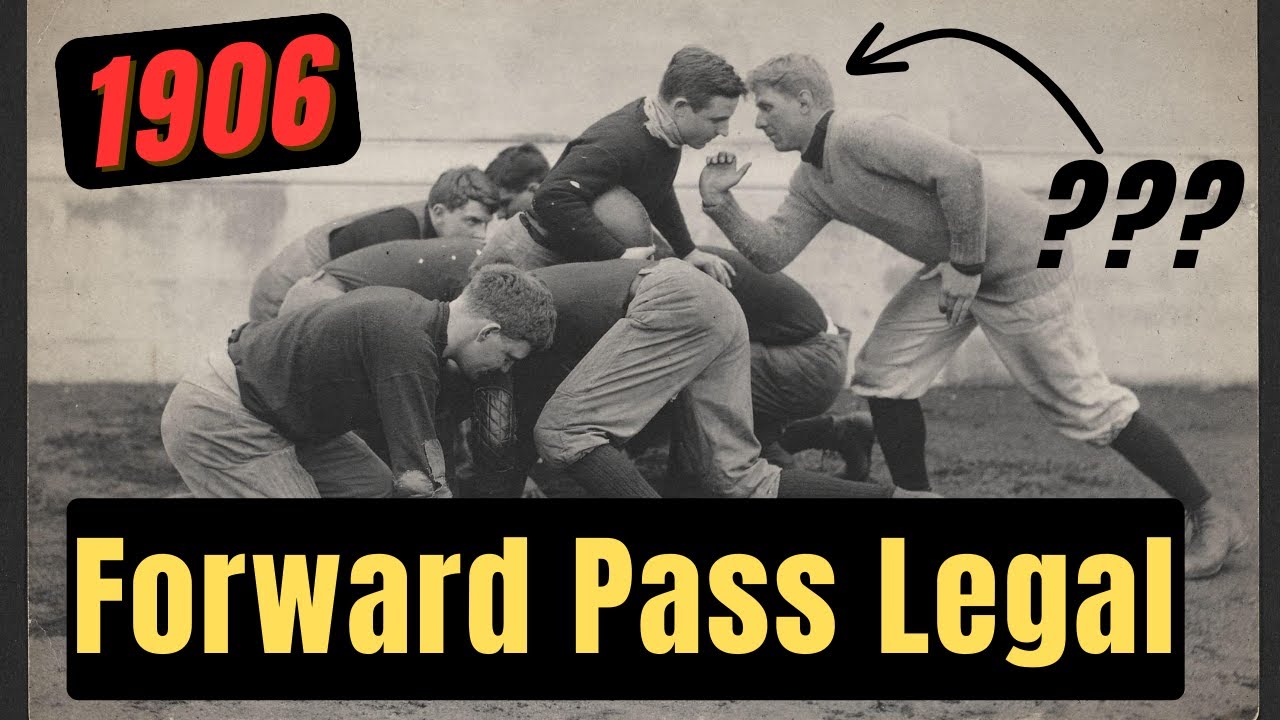
To understand why the 1909 crisis happened despite the sweeping reforms of 1906, you have to understand what those reforms did and did not address. The 1906 rules had banned momentum plays — the flying wedge style formations where players started moving before the snap. They had established the neutral zone, defined personal fouls, created unnecessary roughness as a penalty, and doubled the first down distance to ten yards.

What they had not done was outlaw mass plays. A mass play — where a concentrated group of blockers with interlocked arms converged on a single point of the defense, pushing and pulling the ball carrier through the opening — was still entirely legal. The rule defining when a ball carrier was down still included the phrase “while in the grasp of an opponent,” which meant a ball carrier on the ground could still be dragged forward by teammates if no defender had a clear hold on him. Pushing and pulling ball carriers remained legal. Interlocked arms on blocking were legal.

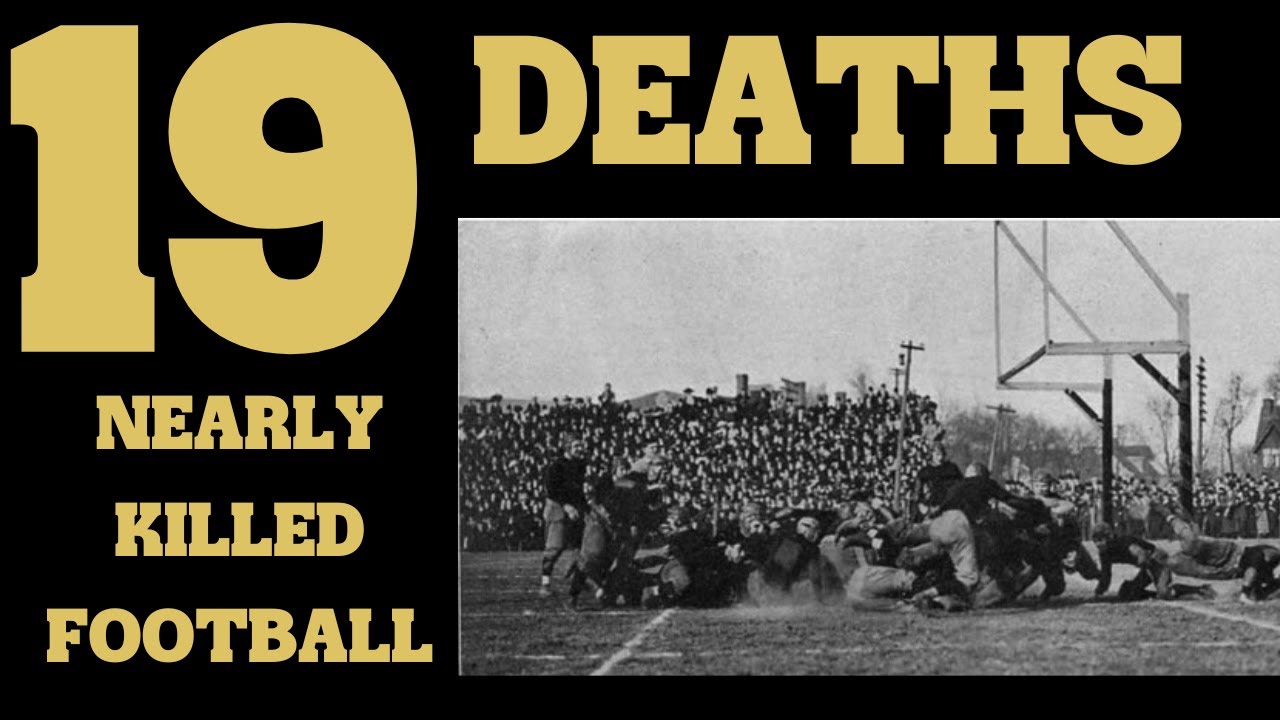
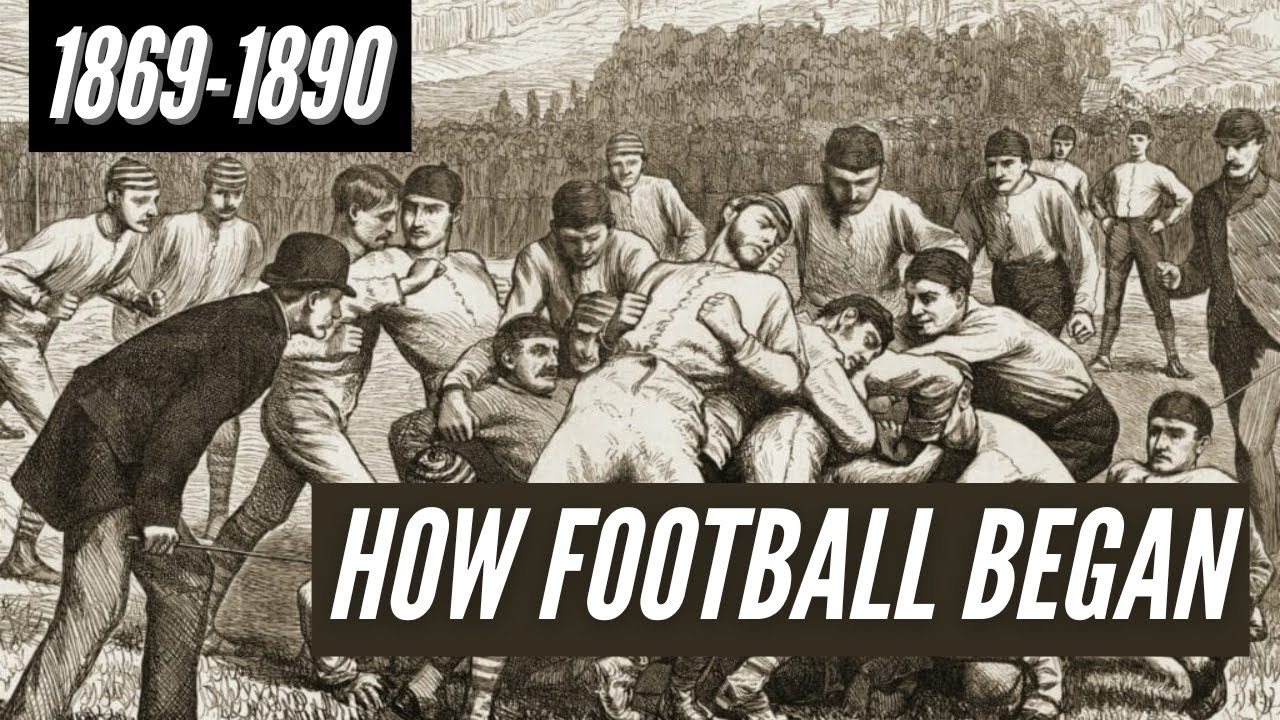
The result was exactly what it had always been. Defensive players piled onto ball carriers to force them down. Offensive teammates piled on to keep defenders away. The mass of bodies accumulated at the bottom of every play. And the men at the bottom of those piles — like Eugene Byrne, targeted repeatedly at the tackle position throughout the game in which he died — absorbed punishment that no human body could sustain indefinitely.

The forward pass, ironically, had made things worse in a specific way. Because defensive secondaries now had to play deeper to account for passes over their heads, the tackle position on the defensive line was left more isolated and exposed than ever. Teams were using pass fakes to hold the secondary back and then running mass plays directly at the unprotected tackle. It was the worst of both worlds — all the danger of mass play football, now concentrated at a single vulnerable position on every play.

The Stage Is Set

At the end of 1909, college football was in an existential crisis for the second time in five years. The difference was that this time, the excuses were gone. The 1906 reforms had failed to solve the problem. The mass play had to be eliminated entirely, and everyone who mattered in college football knew it. The problem was that mass play was still favored by the most powerful programs and the most influential rules makers in the sport.

What happened next would finally, permanently change the way football was played. The rules changes coming out of the 1909 crisis would set the stage for truly modern football — and the story of how that happened is the subject of the next video.

Hardcore College Football History covers the forgotten stories and foundational moments that shaped college football. Subscribe for more documentary-style deep dives into the history of the game.
Most people who know anything about the near-death of college football know about 1905. They know about the death harvest, the muckraking journalists, and the story — largely mythologized — of Teddy Roosevelt saving the game with a meeting at the White House. What almost nobody talks about is 1909.

The 1909 football crisis is the forgotten crisis. It doesn’t have a presidential legend attached to it. It doesn’t have a catchy nickname. What it has is three high-profile deaths in five weeks, a New York Times editorial demanding immediate abolition or reform, schools across the nation canceling their seasons, and the most damning indictment the sport had ever faced — that this time, the players dying weren’t unprepared mill hands or unsupervised schoolboys. They were skilled, trained, coached athletes playing for some of the most prestigious institutions in the country. And the game was killing them anyway.

Three Deaths in Five Weeks

The 1909 crisis announced itself with brutal efficiency. On October 16th, Navy quarterback Earl Wilson was playing against Villanova when he made a flying tackle and the back of his neck struck the ground. The fracture between his fourth and fifth cervical vertebrae paralyzed him from the shoulders down. He fought for six months before dying on April 16, 1910.

Two weeks later, on October 30th, Army tackle Eugene Byrne was on the field against Harvard. Harvard had been running mass plays directly at Byrne for much of the game. Umpire Edward K. Hall later recalled that Byrne was virtually dead on his feet — the play had been steadily directed at him and he was exhausted. The referee sent word to the Army coach to remove him. The Army coach left him in. Byrne took a hit on a short forward pass play, then Harvard ran directly at him again. He went down and did not get up. Only immediate artificial respiration kept him alive on the field. He regained consciousness during the night and slipped back into a coma, dying at 6 a.m. the following morning. An x-ray taken after his death showed a dislocation of the vertebrae in his neck that had destroyed the nerve center controlling his breathing.

Two weeks after Byrne’s death, University of Virginia halfback Archer Christian broke through Georgetown’s left side for an eight-yard gain, was tackled, and had players fall on top of him. He did not get up. Barely conscious on the sideline, he told the trainer, “Oh, I’m suffering, Pop. Please do something for me.” He slipped into a coma and died the next morning of brain hemorrhage.

Wilson, Byrne, and Christian were not the only early football deaths that season. One article counted 30 players killed across college and high school football in 1909. But they were the names that mattered — the high-profile casualties that made it impossible for anyone in a position of institutional authority to look away.

The Immediate Response

Navy, Army, and Virginia canceled their remaining games immediately. Georgetown followed. North Carolina canceled its final game against Virginia. On November 16th, the New York Times published an editorial titled “Stop the Mass Plays” that pulled no punches. The editorial noted that every institution that had suffered a fatality had canceled its remaining games — appropriate, the Times wrote, but insufficient. Stopping the game after the boy is killed, it observed, was considerably less appropriate than stopping it before the next boy was killed.

The editorial went further, noting that the Times had published photographs just the previous Sunday showing mass plays, tackles, and interference in recent games that made accidents like those suffered by Byrne and Christian not just possible but predictable. The rules committee, the Times said, had assured the public in 1906 that dangerous and brutal play had been eliminated. The photographs suggested otherwise.

The response spread rapidly. New York public schools abolished football. Washington D.C. followed. Jesuit colleges — Georgetown, Fordham, Holy Cross, and nine others across the East — canceled their programs. Several states began drafting legislation to outlaw the sport entirely. On the West Coast, the movement to replace football with rugby, which had begun after 1905, gained new momentum.

Why the 1909 Crisis Was Different

The history of American football’s violence problems had always carried an escape hatch for football’s defenders. In 1905, they could point to deaths caused by medical ignorance, unprepared players, and journalistic sensationalism. Boys playing without training, without coaches, without proper preparation. The implication was that better coaching, better preparation, and better-run programs would solve the problem.

The 1909 crisis demolished that argument completely. Harvard president Charles Elliott — football’s most persistent and prominent critic — wrote to Edwin Alderman, the University of Virginia president grappling with the death of Archer Christian, and made the point with surgical precision. Men died in hunting, rowing, riding, sailing, and mountain climbing, Elliott acknowledged. What distinguished football from those sports was that the dangers in football resulted from risks deliberately planned and deliberately maintained. Death and injury on the football field were not random accidents. They were the direct consequence of playing the game according to its rules.

That was a charge that couldn’t be answered with better coaching or more physical preparation. It was an indictment of the rules themselves.

The Structural Problem Nobody Had Fixed

To understand why the 1909 crisis happened despite the sweeping reforms of 1906, you have to understand what those reforms did and did not address. The 1906 rules had banned momentum plays — the flying wedge style formations where players started moving before the snap. They had established the neutral zone, defined personal fouls, created unnecessary roughness as a penalty, and doubled the first down distance to ten yards.

What they had not done was outlaw mass plays. A mass play — where a concentrated group of blockers with interlocked arms converged on a single point of the defense, pushing and pulling the ball carrier through the opening — was still entirely legal. The rule defining when a ball carrier was down still included the phrase “while in the grasp of an opponent,” which meant a ball carrier on the ground could still be dragged forward by teammates if no defender had a clear hold on him. Pushing and pulling ball carriers remained legal. Interlocked arms on blocking were legal.

The result was exactly what it had always been. Defensive players piled onto ball carriers to force them down. Offensive teammates piled on to keep defenders away. The mass of bodies accumulated at the bottom of every play. And the men at the bottom of those piles — like Eugene Byrne, targeted repeatedly at the tackle position throughout the game in which he died — absorbed punishment that no human body could sustain indefinitely.

The forward pass, ironically, had made things worse in a specific way. Because defensive secondaries now had to play deeper to account for passes over their heads, the tackle position on the defensive line was left more isolated and exposed than ever. Teams were using pass fakes to hold the secondary back and then running mass plays directly at the unprotected tackle. It was the worst of both worlds — all the danger of mass play football, now concentrated at a single vulnerable position on every play.

The Stage Is Set

At the end of 1909, college football was in an existential crisis for the second time in five years. The difference was that this time, the excuses were gone. The 1906 reforms had failed to solve the problem. The mass play had to be eliminated entirely, and everyone who mattered in college football knew it. The problem was that mass play was still favored by the most powerful programs and the most influential rules makers in the sport.

What happened next would finally, permanently change the way football was played. The rules changes coming out of the 1909 crisis would set the stage for truly modern football — and the story of how that happened is the subject of the next video.

Hardcore College Football History covers the forgotten stories and foundational moments that shaped college football. Subscribe for more documentary-style deep dives into the history of the game.

Leave a Reply

Your email address will not be published. Required fields are marked *