
Explore Videos by:

Play Video

Related Videos

The Forward Pass and the Rules That Rebuilt Football: The True Story of 1906

The year 1906 in college football terms is best known as the year the forward pass was first legalized.
Show More

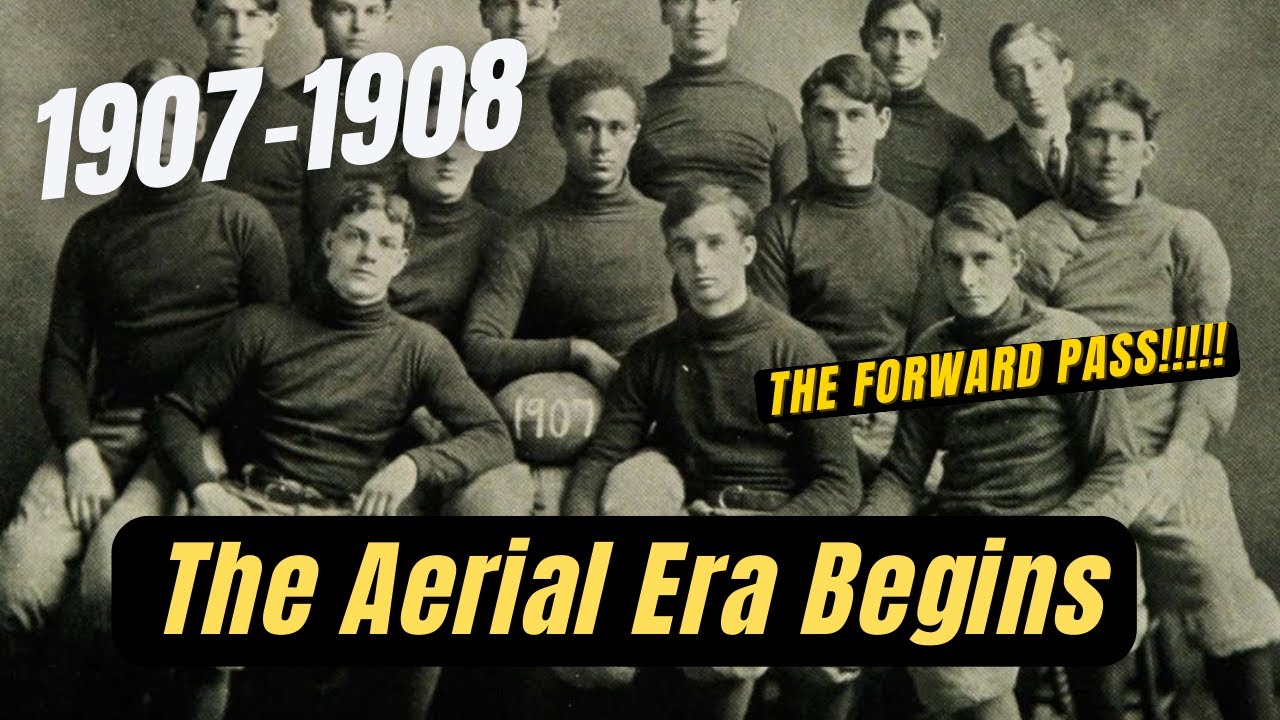
Most people know that the forward pass was legalized in 1906. Fewer know that the men who legalized it did everything in their power to make sure nobody would actually use it.

The forward pass history that gets told in highlight reels and football documentaries skips the messy reality — the political infighting, the desperate compromises, the coaches who predicted the new rules would destroy the sport within a season, and the fundamental confusion about how a thrown football was even supposed to work. In 1906, a Minneapolis newspaper instructed readers that the proper way to throw a forward pass was with both hands, like a basketball chest pass, and noted approvingly that a very clever and dexterous man could pass the ball secretly behind his back. Nobody had any idea what they were doing. And yet what they stumbled into that year changed American football forever.

Why 1906 Was Necessary

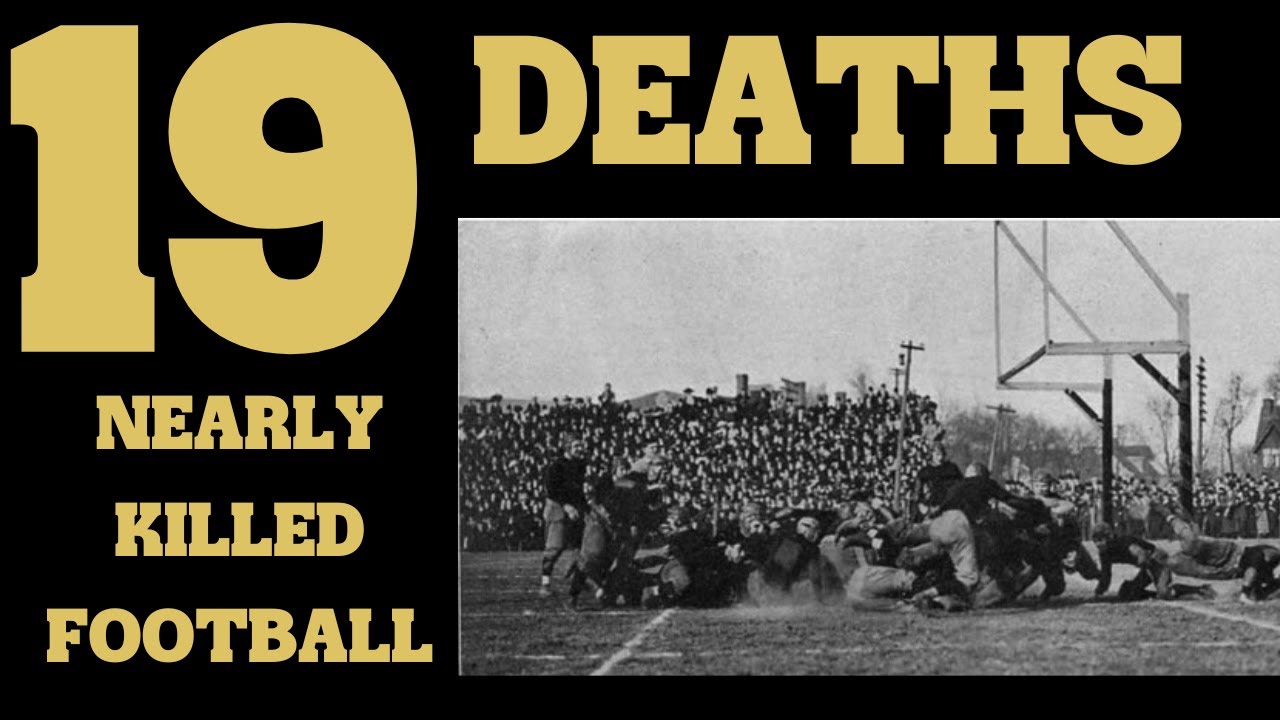
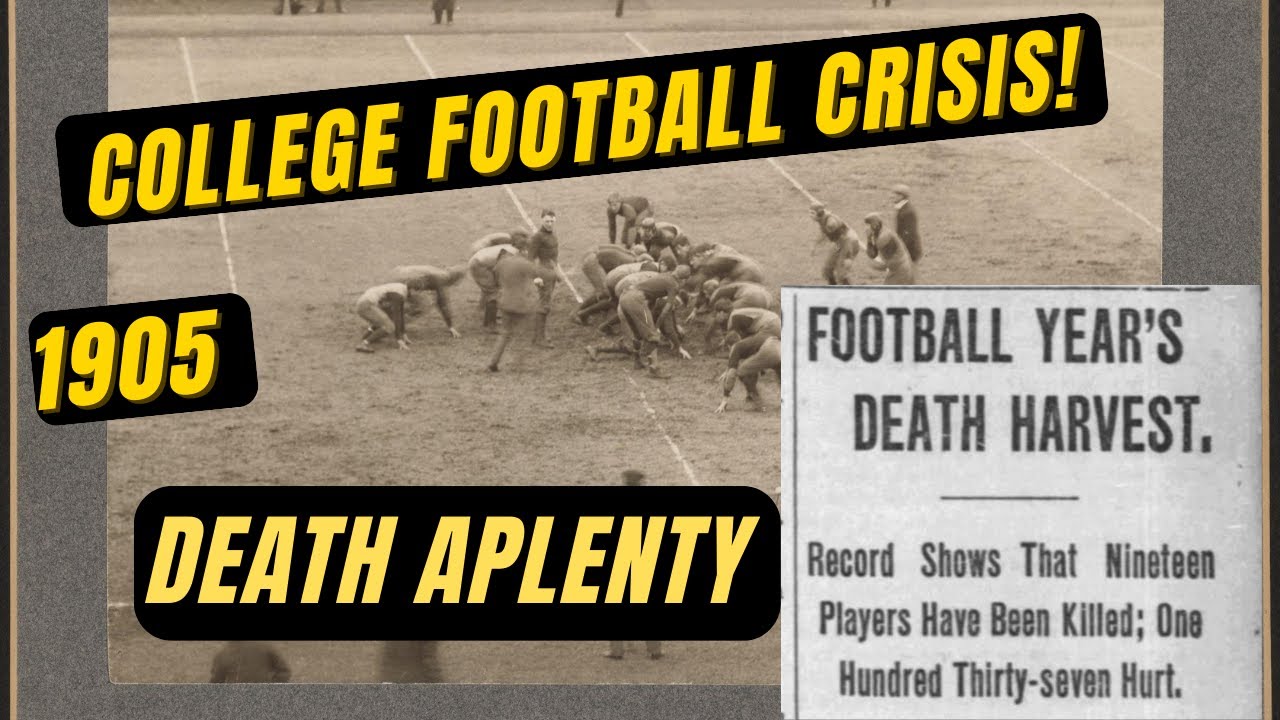
To understand 1906, you have to understand what preceded it. The 1905 football crisis had nearly ended the sport entirely. Players were dying. Schools were abolishing their programs. The public was sick of watching mass plays — formations of men crashing into each other over and over in the middle of the field, with no open space, no variety, and no relief from the grinding brutality. The forerunner of the NCAA, the Intercollegiate Athletic Association of the United States, had taken over rules-making from the old Eastern establishment and was under enormous pressure to produce a game the public would actually want to watch — and that wouldn’t keep killing the people playing it.

What followed was the most sweeping overhaul in the history of American football rules. Nearly 30 changes were passed for the 1906 season. The forward pass was the most famous. It was far from the only one that mattered.

Making the Game Safer — For Real This Time

For the first time in football history, personal fouls were explicitly defined. Striking with the fist or elbow, kneeing, kicking — none of these had previously been illegal by name. A rule was written specifically prohibiting a defender from striking a ball carrier in the face with the heel of the hand, which tells you everything you need to know about what was happening on football fields before 1906. The penalty for personal fouls was disqualification and 15 yards.

Unnecessary roughness became a codified penalty for the first time, covering tackling out of bounds, piling on, and hurdling — including a very specific prohibition on jumping over a player on the line of scrimmage with the feet or knees foremost within five yards of the center. That rule existed because teams had been literally picking up their ball carriers and throwing them over the line of scrimmage. It was an actual play. They had to write a rule to stop it.

Unsportsmanlike conduct was created as a penalty category, covering abusive and insulting language directed at opponents or officials. The neutral zone was established, separating offensive and defensive linemen who had previously lined up brow to brow and opened each play by punching each other. Six players were required to remain on the offensive line, eliminating the popular guards-back and tackles-back formations that had been among the most dangerous mass plays in the game. Holding rules were tightened. Offensive players could obstruct opponents with the body only — no grabbing, no wrapping arms, no lifting.

Two officials became four, and critically, all officials were now empowered to call penalties. Previously, only the head referee could flag a foul — and since referees were paid by the home team, they had powerful financial incentives to look the other way. Spreading penalty authority across the officiating crew was a quiet but significant reform.

The first down distance was doubled, from five yards in three downs to ten yards in three downs. The explicit goal was to force offenses out of the middle of the field and into open space, where running off tackle or outside the ends would become necessary rather than optional.

And the game was shortened to 60 minutes — two 30-minute halves — with three timeouts per half. It has been played at that length ever since.

The Forward Pass: Revolutionary, Reluctant, and Ridiculous

The forward pass rule history is a study in institutional resistance to change. Nobody on the rules committee was sure it was a good idea. Walter Camp, who had shaped every significant rule in football for three decades, was openly hostile to it. Schools like Penn, which had built dominant programs on the mass play system, had no interest in an innovation that would level the playing field. Some committee members wanted to ban the forward pass entirely once the offense crossed the 25-yard line. Others wanted to limit throws to ten yards. The debate over how high the ball had to be thrown before it counted as a legal pass was apparently a serious conversation.

What emerged was a forward pass rule so restricted it barely resembled what we know today. One forward pass was allowed per play. The passer had to be behind the line of scrimmage. Only the two players at the ends of the offensive line — essentially what we now call tight ends — were eligible to catch the ball. No pass could be thrown within five yards on either side of the center, meaning the quarterback had to get outside the tackle box before releasing the ball. And if a completed forward pass touched the ground before being touched by any player, possession was turned over to the defense at the spot of the pass. An incompletion wasn’t just a wasted down. It was a turnover.

The penalty for an illegal forward pass was also a turnover. The rules committee had designed a pass that punished failure so severely that most coaches spent the early part of the 1906 season wondering if it was worth the risk at all.

Reactions: Outrage, Mockery, and Eventual Vindication

The response from coaches and media was exactly what you’d expect from people confronting something genuinely new. Penn coach A.L. Smith predicted the rules would ruin football within a season, that the only play anyone would use was the punt, and that the committee would inevitably return to the old game. A satirical illustration in Judge Magazine depicted two gentlemen reviewing a rulebook that read no pinching, no slapping, hug easy, don’t yell — mocking either the new rules or their critics, depending on your interpretation. Early season reports from games played under the new rules were largely negative. Experts called it chaos. Coaches called it impossible.

By the end of the season, the tone had shifted completely. The Louisville Courier-Journal called the new rules an unqualified success. The Chicago Inter-Ocean declared the game more interesting and spectacular than it had been under the old system. The defense had already adapted — spreading out to account for the threat of the forward pass and the onside kick, creating the open space that coaches had been demanding for years.

Coach A.L. Smith’s prediction that the rules would be reversed within a season turned out to be, as the video’s narrator generously notes, one of the wrongest statements in the history of sports.

The Threshold

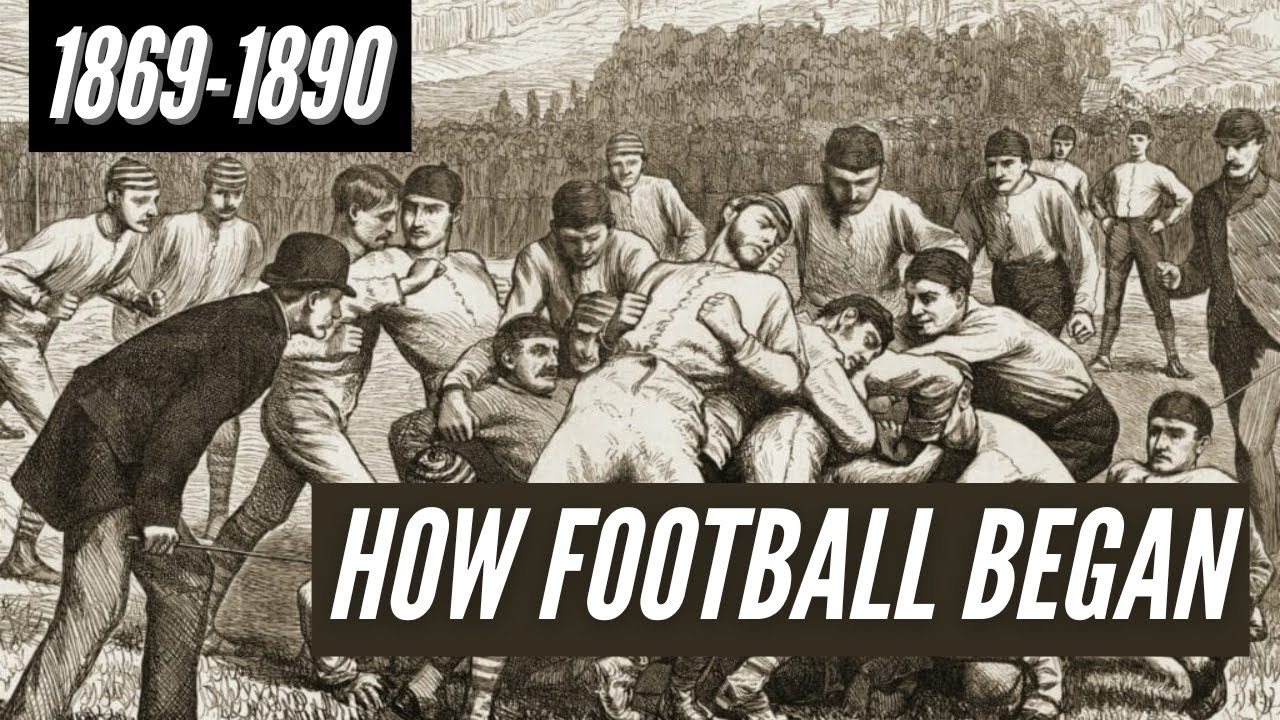
From the first intercollegiate football game in 1869 with 25 players to a side, through the establishment of possession in 1876, the invention of the down system in 1882, the flying wedge era, the 1905 death crisis, and now the forward pass — the history of American football in 1906 represents a genuine turning point. The game that emerged from that season was recognizably the ancestor of what we watch today.

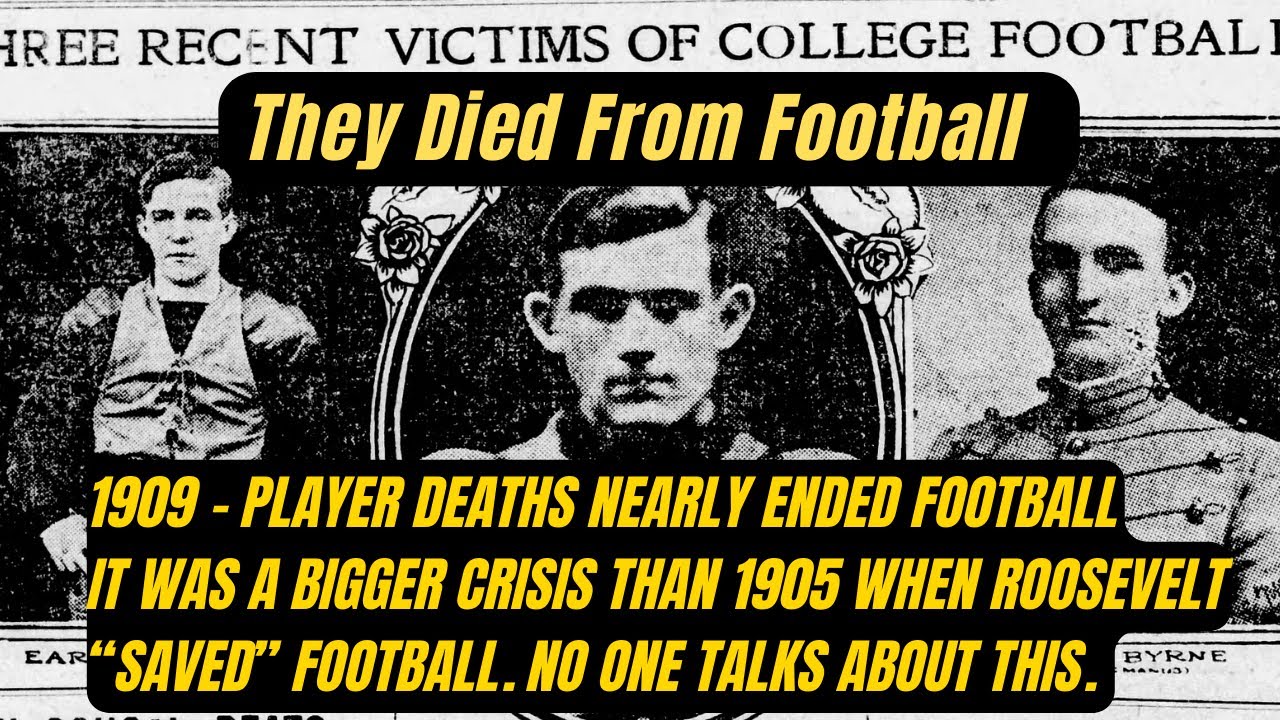
It wasn’t enough to solve the injury problem. Football would face another crisis in 1909. But the foundation had been permanently altered. The forward pass existed now. And whatever the rules committee had intended, it wasn’t going back.

Hardcore College Football History covers the forgotten stories and foundational moments that shaped college football. Subscribe for more documentary-style deep dives into the history of the game.
Most people know that the forward pass was legalized in 1906. Fewer know that the men who legalized it did everything in their power to make sure nobody would actually use it.

The forward pass history that gets told in highlight reels and football documentaries skips the messy reality — the political infighting, the desperate compromises, the coaches who predicted the new rules would destroy the sport within a season, and the fundamental confusion about how a thrown football was even supposed to work. In 1906, a Minneapolis newspaper instructed readers that the proper way to throw a forward pass was with both hands, like a basketball chest pass, and noted approvingly that a very clever and dexterous man could pass the ball secretly behind his back. Nobody had any idea what they were doing. And yet what they stumbled into that year changed American football forever.

Why 1906 Was Necessary

To understand 1906, you have to understand what preceded it. The 1905 football crisis had nearly ended the sport entirely. Players were dying. Schools were abolishing their programs. The public was sick of watching mass plays — formations of men crashing into each other over and over in the middle of the field, with no open space, no variety, and no relief from the grinding brutality. The forerunner of the NCAA, the Intercollegiate Athletic Association of the United States, had taken over rules-making from the old Eastern establishment and was under enormous pressure to produce a game the public would actually want to watch — and that wouldn’t keep killing the people playing it.

What followed was the most sweeping overhaul in the history of American football rules. Nearly 30 changes were passed for the 1906 season. The forward pass was the most famous. It was far from the only one that mattered.

Making the Game Safer — For Real This Time

For the first time in football history, personal fouls were explicitly defined. Striking with the fist or elbow, kneeing, kicking — none of these had previously been illegal by name. A rule was written specifically prohibiting a defender from striking a ball carrier in the face with the heel of the hand, which tells you everything you need to know about what was happening on football fields before 1906. The penalty for personal fouls was disqualification and 15 yards.

Unnecessary roughness became a codified penalty for the first time, covering tackling out of bounds, piling on, and hurdling — including a very specific prohibition on jumping over a player on the line of scrimmage with the feet or knees foremost within five yards of the center. That rule existed because teams had been literally picking up their ball carriers and throwing them over the line of scrimmage. It was an actual play. They had to write a rule to stop it.

Unsportsmanlike conduct was created as a penalty category, covering abusive and insulting language directed at opponents or officials. The neutral zone was established, separating offensive and defensive linemen who had previously lined up brow to brow and opened each play by punching each other. Six players were required to remain on the offensive line, eliminating the popular guards-back and tackles-back formations that had been among the most dangerous mass plays in the game. Holding rules were tightened. Offensive players could obstruct opponents with the body only — no grabbing, no wrapping arms, no lifting.

Two officials became four, and critically, all officials were now empowered to call penalties. Previously, only the head referee could flag a foul — and since referees were paid by the home team, they had powerful financial incentives to look the other way. Spreading penalty authority across the officiating crew was a quiet but significant reform.

The first down distance was doubled, from five yards in three downs to ten yards in three downs. The explicit goal was to force offenses out of the middle of the field and into open space, where running off tackle or outside the ends would become necessary rather than optional.

And the game was shortened to 60 minutes — two 30-minute halves — with three timeouts per half. It has been played at that length ever since.

The Forward Pass: Revolutionary, Reluctant, and Ridiculous

The forward pass rule history is a study in institutional resistance to change. Nobody on the rules committee was sure it was a good idea. Walter Camp, who had shaped every significant rule in football for three decades, was openly hostile to it. Schools like Penn, which had built dominant programs on the mass play system, had no interest in an innovation that would level the playing field. Some committee members wanted to ban the forward pass entirely once the offense crossed the 25-yard line. Others wanted to limit throws to ten yards. The debate over how high the ball had to be thrown before it counted as a legal pass was apparently a serious conversation.

What emerged was a forward pass rule so restricted it barely resembled what we know today. One forward pass was allowed per play. The passer had to be behind the line of scrimmage. Only the two players at the ends of the offensive line — essentially what we now call tight ends — were eligible to catch the ball. No pass could be thrown within five yards on either side of the center, meaning the quarterback had to get outside the tackle box before releasing the ball. And if a completed forward pass touched the ground before being touched by any player, possession was turned over to the defense at the spot of the pass. An incompletion wasn’t just a wasted down. It was a turnover.

The penalty for an illegal forward pass was also a turnover. The rules committee had designed a pass that punished failure so severely that most coaches spent the early part of the 1906 season wondering if it was worth the risk at all.

Reactions: Outrage, Mockery, and Eventual Vindication

The response from coaches and media was exactly what you’d expect from people confronting something genuinely new. Penn coach A.L. Smith predicted the rules would ruin football within a season, that the only play anyone would use was the punt, and that the committee would inevitably return to the old game. A satirical illustration in Judge Magazine depicted two gentlemen reviewing a rulebook that read no pinching, no slapping, hug easy, don’t yell — mocking either the new rules or their critics, depending on your interpretation. Early season reports from games played under the new rules were largely negative. Experts called it chaos. Coaches called it impossible.

By the end of the season, the tone had shifted completely. The Louisville Courier-Journal called the new rules an unqualified success. The Chicago Inter-Ocean declared the game more interesting and spectacular than it had been under the old system. The defense had already adapted — spreading out to account for the threat of the forward pass and the onside kick, creating the open space that coaches had been demanding for years.

Coach A.L. Smith’s prediction that the rules would be reversed within a season turned out to be, as the video’s narrator generously notes, one of the wrongest statements in the history of sports.

The Threshold

From the first intercollegiate football game in 1869 with 25 players to a side, through the establishment of possession in 1876, the invention of the down system in 1882, the flying wedge era, the 1905 death crisis, and now the forward pass — the history of American football in 1906 represents a genuine turning point. The game that emerged from that season was recognizably the ancestor of what we watch today.

It wasn’t enough to solve the injury problem. Football would face another crisis in 1909. But the foundation had been permanently altered. The forward pass existed now. And whatever the rules committee had intended, it wasn’t going back.

Hardcore College Football History covers the forgotten stories and foundational moments that shaped college football. Subscribe for more documentary-style deep dives into the history of the game.
Leave a Reply

Your email address will not be published. Required fields are marked *