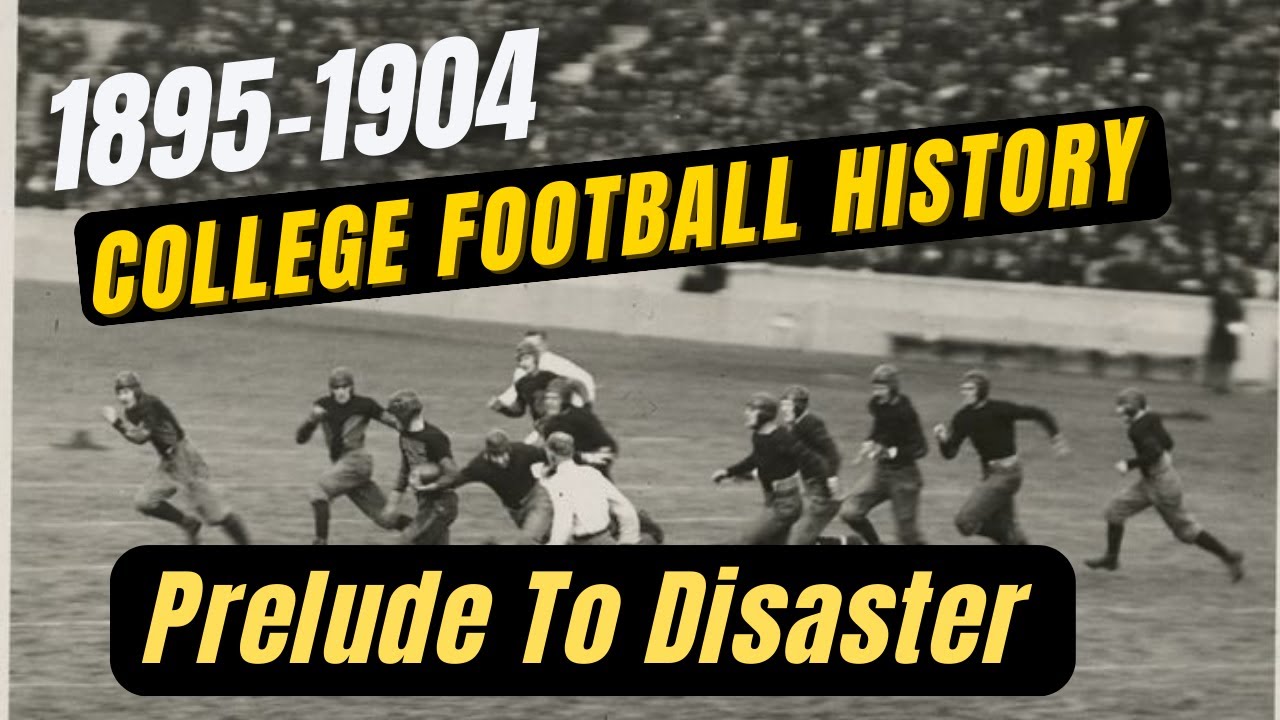
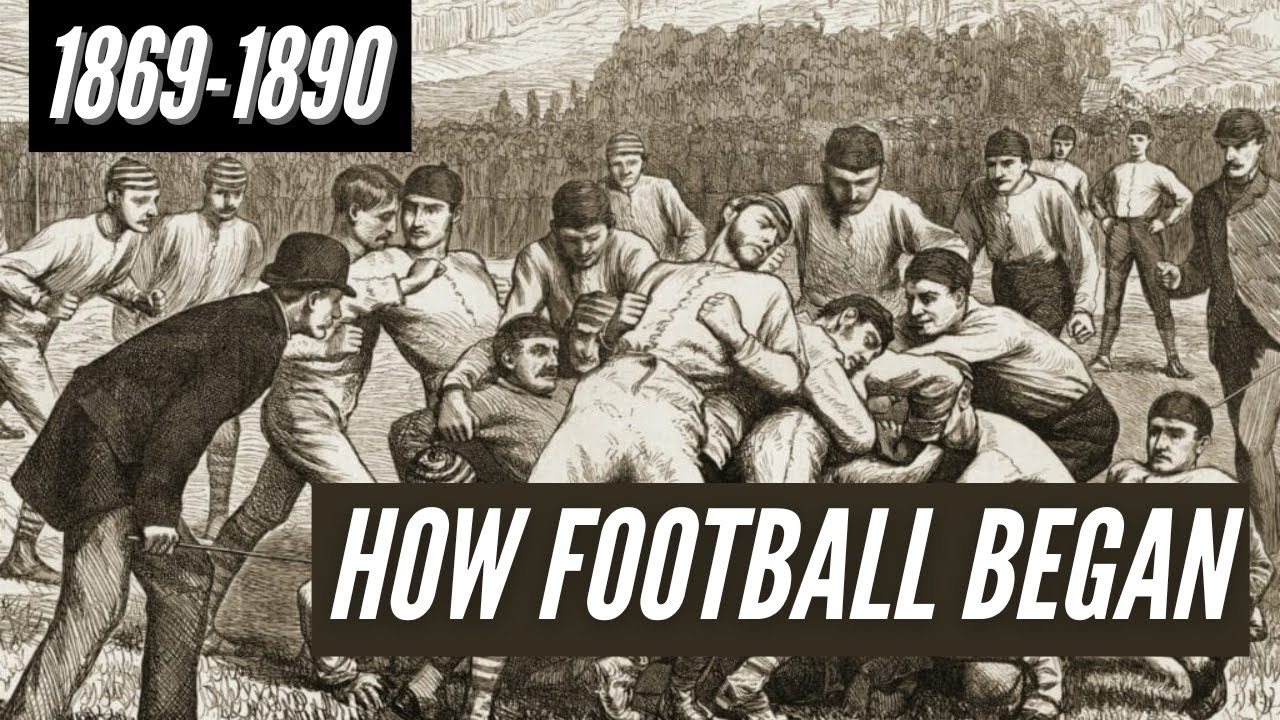
By 1890, American football had carved out its identity. The concept of possession, the line of scrimmage, the system of downs — these rules had separated the American game from rugby and made it something genuinely new. But the same rules that created American football also created a monster. With blocking now permitted and tackling below the waist allowed, coaches and players began devising plays that compressed the wide-open game into something brutal, suffocating, and nearly impossible to stop. The result was a decade of mass momentum plays that pushed the history of American football to the edge of extinction.
The V-Trick: Where It All Started
The first mass play wasn’t invented in a laboratory or drawn up on a chalkboard. It was improvised in the middle of a game. In 1884, Princeton quarterback Richard Hodge was getting nowhere against Pennsylvania with seven men running abreast. On the fly, he arranged them in a V-shape with the ball carrier tucked inside the apex. The play worked spectacularly, moving the ball from midfield to the five-yard line. Hodge’s team forgot about it almost immediately — but the idea didn’t stay forgotten for long.
By 1886, Princeton was practicing the V-trick with intention. By 1888, every team in the country was using it as their standard kickoff formation. Historian Park Davis described the perfected version as eleven players locked together in a solid V-shaped mass, arms encircling one another’s bodies, surging forward while the ball carrier disappeared within it. The only way to stop it, according to Davis, was to throw yourself directly at the apex and upset it while your teammates attacked the flanks. Yale’s Walter Heffelfinger, one of the most physical players of the era, was known for leaping entirely over the wedge and landing on the men inside. That was considered a reasonable defensive strategy.
The Flying Wedge: Football Meets Napoleon
If the V-trick was alarming, what Harvard unveiled against Yale in 1892 was something else entirely. The flying wedge wasn’t just a formation — it was a weapon system. Inventor Lorin F. DeLand had never played football. What he had done was spend years studying the military strategy of Napoleon, mapping out decisive battles, and looking for tactical principles he could apply to the game. When a friend took him to his first football game, DeLand immediately saw war in miniature. He went home and built a scale model of a football field and went to work.
The play he designed split Harvard’s ten non-kicking players into two groups, which fell back to the 25-yard line on opposite sides of the field. On a signal from the ball holder, both groups charged forward in lockstep, converging at full speed just as the ball was put in play. By the time they reached the ball carrier, they were a single mass of momentum aimed directly at the nearest Yale defender. Harvard fans went wild. Newspapers called it the greatest play in the history of football. The New York Times described it as half a ton of bone and muscle coming into collision with a man weighing 160 pounds.
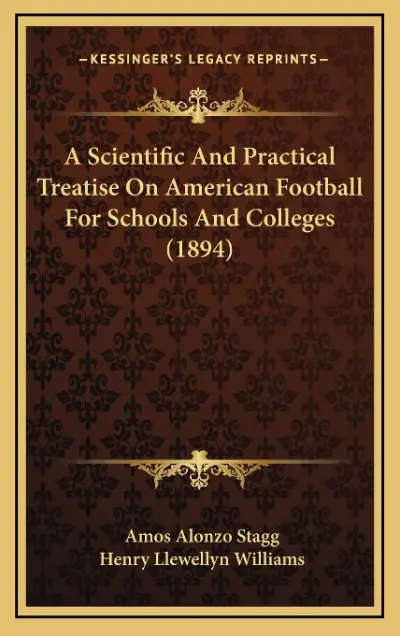
Within a year, everyone was running the flying wedge. And so were variations — the Turtleback, where eleven men formed a solid oval and rolled around the end like an unwinding spring; the push play, where a ball carrier was literally lifted atop the mass and pushed over the line. Amos Alonzo Stagg’s 1894 coaching manual included diagrams for plays like the Revolving Wedge, in which a surging mass of men would pivot mid-play to attack from a new angle, using the defense’s own resistance as leverage.
The Hampden Park Bloodbath
The crowds who had once marveled at these plays were souring on them fast. Early football violence had always been part of the game, but the mass plays had concentrated it into something relentless and ugly. Newspapers that once celebrated the flying wedge were now calling for reform. College presidents — most prominently Harvard’s Charles Elliott — were openly questioning whether football should exist at all.
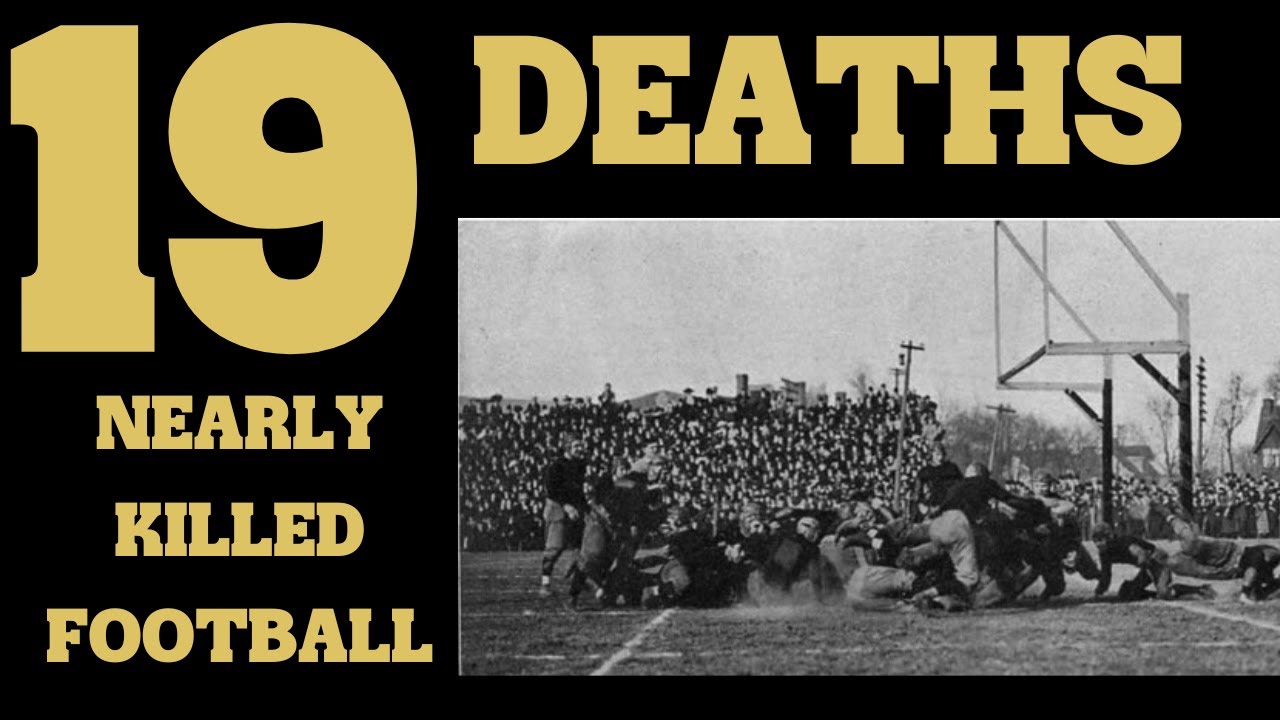
Everything came to a head on November 21, 1894, when Yale met Harvard at Hampden Park in Springfield, Massachusetts. Eight of the 22 players on the field were injured before it was over — four from each side. Yale tackle Fred Murphy knocked Harvard’s Bob Halliwell unconscious during an officials’ conference, breaking his nose. Murphy himself later took a hit that left him unconscious for five hours. Harvard’s Edgar Wrightington suffered a broken collarbone amid allegations that Yale captain Frank Hinkey had deliberately jumped on him while he was down. Yale won 12–4, and the violence spilled into the streets afterward.
The fallout was enormous. Yale and Harvard did not play each other for the next three years — the equivalent, in that era, of canceling Ohio State-Michigan for three seasons running. The sport was under attack from all sides.
The Rules Fight Back
The response from football’s governing bodies was sweeping. Momentum mass plays — defined as more than three men starting in motion before the snap — were outlawed. Games were shortened from 90 to 70 minutes. Players could no longer grab opponents unless they had the ball. And critically, the kickoff rule was changed to require the ball to travel at least ten yards downfield, eliminating the trick kicks that had made the flying wedge possible in the first place.
But even with those changes, the mass plays themselves survived, and the 1890s college football landscape remained violent and chaotic. Walter Camp — the father of American football — was fighting a propaganda war with a book surveying players about whether the game was too brutal. His critics, led by Elliott, were pushing for abolition. There was no central rules authority capable of resolving the dispute. Heading into 1895, football’s survival was genuinely uncertain.
The sport would survive. But what came next — including the intervention of President Theodore Roosevelt himself — would be just as dramatic as anything that happened on the field.
Hardcore College Football History covers the forgotten stories and foundational moments that shaped college football. Subscribe for more documentary-style deep dives into the history of the game.