
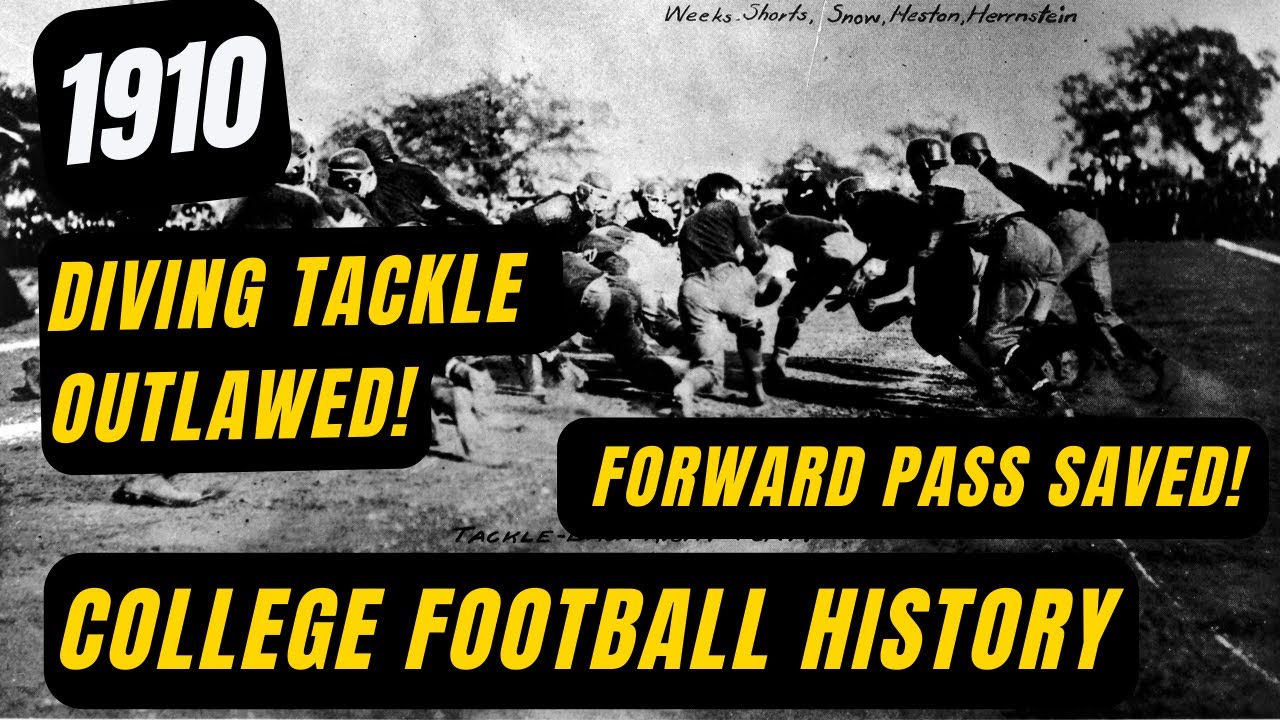
Explore Videos by:

Play Video

Related Videos

Blood on the Gridiron: The True Story of the 1905 Football Crisis

In college football history terms, the year 1905 stands out as being the first year the sport encounters an existential crisis.
Show More

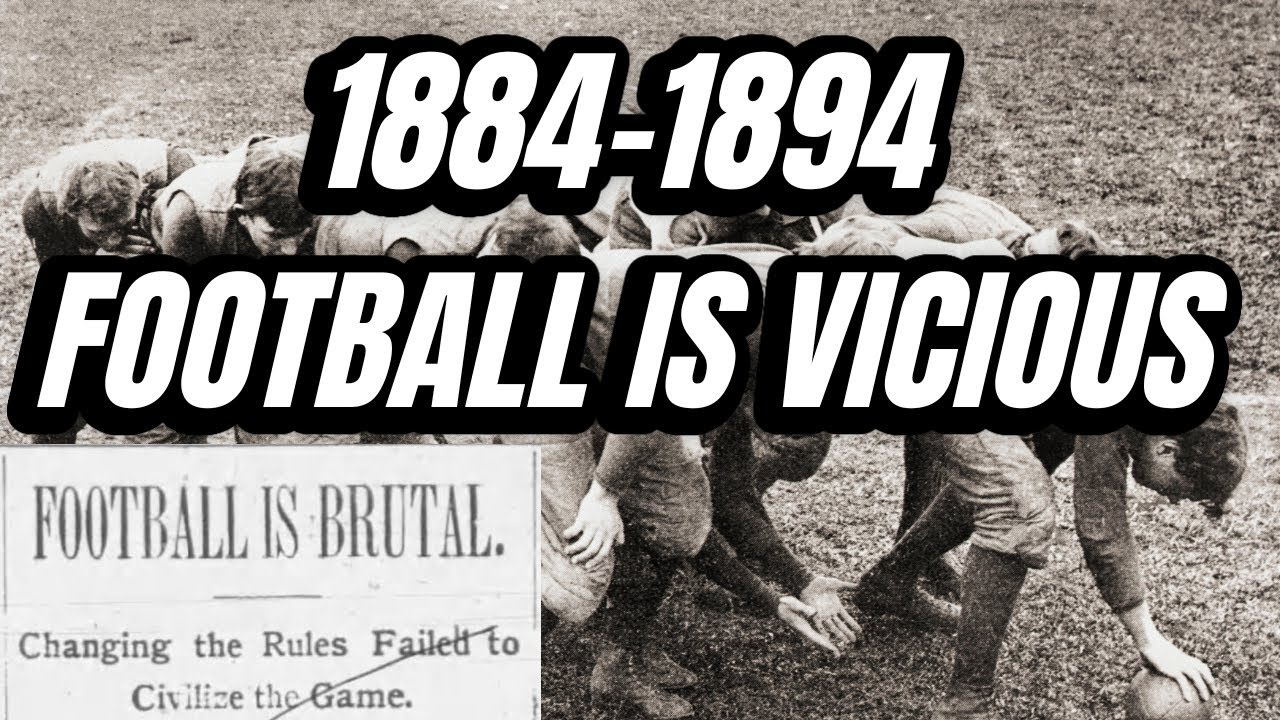
The story most people know about 1905 and college football goes something like this: players were dying, the public was outraged, and President Teddy Roosevelt rode in like a cavalry charge, threatened to abolish the game, and single-handedly saved football for future generations. It’s a clean story. It’s a satisfying story. And like most clean, satisfying stories about complicated historical events, it’s not entirely true.

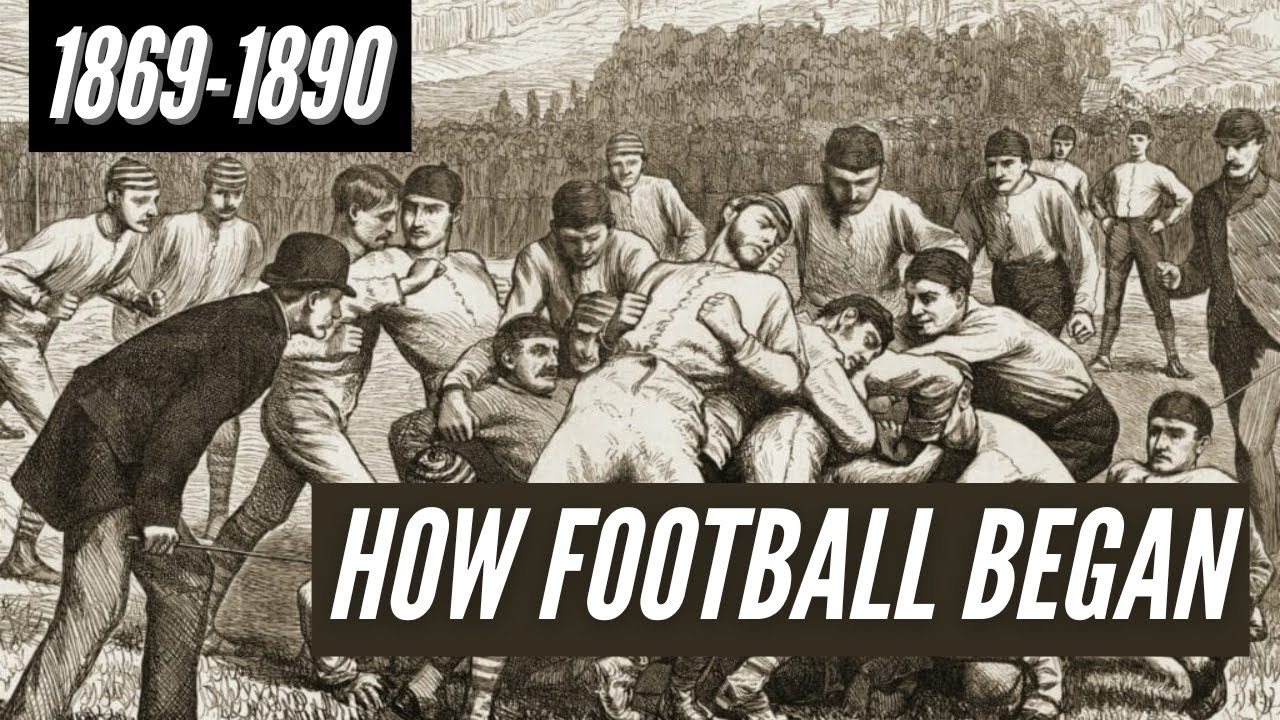
The real story of the 1905 football crisis is messier, more interesting, and far more revealing about the nature of the sport, the media, and American society at the turn of the twentieth century. It involves muckraking journalists, racial violence, a New York chancellor nobody remembers, a Harvard president who hated football with a burning passion, and a father of American football who, when put on the spot by the President of the United States, managed to say a great deal without committing to anything at all.

The Death Harvest

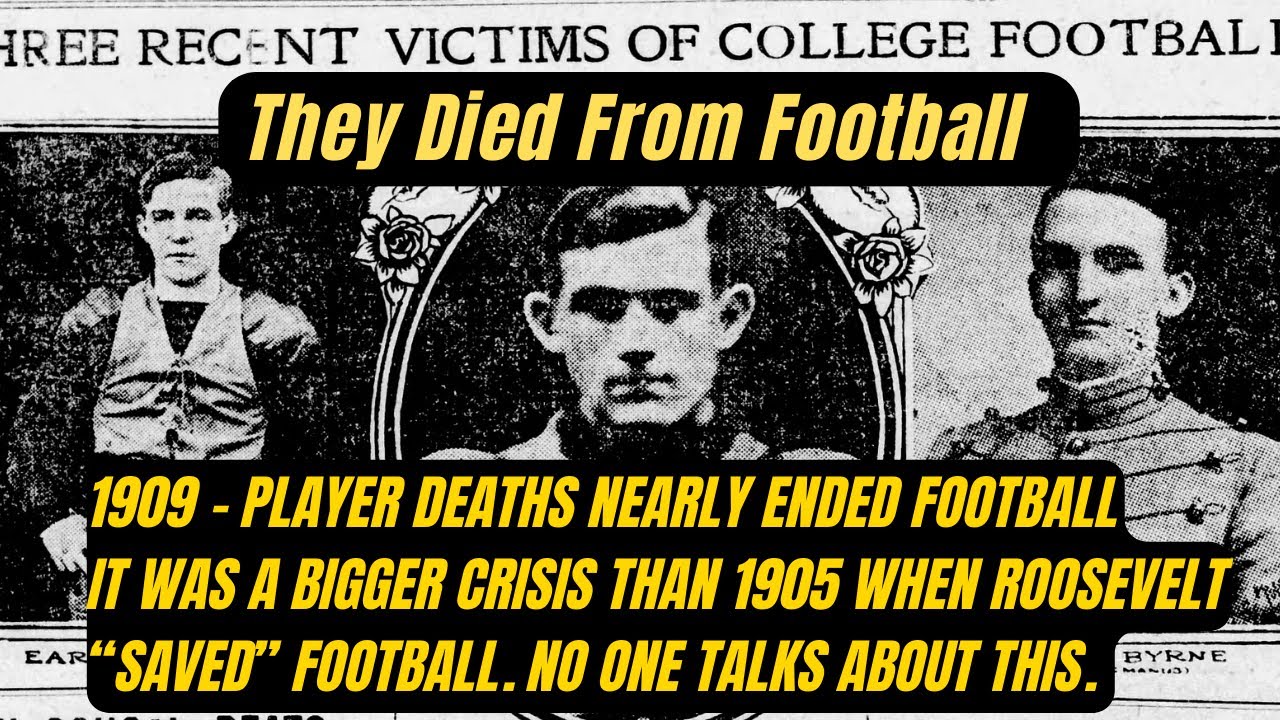
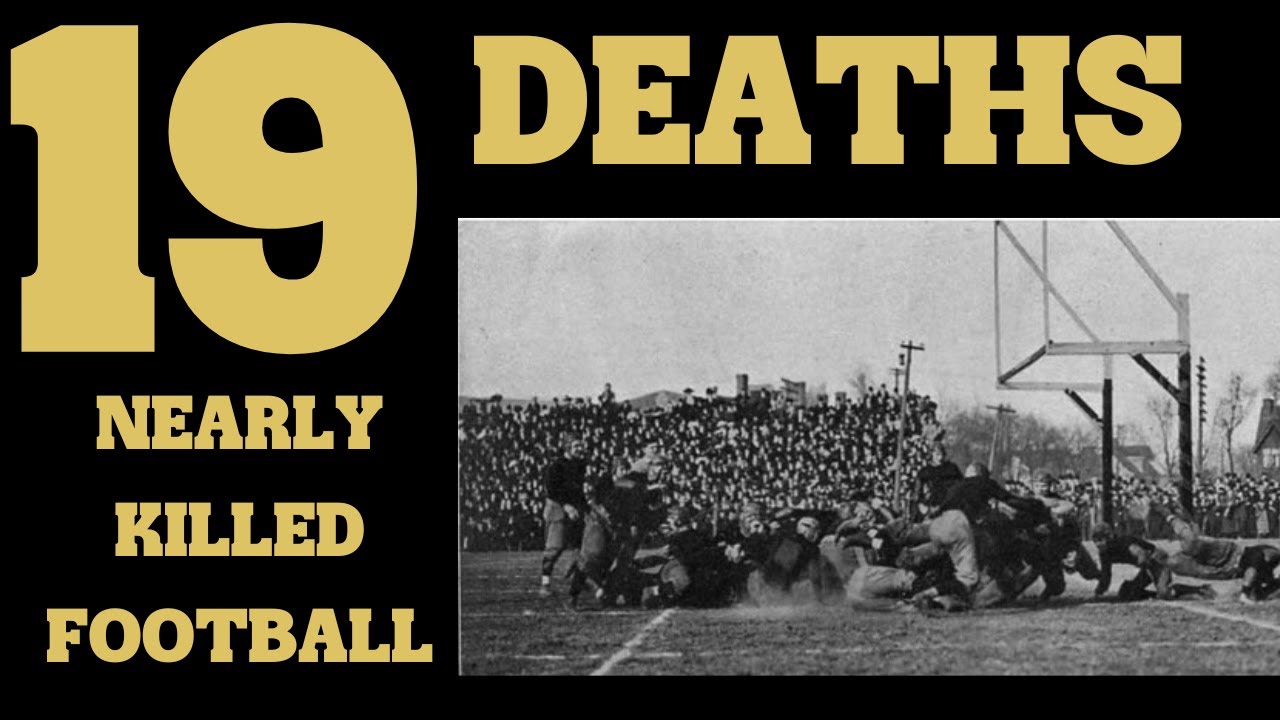
On November 26, 1905, the Chicago Tribune published an article under the headline “Football’s Death Harvest.” The numbers it reported were staggering — 19 players killed, 137 seriously injured in a single season. Other newspapers ran their own tallies. The Cincinnati Commercial Tribune claimed 25 dead, running an illustration titled “The Grim Reaper Smiles at the Goal Post.” The term death harvest, which sounds to modern ears like the title of a horror film, was actually standard journalistic shorthand of the era — a year-end accounting of notable deaths, applied here to the football field with maximum dramatic effect.

The dead were overwhelmingly young. Eleven were high school players. Ten were 17 or younger. Three were college men. The causes ranged from the clearly football-related — cerebral hemorrhage, spinal injuries, internal trauma from body blows — to the genuinely puzzling. One player developed meningitis after receiving injuries in a game. Another, an assistant coach, accidentally drowned. A 16-year-old suffered an injury that resulted in blood poisoning. And in perhaps the strangest entry on any sports mortality list in American history, 14-year-old Leslie Wise of Milwaukee died after falling in a scrimmage when a weed entered his nostril and penetrated his brain.

The early football violence was real. But so was the chaos of 1905-era medicine. Penicillin wouldn’t be discovered until 1928. A cut that became infected could kill you. A hard hit that would today result in a concussion protocol might in 1905 result in a misdiagnosed condition that deteriorated fatally over days or weeks. Some of these deaths were caused by football. Some were caused by ignorance. Some were caused by the kind of reckless disregard for preparation that even contemporary observers found indefensible — one columnist noted acidly that a mill hand who had gone directly from work to a football game without any training whatsoever, and a Maryland girl who had no business playing the sport at all, were being counted against football’s record.

The Death That Triggered the Crisis

Of all the deaths recorded in 1905, one set the institutional response in motion. Harold Moore — mislabeled as William Moore in the original Tribune article — was a halfback for Union College playing against New York University on November 21st. Caught in a tackle, he took a blow to the head, never got up, was loaded into a car by the team doctor and a Union alumnus, and died of cerebral hemorrhage a few hours later at a hospital.

NYU’s chancellor, Henry McCracken, was horrified. He telegraphed Harvard president Charles Elliott — football’s most prominent and persistent critic — urging him to convene a conference of colleges to reform the rules. Elliott refused, having long since concluded that football was beyond saving. McCracken pressed forward anyway, organizing a meeting of 12 schools on December 9th. A follow-up conference on December 28th drew 62 institutions. That second meeting would become the founding body of what eventually evolved into the NCAA.

The Media and the Muckrakers

The Death Harvest article didn’t ignite the 1905 football crisis in a vacuum. The kindling had been laid months earlier. Journalist Henry Beach Needham had published two articles in McClure’s Magazine in June and July of 1905 under the title “The College Athlete.” One passage detailed a conversation between two former Phillips Andover students — one who had played football at Princeton, one at Harvard — about a Dartmouth player, an African-American, who had suffered a broken collarbone against Princeton. The Princeton man’s explanation was chilling in its candor: his team was coached to identify the most dangerous man on the opposing side and put him out of the game in the first five minutes.

The exchange made explicit what everyone involved in football already understood. Brutality wasn’t incidental to the game. It was strategic. It was coached. McClure’s was a known muckraking publication — the same world that produced Upton Sinclair’s The Jungle, published the same year, which exposed the horrors of Chicago’s meatpacking industry and led directly to the Meat Inspection Act of 1906. These were journalists with real influence, operating in a progressive era defined by the belief that institutions needed to be held publicly accountable.

Teddy Roosevelt and the Big Stick That Wasn’t

So where does Teddy Roosevelt fit into all of this? The popular myth — traceable to a 1944 sports encyclopedia — holds that Roosevelt saw a photograph of Swarthmore player Bob Maxwell covered in blood after a brutal game against Penn, flew into a rage, summoned the football powers to the White House, and threatened to abolish the sport by executive decree if it didn’t clean itself up immediately.

Almost none of that holds up. There is likely no such photograph. Roosevelt never mentions it. The White House meeting on October 9th — with representatives from Harvard, Yale, and Princeton — had been arranged weeks before the Maxwell game. Roosevelt was indeed engaged with football reform throughout 1905, having read Needham’s articles and discussed them with the journalist directly. But Roosevelt was not trying to abolish football. He believed the game built character and toughened young men for the demands of life. What he objected to was not physicality but deliberate brutality — the coached-in foul, the intentional injury, the cynical disregard for fair play.

At the White House meeting, Roosevelt told the assembled representatives that football was on trial and that he wanted to save it. He cited specific examples of crooked play by all three of their programs. Walter Camp — the father of American football, the most powerful rules-maker in the sport — responded by talking at considerable length while carefully avoiding any actual commitment. Princeton and Yale denied all knowledge of unsportsmanlike conduct by their teams. The meeting ended with a joint statement pledging fair play, and everyone went home.

The Real Hero of 1905

The man who actually changed the trajectory of football in 1905 was Henry McCracken. His persistence in organizing the reform conference — even after Elliott’s refusal, even without the institutional prestige of Harvard’s backing — produced the meeting of 62 schools that broke the stranglehold the Big Four had exercised over the sport’s rules for three decades. The old Intercollegiate Rules Committee, dominated by Harvard, Yale, Princeton, Penn, and Cornell, tried to organize its own counter-reforms to preserve its power. It failed. The reformers won.

In January 1906, the new rules committee got to work. The changes they produced were sweeping — and the story of what they did, and whether it actually made football safer, is the subject of the next video.

What the 1905 football crisis really was, at its core, was a convergence. Fans were sick of brutal, grinding mass plays. Academic critics saw their chance to finally rein in a sport that had grown too powerful on their campuses. Reformers within football were tired of Walter Camp and the Eastern establishment dictating the rules to everyone else. The death harvest gave all of them a common cause at the same moment. Nothing more powerful than an idea whose time has come.

Hardcore College Football History covers the forgotten stories and foundational moments that shaped college football. Subscribe for more documentary-style deep dives into the history of the game.
The story most people know about 1905 and college football goes something like this: players were dying, the public was outraged, and President Teddy Roosevelt rode in like a cavalry charge, threatened to abolish the game, and single-handedly saved football for future generations. It’s a clean story. It’s a satisfying story. And like most clean, satisfying stories about complicated historical events, it’s not entirely true.

The real story of the 1905 football crisis is messier, more interesting, and far more revealing about the nature of the sport, the media, and American society at the turn of the twentieth century. It involves muckraking journalists, racial violence, a New York chancellor nobody remembers, a Harvard president who hated football with a burning passion, and a father of American football who, when put on the spot by the President of the United States, managed to say a great deal without committing to anything at all.

The Death Harvest

On November 26, 1905, the Chicago Tribune published an article under the headline “Football’s Death Harvest.” The numbers it reported were staggering — 19 players killed, 137 seriously injured in a single season. Other newspapers ran their own tallies. The Cincinnati Commercial Tribune claimed 25 dead, running an illustration titled “The Grim Reaper Smiles at the Goal Post.” The term death harvest, which sounds to modern ears like the title of a horror film, was actually standard journalistic shorthand of the era — a year-end accounting of notable deaths, applied here to the football field with maximum dramatic effect.

The dead were overwhelmingly young. Eleven were high school players. Ten were 17 or younger. Three were college men. The causes ranged from the clearly football-related — cerebral hemorrhage, spinal injuries, internal trauma from body blows — to the genuinely puzzling. One player developed meningitis after receiving injuries in a game. Another, an assistant coach, accidentally drowned. A 16-year-old suffered an injury that resulted in blood poisoning. And in perhaps the strangest entry on any sports mortality list in American history, 14-year-old Leslie Wise of Milwaukee died after falling in a scrimmage when a weed entered his nostril and penetrated his brain.

The early football violence was real. But so was the chaos of 1905-era medicine. Penicillin wouldn’t be discovered until 1928. A cut that became infected could kill you. A hard hit that would today result in a concussion protocol might in 1905 result in a misdiagnosed condition that deteriorated fatally over days or weeks. Some of these deaths were caused by football. Some were caused by ignorance. Some were caused by the kind of reckless disregard for preparation that even contemporary observers found indefensible — one columnist noted acidly that a mill hand who had gone directly from work to a football game without any training whatsoever, and a Maryland girl who had no business playing the sport at all, were being counted against football’s record.

The Death That Triggered the Crisis

Of all the deaths recorded in 1905, one set the institutional response in motion. Harold Moore — mislabeled as William Moore in the original Tribune article — was a halfback for Union College playing against New York University on November 21st. Caught in a tackle, he took a blow to the head, never got up, was loaded into a car by the team doctor and a Union alumnus, and died of cerebral hemorrhage a few hours later at a hospital.

NYU’s chancellor, Henry McCracken, was horrified. He telegraphed Harvard president Charles Elliott — football’s most prominent and persistent critic — urging him to convene a conference of colleges to reform the rules. Elliott refused, having long since concluded that football was beyond saving. McCracken pressed forward anyway, organizing a meeting of 12 schools on December 9th. A follow-up conference on December 28th drew 62 institutions. That second meeting would become the founding body of what eventually evolved into the NCAA.

The Media and the Muckrakers

The Death Harvest article didn’t ignite the 1905 football crisis in a vacuum. The kindling had been laid months earlier. Journalist Henry Beach Needham had published two articles in McClure’s Magazine in June and July of 1905 under the title “The College Athlete.” One passage detailed a conversation between two former Phillips Andover students — one who had played football at Princeton, one at Harvard — about a Dartmouth player, an African-American, who had suffered a broken collarbone against Princeton. The Princeton man’s explanation was chilling in its candor: his team was coached to identify the most dangerous man on the opposing side and put him out of the game in the first five minutes.

The exchange made explicit what everyone involved in football already understood. Brutality wasn’t incidental to the game. It was strategic. It was coached. McClure’s was a known muckraking publication — the same world that produced Upton Sinclair’s The Jungle, published the same year, which exposed the horrors of Chicago’s meatpacking industry and led directly to the Meat Inspection Act of 1906. These were journalists with real influence, operating in a progressive era defined by the belief that institutions needed to be held publicly accountable.

Teddy Roosevelt and the Big Stick That Wasn’t

So where does Teddy Roosevelt fit into all of this? The popular myth — traceable to a 1944 sports encyclopedia — holds that Roosevelt saw a photograph of Swarthmore player Bob Maxwell covered in blood after a brutal game against Penn, flew into a rage, summoned the football powers to the White House, and threatened to abolish the sport by executive decree if it didn’t clean itself up immediately.

Almost none of that holds up. There is likely no such photograph. Roosevelt never mentions it. The White House meeting on October 9th — with representatives from Harvard, Yale, and Princeton — had been arranged weeks before the Maxwell game. Roosevelt was indeed engaged with football reform throughout 1905, having read Needham’s articles and discussed them with the journalist directly. But Roosevelt was not trying to abolish football. He believed the game built character and toughened young men for the demands of life. What he objected to was not physicality but deliberate brutality — the coached-in foul, the intentional injury, the cynical disregard for fair play.

At the White House meeting, Roosevelt told the assembled representatives that football was on trial and that he wanted to save it. He cited specific examples of crooked play by all three of their programs. Walter Camp — the father of American football, the most powerful rules-maker in the sport — responded by talking at considerable length while carefully avoiding any actual commitment. Princeton and Yale denied all knowledge of unsportsmanlike conduct by their teams. The meeting ended with a joint statement pledging fair play, and everyone went home.

The Real Hero of 1905

The man who actually changed the trajectory of football in 1905 was Henry McCracken. His persistence in organizing the reform conference — even after Elliott’s refusal, even without the institutional prestige of Harvard’s backing — produced the meeting of 62 schools that broke the stranglehold the Big Four had exercised over the sport’s rules for three decades. The old Intercollegiate Rules Committee, dominated by Harvard, Yale, Princeton, Penn, and Cornell, tried to organize its own counter-reforms to preserve its power. It failed. The reformers won.

In January 1906, the new rules committee got to work. The changes they produced were sweeping — and the story of what they did, and whether it actually made football safer, is the subject of the next video.

What the 1905 football crisis really was, at its core, was a convergence. Fans were sick of brutal, grinding mass plays. Academic critics saw their chance to finally rein in a sport that had grown too powerful on their campuses. Reformers within football were tired of Walter Camp and the Eastern establishment dictating the rules to everyone else. The death harvest gave all of them a common cause at the same moment. Nothing more powerful than an idea whose time has come.

Hardcore College Football History covers the forgotten stories and foundational moments that shaped college football. Subscribe for more documentary-style deep dives into the history of the game.

Leave a Reply

Your email address will not be published. Required fields are marked *