
Explore Videos by:

Play Video

Related Videos

How 19 Deaths Created the Forward Pass: The Complete History of Football’s Greatest Innovation

The Radical Rule That Saved College Football: The Complete History of the Forward Pass Discover how one controversial rule change transformed college…
Show More

It began as a body count.

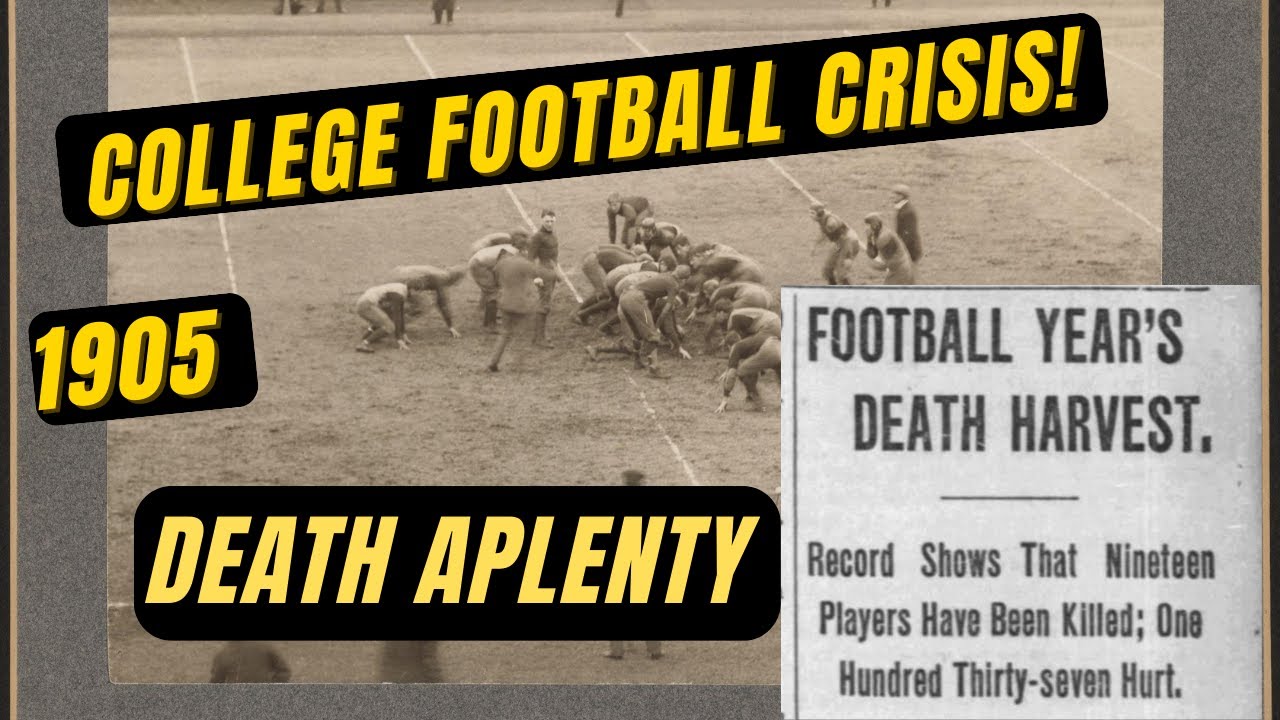
In the fall of 1905, American football killed 19 people. The Chicago Tribune published the toll under the headline “Football’s Death Harvest.” Schools abolished their programs. Universities threatened legislation. The public demanded reform or elimination. The sport that would become America’s greatest obsession was, in the autumn of 1905, genuinely fighting for its survival.

The solution that saved football — the forward pass — was so thoroughly despised by the men who controlled the game that they spent years trying to make it fail. They legalized it and then surrounded it with rules so punishing that most coaches wouldn’t touch it. An incomplete pass was an immediate turnover. Throwing from the wrong spot on the field was a turnover. A pass that crossed the goal line in the air was a touchback — no score, other team’s ball. They built a straitjacket and called it a rule change.

It didn’t work. The forward pass survived anyway. And in surviving, it didn’t just save football — it accidentally created the most spectacular team sport in the world.

The Crisis That Made Change Inevitable

The forward pass history begins not on a football field but in a newspaper office. On November 26th, 1905, the Chicago Tribune’s death harvest article forced a national reckoning that football’s establishment could no longer manage or dismiss. The most galvanizing single incident was the death of Harold Moore, a Union College halfback who was kicked in the head during a game against NYU and died that evening of cerebral hemorrhage.

NYU Chancellor Henry MacCracken, horrified, convened a conference of 13 colleges in December 1905 to debate reform or abolition. A follow-up meeting of 62 institutions on December 28th produced the Intercollegiate Athletic Association of the United States — the organization that would eventually become the NCAA.

For the first time, college football had a national governing body with both the authority and the mandate to change the game. The question was what to change it to.

John Heisman and the Radical Idea

One of the most persistent advocates for the forward pass was John Heisman — the coach for whom the famous trophy is named — who had witnessed an illegal forward pass decide a game back in 1895 and spent the next decade arguing that legalizing it would transform football.

His argument was tactical and safety-conscious simultaneously: a legal forward pass would force defenses to spread out, which would break up the mass formations that were killing players. Speed and skill could replace brute force. The game could be both safer and more exciting.

Heisman persuaded Navy’s Paul Dashiell, a rules committee member, to propose legalization. Standing in opposition was the most powerful figure in football — Walter Camp of Yale, the father of American football, who viewed the forward pass as a fundamental corruption of the sport’s character.

Camp’s resistance was institutional as well as philosophical. Yale had built its dynasty on mass play football. A passing game would level the playing field in ways that threatened everything the Eastern establishment had built.

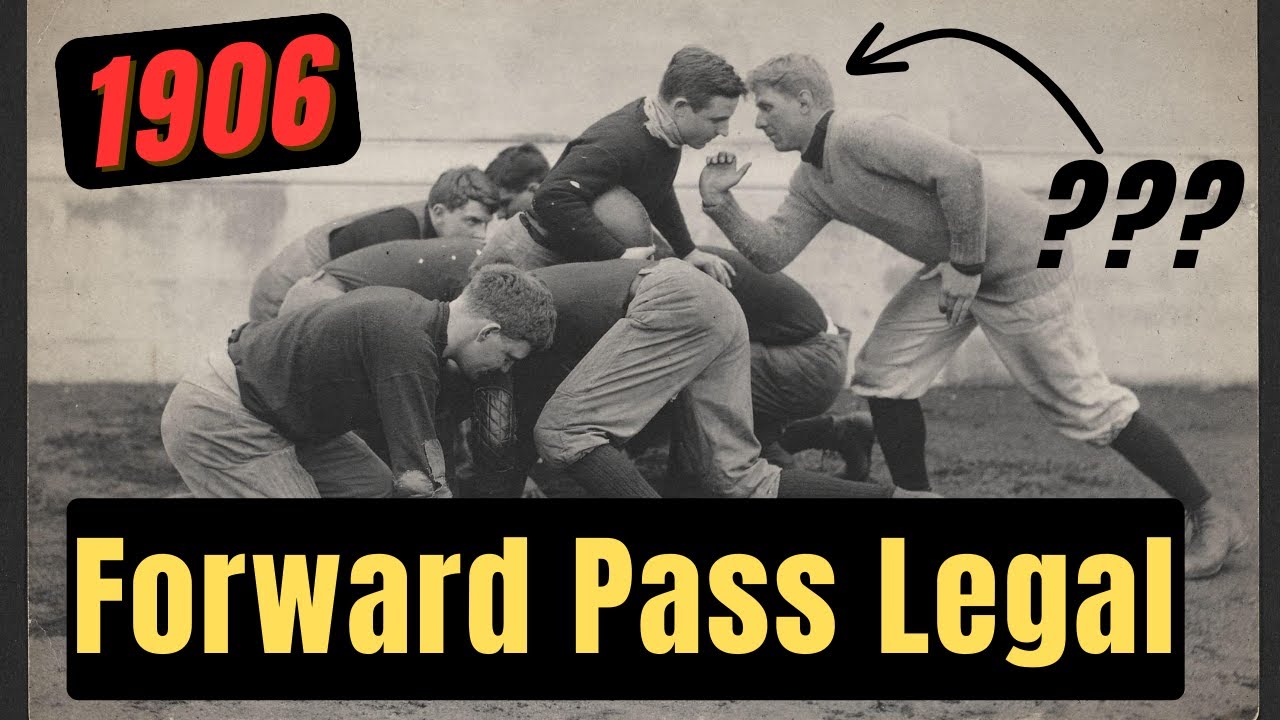
The compromise that emerged in 1906 was legalization in name only. The forward pass was on the books. The rules surrounding it were designed to ensure it stayed off the field.

The Men Who Used It Anyway

The forward pass history’s first hero is Eddie Cochems of St. Louis University, who recognized the rule change for what it could be rather than what it was. Cochems took his team to a secluded Jesuit retreat in Wisconsin for two months of intensive secret practice and developed what he called the overhead projectile spiral pass — at a time when most teams threw the football like a basketball chest pass, two-handed and pushing.

His quarterback Bradbury Robinson threw the first legal forward pass on September 5th, 1906, against Carroll College. The first attempt was incomplete — and under the rules of that year, a turnover. Cochems was undeterred.

Robinson threw again later in the game, 20 yards to Jack Snyder, who caught it in open space and walked into the end zone. St. Louis went 11-0 that season, outscoring opponents 407 to 11. The Eastern establishment dismissed it as a fluke against inferior Midwestern competition.

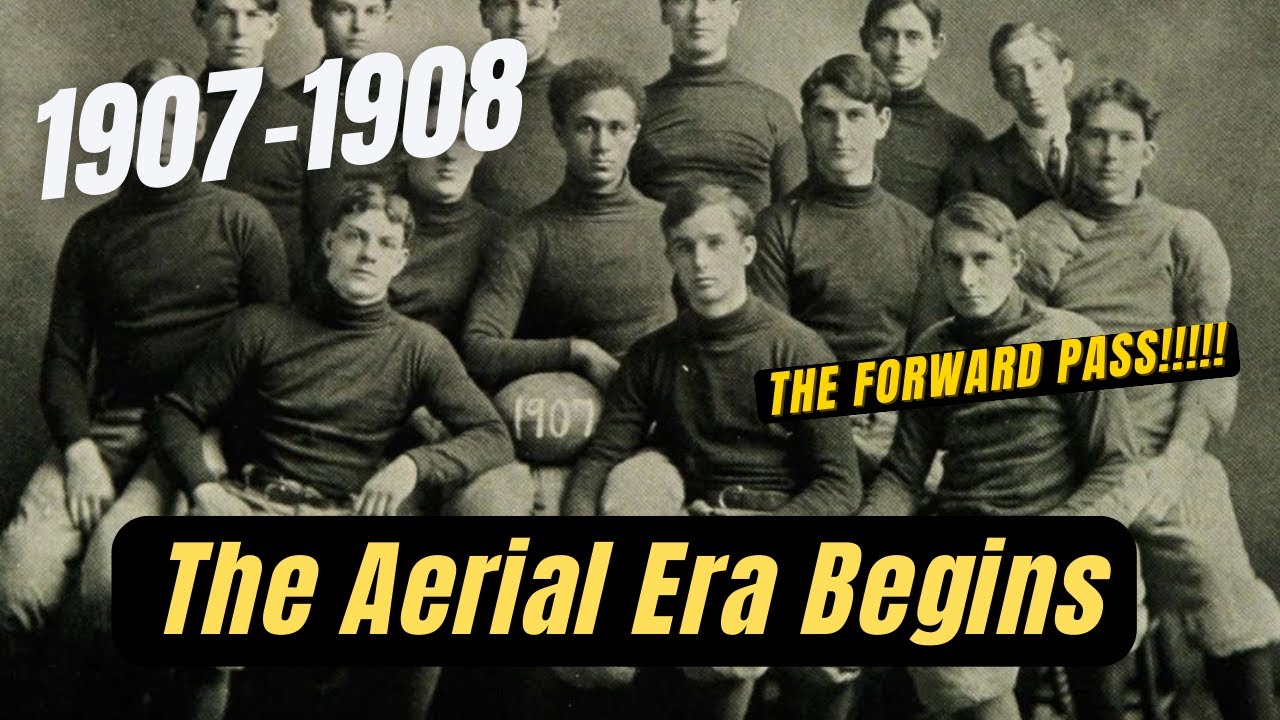
The second hero is Pop Warner at the Carlisle Indian Industrial School, who understood that the forward pass was the ultimate equalizer for a team that would always be outweighed and outmanned by the established powers. Warner built an offense designed to make defenses guess — run, kick, or pass — and with it produced one of the most dominant and overlooked seasons in college football history. On October 26th, 1907,

Carlisle faced the mighty University of Pennsylvania and completed 18 passes, gaining 402 yards to Penn’s 76, winning 26-6. One reporter described a 40-yard spiral from quarterback Pete Houser as the sporting equivalent of the Wright brothers at Kitty Hawk.

Carlisle beat Minnesota. Carlisle beat Harvard. Carlisle beat Amos Alonzo Stagg’s Chicago team. They finished 10-1, outscoring opponents 267-62. The Eastern establishment still wasn’t convinced.

The Rules That Unlocked the Pass

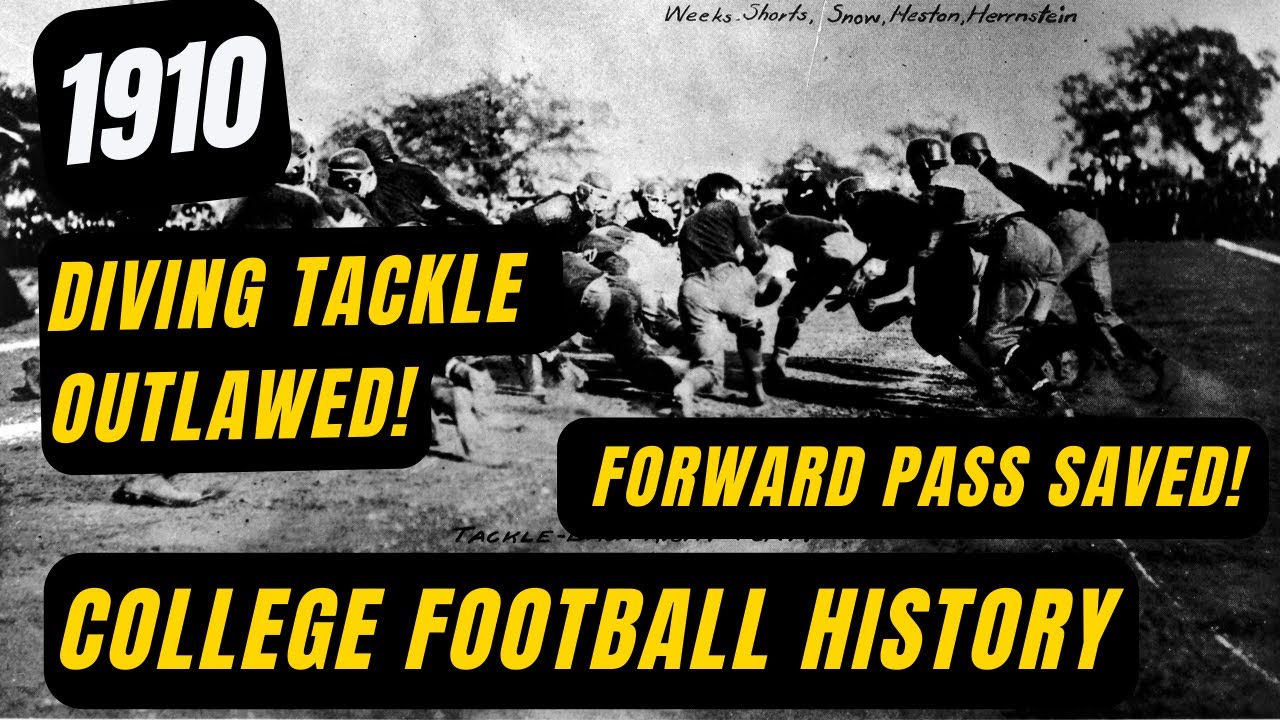
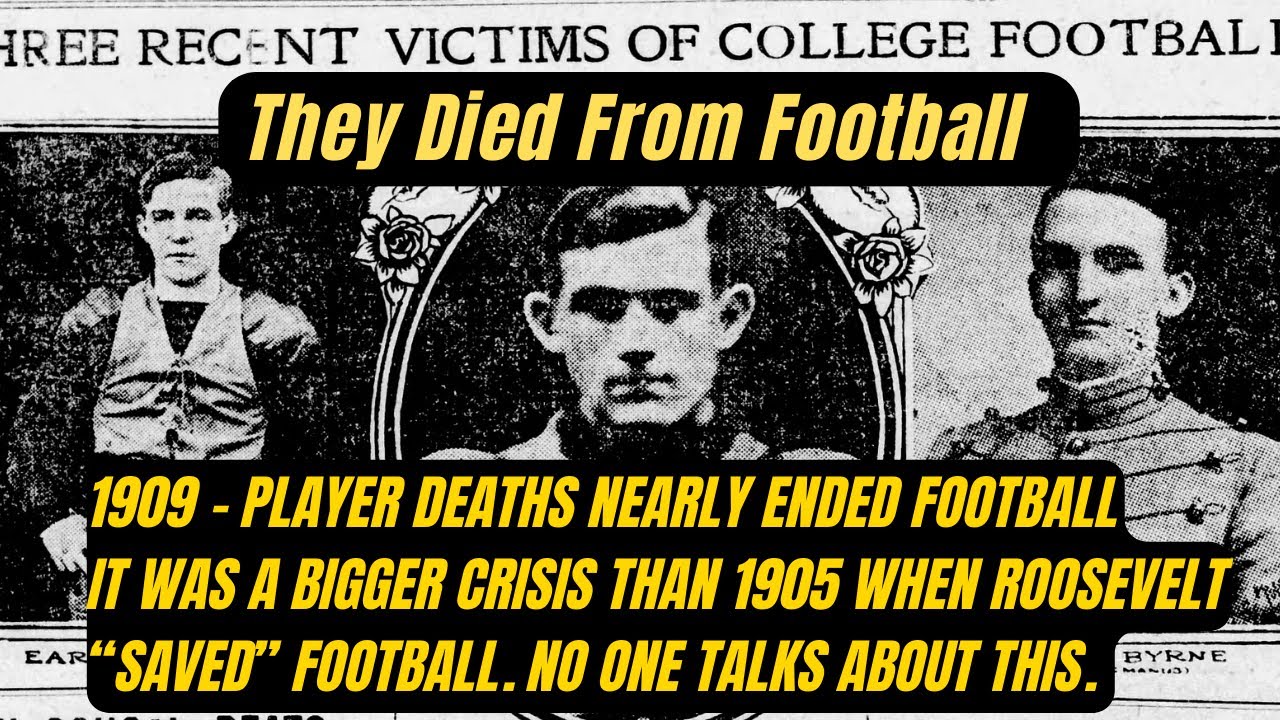
The forward pass remained a fringe concept through 1908 and into 1909, when another wave of deaths — 31 more football-related fatalities over two seasons — produced a second existential crisis and a second round of sweeping reforms. The 1910 rules finally addressed the most punishing restriction: an untouched incomplete pass was no longer a turnover. It was now simply a loss of down. The risk of throwing the ball dropped dramatically overnight.

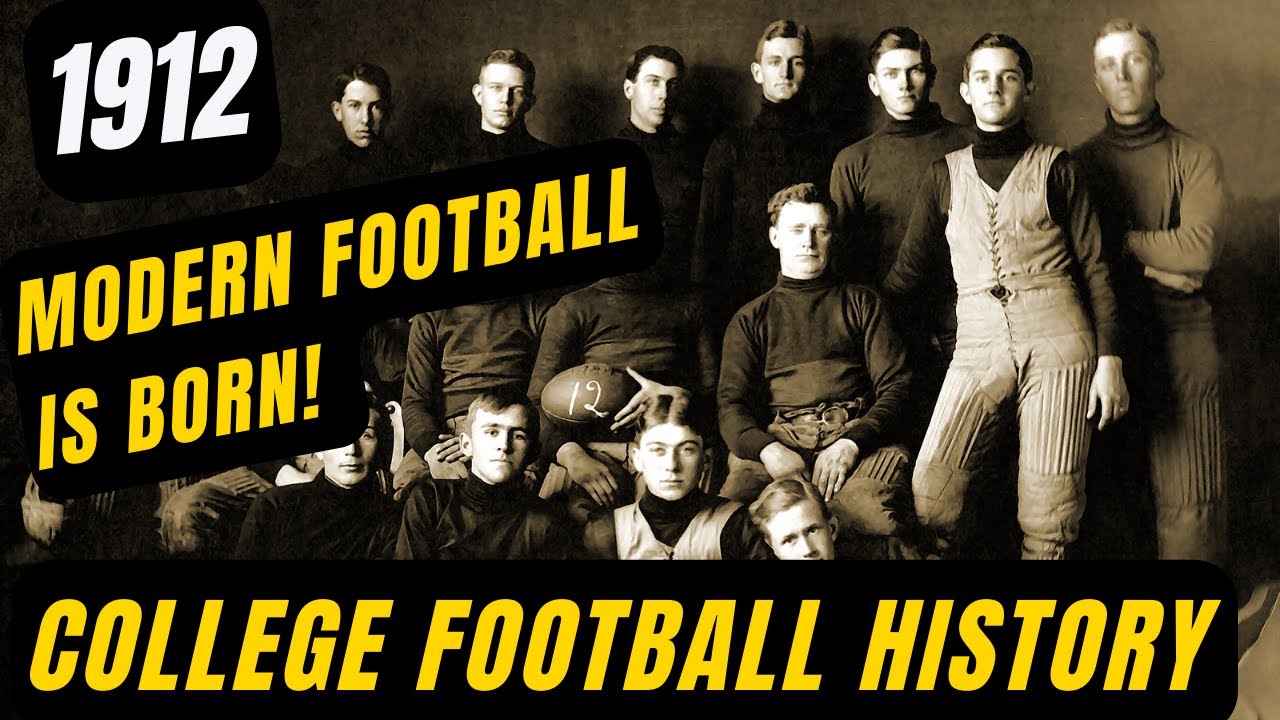
In 1912, the full transformation arrived. Teams were given four downs to gain ten yards. A pass completed in the end zone was ruled a touchdown. The end zone itself was created, as the field was shortened from 110 yards to 100 with ten yards of end zone added at each end.

The touchdown was increased from five points to six. And Walter Camp — the man who had spent his career opposing the forward pass — proposed removing the 20-yard distance limit entirely, allowing quarterbacks to throw the ball as far as they were capable of throwing it. The straitjacket was off.

The Game That Changed Everything

On November 1st, 1913, a little-known Midwestern school called Notre Dame traveled to West Point to face the Army powerhouse. Notre Dame quarterback Gus Dorais and his end Knute Rockne had spent the summer at a resort on Lake Erie practicing the forward pass obsessively.

What they unleashed on Army that afternoon was a systematic passing attack the Eastern establishment had never seen — 14 completions in 17 attempts for 243 yards, graceful spirals thrown to receivers running precise routes in open space. Notre Dame won 35-13 in one of the most shocking upsets in college football history. As Rockne later wrote, the crowd was astonished — there had been no hurdling, no tackling, no plunging, just a long distance touchdown by rapid transit.

The 1913 Notre Dame-Army game is the moment most historians point to as the forward pass going mainstream. It was the game that finally convinced the establishment that the pass was not a gimmick, not a regional novelty, not a trick for inferior teams playing inferior competition. It was the future of football.

The Innovators Who Built the Modern Game

The forward pass history doesn’t end in 1913. It accelerates. At TCU in the 1930s, Dutch Meyer spread his receivers wide and used a shotgun snap to give his quarterback time — decades before anyone else dared. With Slingin’ Sammy Baugh and later Heisman winner Davey O’Brien, Meyer’s Horned Frogs won two national championships on a pass-first philosophy, and he wrote the book on it — literally, publishing Spread Formation Football in 1952.

Bennie Owen at Oklahoma averaged 30 to 35 forward passes per game at a time when that number was considered incomprehensible. Sid Gillman in the AFL turned the long bomb into an art form. Bill Walsh’s West Coast offense transformed short passes into a death-by-a-thousand-cuts offensive system that dominated professional and college football for decades.

The final floodgates opened in 1978, when the NFL adopted rules restricting contact with receivers beyond five yards of the line of scrimmage. The Mel Blount rule — named after the Pittsburgh Steelers cornerback whose physical style of coverage it was designed to curtail — shifted the balance of power permanently toward the offense and sent passing yardage climbing in ways that have never stopped.

Rules changes through the late 1970s and 1980s also allowed offensive linemen to use their hands in pass protection, transforming blocking technique and dramatically increasing quarterbacks’ ability to throw from the pocket.

Mouse Davis, Hal Mumme, and Mike Leach completed the revolution with air raid offenses built on a philosophy of radical simplicity — spread the field, throw the ball on every down, and dare the defense to stop it. What had begun as a desperate safety measure in 1906 had become the defining characteristic of American football at every level.

What the Forward Pass Actually Did

The statistical evidence of the transformation is staggering. The average passer rating in college football rose from 27.2 in 1932 to over 85 by the 2010s. The 3,000-yard passing season went from a landmark achievement to a baseline expectation for any quarterback with serious Heisman ambitions. Passing yardage began exceeding rushing yardage across the sport for the first time in the 1970s and has never looked back.

But the numbers don’t capture the full story. The forward pass changed what football looked like, what it felt like, and what it meant. It moved the game away from the grinding brutality of mass play and toward speed, deception, and athleticism. It made the quarterback the unquestioned star of the sport.

It made football perfect for television — the long spiral, the diving catch, the touchdown celebration — in ways that fueled the explosion of media rights deals that turned college football into a billion-dollar industry.

What began as a desperate attempt to reduce the body count in 1905 accidentally unlocked the strategic, commercial, and artistic potential of the greatest team sport ever invented. It saved football from itself. And in saving it, created something nobody in 1905 could have imagined.

Hardcore College Football History covers the forgotten stories and foundational moments that shaped college football. Subscribe for more documentary-style deep dives into the history of the game.
It began as a body count.

In the fall of 1905, American football killed 19 people. The Chicago Tribune published the toll under the headline “Football’s Death Harvest.” Schools abolished their programs. Universities threatened legislation. The public demanded reform or elimination. The sport that would become America’s greatest obsession was, in the autumn of 1905, genuinely fighting for its survival.

The solution that saved football — the forward pass — was so thoroughly despised by the men who controlled the game that they spent years trying to make it fail. They legalized it and then surrounded it with rules so punishing that most coaches wouldn’t touch it. An incomplete pass was an immediate turnover. Throwing from the wrong spot on the field was a turnover. A pass that crossed the goal line in the air was a touchback — no score, other team’s ball. They built a straitjacket and called it a rule change.

It didn’t work. The forward pass survived anyway. And in surviving, it didn’t just save football — it accidentally created the most spectacular team sport in the world.

The Crisis That Made Change Inevitable

The forward pass history begins not on a football field but in a newspaper office. On November 26th, 1905, the Chicago Tribune’s death harvest article forced a national reckoning that football’s establishment could no longer manage or dismiss. The most galvanizing single incident was the death of Harold Moore, a Union College halfback who was kicked in the head during a game against NYU and died that evening of cerebral hemorrhage.

NYU Chancellor Henry MacCracken, horrified, convened a conference of 13 colleges in December 1905 to debate reform or abolition. A follow-up meeting of 62 institutions on December 28th produced the Intercollegiate Athletic Association of the United States — the organization that would eventually become the NCAA.

For the first time, college football had a national governing body with both the authority and the mandate to change the game. The question was what to change it to.

John Heisman and the Radical Idea

One of the most persistent advocates for the forward pass was John Heisman — the coach for whom the famous trophy is named — who had witnessed an illegal forward pass decide a game back in 1895 and spent the next decade arguing that legalizing it would transform football.

His argument was tactical and safety-conscious simultaneously: a legal forward pass would force defenses to spread out, which would break up the mass formations that were killing players. Speed and skill could replace brute force. The game could be both safer and more exciting.

Heisman persuaded Navy’s Paul Dashiell, a rules committee member, to propose legalization. Standing in opposition was the most powerful figure in football — Walter Camp of Yale, the father of American football, who viewed the forward pass as a fundamental corruption of the sport’s character.

Camp’s resistance was institutional as well as philosophical. Yale had built its dynasty on mass play football. A passing game would level the playing field in ways that threatened everything the Eastern establishment had built.

The compromise that emerged in 1906 was legalization in name only. The forward pass was on the books. The rules surrounding it were designed to ensure it stayed off the field.

The Men Who Used It Anyway

The forward pass history’s first hero is Eddie Cochems of St. Louis University, who recognized the rule change for what it could be rather than what it was. Cochems took his team to a secluded Jesuit retreat in Wisconsin for two months of intensive secret practice and developed what he called the overhead projectile spiral pass — at a time when most teams threw the football like a basketball chest pass, two-handed and pushing.

His quarterback Bradbury Robinson threw the first legal forward pass on September 5th, 1906, against Carroll College. The first attempt was incomplete — and under the rules of that year, a turnover. Cochems was undeterred.

Robinson threw again later in the game, 20 yards to Jack Snyder, who caught it in open space and walked into the end zone. St. Louis went 11-0 that season, outscoring opponents 407 to 11. The Eastern establishment dismissed it as a fluke against inferior Midwestern competition.

The second hero is Pop Warner at the Carlisle Indian Industrial School, who understood that the forward pass was the ultimate equalizer for a team that would always be outweighed and outmanned by the established powers. Warner built an offense designed to make defenses guess — run, kick, or pass — and with it produced one of the most dominant and overlooked seasons in college football history. On October 26th, 1907,

Carlisle faced the mighty University of Pennsylvania and completed 18 passes, gaining 402 yards to Penn’s 76, winning 26-6. One reporter described a 40-yard spiral from quarterback Pete Houser as the sporting equivalent of the Wright brothers at Kitty Hawk.

Carlisle beat Minnesota. Carlisle beat Harvard. Carlisle beat Amos Alonzo Stagg’s Chicago team. They finished 10-1, outscoring opponents 267-62. The Eastern establishment still wasn’t convinced.

The Rules That Unlocked the Pass

The forward pass remained a fringe concept through 1908 and into 1909, when another wave of deaths — 31 more football-related fatalities over two seasons — produced a second existential crisis and a second round of sweeping reforms. The 1910 rules finally addressed the most punishing restriction: an untouched incomplete pass was no longer a turnover. It was now simply a loss of down. The risk of throwing the ball dropped dramatically overnight.

In 1912, the full transformation arrived. Teams were given four downs to gain ten yards. A pass completed in the end zone was ruled a touchdown. The end zone itself was created, as the field was shortened from 110 yards to 100 with ten yards of end zone added at each end.

The touchdown was increased from five points to six. And Walter Camp — the man who had spent his career opposing the forward pass — proposed removing the 20-yard distance limit entirely, allowing quarterbacks to throw the ball as far as they were capable of throwing it. The straitjacket was off.

The Game That Changed Everything

On November 1st, 1913, a little-known Midwestern school called Notre Dame traveled to West Point to face the Army powerhouse. Notre Dame quarterback Gus Dorais and his end Knute Rockne had spent the summer at a resort on Lake Erie practicing the forward pass obsessively.

What they unleashed on Army that afternoon was a systematic passing attack the Eastern establishment had never seen — 14 completions in 17 attempts for 243 yards, graceful spirals thrown to receivers running precise routes in open space. Notre Dame won 35-13 in one of the most shocking upsets in college football history. As Rockne later wrote, the crowd was astonished — there had been no hurdling, no tackling, no plunging, just a long distance touchdown by rapid transit.

The 1913 Notre Dame-Army game is the moment most historians point to as the forward pass going mainstream. It was the game that finally convinced the establishment that the pass was not a gimmick, not a regional novelty, not a trick for inferior teams playing inferior competition. It was the future of football.

The Innovators Who Built the Modern Game

The forward pass history doesn’t end in 1913. It accelerates. At TCU in the 1930s, Dutch Meyer spread his receivers wide and used a shotgun snap to give his quarterback time — decades before anyone else dared. With Slingin’ Sammy Baugh and later Heisman winner Davey O’Brien, Meyer’s Horned Frogs won two national championships on a pass-first philosophy, and he wrote the book on it — literally, publishing Spread Formation Football in 1952.

Bennie Owen at Oklahoma averaged 30 to 35 forward passes per game at a time when that number was considered incomprehensible. Sid Gillman in the AFL turned the long bomb into an art form. Bill Walsh’s West Coast offense transformed short passes into a death-by-a-thousand-cuts offensive system that dominated professional and college football for decades.

The final floodgates opened in 1978, when the NFL adopted rules restricting contact with receivers beyond five yards of the line of scrimmage. The Mel Blount rule — named after the Pittsburgh Steelers cornerback whose physical style of coverage it was designed to curtail — shifted the balance of power permanently toward the offense and sent passing yardage climbing in ways that have never stopped.

Rules changes through the late 1970s and 1980s also allowed offensive linemen to use their hands in pass protection, transforming blocking technique and dramatically increasing quarterbacks’ ability to throw from the pocket.

Mouse Davis, Hal Mumme, and Mike Leach completed the revolution with air raid offenses built on a philosophy of radical simplicity — spread the field, throw the ball on every down, and dare the defense to stop it. What had begun as a desperate safety measure in 1906 had become the defining characteristic of American football at every level.

What the Forward Pass Actually Did

The statistical evidence of the transformation is staggering. The average passer rating in college football rose from 27.2 in 1932 to over 85 by the 2010s. The 3,000-yard passing season went from a landmark achievement to a baseline expectation for any quarterback with serious Heisman ambitions. Passing yardage began exceeding rushing yardage across the sport for the first time in the 1970s and has never looked back.

But the numbers don’t capture the full story. The forward pass changed what football looked like, what it felt like, and what it meant. It moved the game away from the grinding brutality of mass play and toward speed, deception, and athleticism. It made the quarterback the unquestioned star of the sport.

It made football perfect for television — the long spiral, the diving catch, the touchdown celebration — in ways that fueled the explosion of media rights deals that turned college football into a billion-dollar industry.

What began as a desperate attempt to reduce the body count in 1905 accidentally unlocked the strategic, commercial, and artistic potential of the greatest team sport ever invented. It saved football from itself. And in saving it, created something nobody in 1905 could have imagined.

Hardcore College Football History covers the forgotten stories and foundational moments that shaped college football. Subscribe for more documentary-style deep dives into the history of the game.

Leave a Reply

Your email address will not be published. Required fields are marked *