





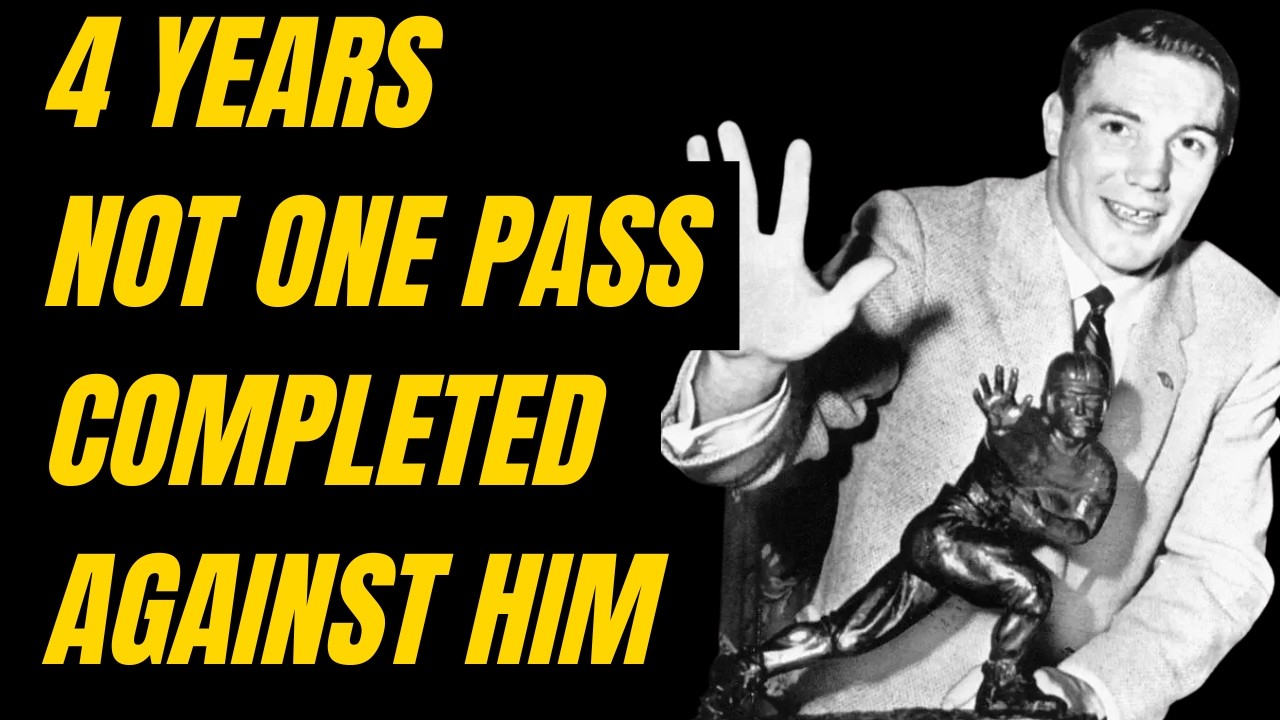
Roger Staubach arrived in Dallas in January 1964 as the most celebrated college quarterback in America. The 1963 Heisman Trophy winner had led Navy to a 9-1 record, scrambling defenses to pieces all season with a style that earned him the nickname Roger the Dodger. The Eastern football establishment was convinced he would dismantle a Texas team they had spent weeks publicly mocking. Pittsburgh writer Myron Cope called Texas the biggest fraud ever perpetrated on the football public and predicted Navy would win by three touchdowns.
What happened instead became one of the most remarkable games in Cotton Bowl history — and one of the most meaningful games in the history of college football.
A City Carrying Guilt
Dallas in late 1963 was a city in profound psychological distress. Six weeks had passed since President John F. Kennedy was assassinated on its streets, and the city could not shake a sense of collective guilt that defied rational explanation. A Sports Illustrated piece from January 1964 captured the mood precisely — Dallas could not accept the notion that it bore responsibility for the shooting, but neither could it understand why it felt responsible. One young woman flying back for the Cotton Bowl game admitted she had spent her entire Florida vacation without once revealing where she was from. She was ashamed, she said, but couldn’t fully explain why.
Into this atmosphere came the 1964 Cotton Bowl — number one Texas against number two Navy. For Dallas, the game carried weight that had nothing to do with football standings.
Navy’s Presence and What It Meant
Kennedy had been a Navy man. The Naval Academy’s football program held a special place in his heart. As people said at the time, the Army belonged to Eisenhower, but the Navy belonged to Kennedy. Navy’s decision to accept the Cotton Bowl invitation was itself a statement — one that required deliberate consideration. An Associated Press report noted that Navy faced pressure to accept, as a refusal might appear as a slight not just to Dallas but to President Johnson, a native Texan. The decision was ultimately left to the players themselves. They chose to come.
During game week, the Navy team traveled by bus to Dealey Plaza. They climbed the back stairs of the Texas School Book Depository and stood at the window where Lee Harvey Oswald had fired the shots that killed their biggest fan. They descended the stairs, marched to the sidewalk parallel to where Kennedy had fallen, knelt on the concrete with the grassy knoll to their right, and prayed. The visit provided little closure. It reminded them of everything they had lost.
The Game the Experts Got Wrong
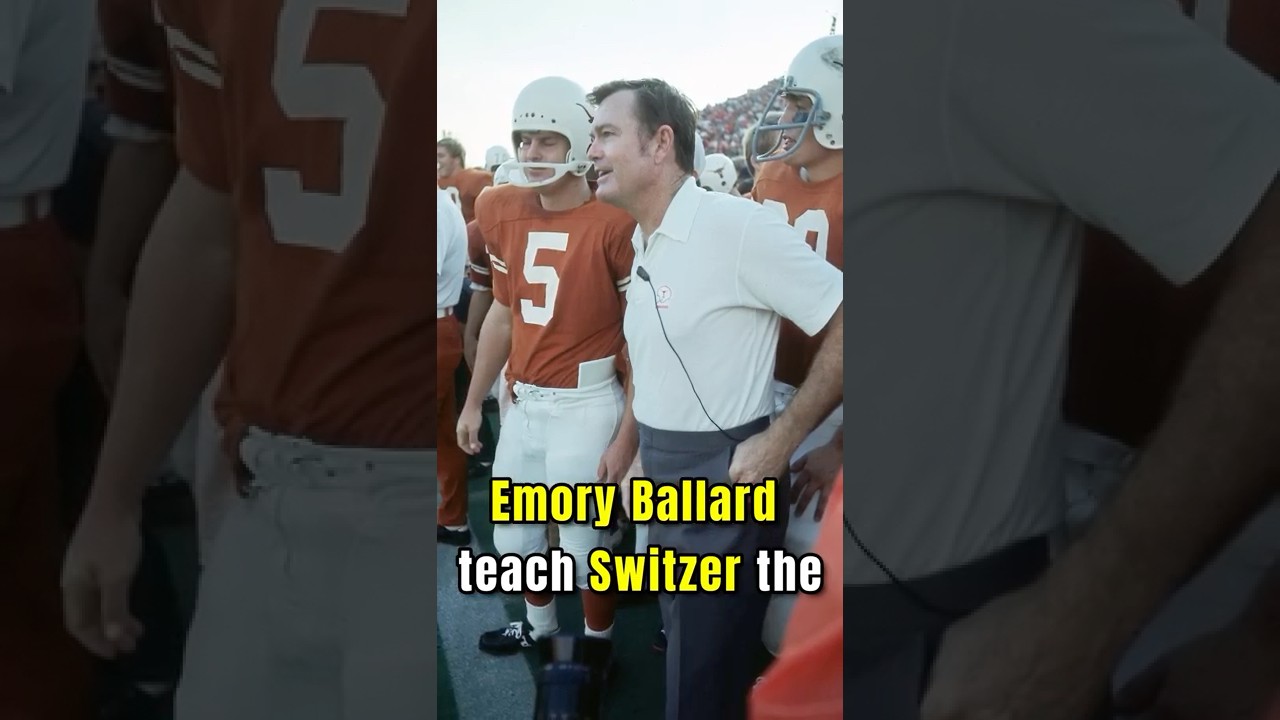
Texas coach Darrell Royal had spent the week quietly preparing a surprise. When Navy came out in a 6-1-4 defensive alignment with tight safeties, Royal saw an opportunity nobody had anticipated — including the Eastern writers who had spent weeks mocking Texas quarterback Duke Carlisle’s inability to throw the football. Carlisle hadn’t thrown a single touchdown pass all season. Royal sent word from the sideline to take to the air.
What followed was extraordinary. Carlisle’s first two passes went for touchdowns — identical 58 and 63-yard strikes to Phil Harris on counter flow plays. Harris outran Navy fullback Pat Donnelly on both plays. By game’s end, Carlisle had set a Cotton Bowl record with 267 yards of total offense, including 213 through the air. Phil Harris caught three passes for 157 yards and two touchdowns. The quarterback the Eastern press had ridiculed as a man who executed handoffs like a construction worker passing a plank to a carpenter had just put on one of the finest passing performances in Cotton Bowl history.
Staubach, meanwhile, was having the worst game of his college career. Royal had spent the entire week drilling his defense on Staubach’s scrambling — running quarterbacks in practice who mimicked his style, drilling pursuit angles, making sure every rusher had a trailing assignment whenever Staubach tried to escape. The strategy worked completely. Every time Staubach broke the pocket, he found a Texas defender in his path. He finished with minus 47 yards rushing. Navy’s offense, which had averaged over 31 points per game during the regular season, managed a single late touchdown in a 28-6 defeat. The final indignity was Navy finishing with minus 14 yards rushing as a team.
Outland Trophy winner Scott Appleton orchestrated the defensive performance, leading a unit that held Navy scoreless for 48 straight minutes. Staubach completed 21 passes — a Cotton Bowl record — but had nowhere to run and no way to change the outcome. They just took my head off all day long, he would recall years later.
The Critics Respond
The Eastern press reaction to Texas’s dominant performance was everything Royal’s players could have hoped for. Allison Danzig in the New York Times wrote that the 75,504 spectators could scarcely credit their eyes at the ease with which Texas handled Navy. Joe Trimble in the New York Daily News acknowledged that Eastern football had taken a genuine comeuppance and told readers that everybody better believe the eyes of Texas now.
Myron Cope — the man who had called Texas a fraud and predicted a three-touchdown Navy victory — admitted after the game that his phone had been ringing constantly. Most of the calls were friendly, he said. He couldn’t open his mouth. His foot was in it.
Texas claimed its first national championship. The Longhorns had gone undefeated, silenced every critic, and done it in the most unexpected way possible — by throwing the football in a game where nobody thought they could.
Dallas Gets Its Voice Back
The Sports Illustrated piece that had so vividly captured Dallas’s post-assassination guilt ended on a different note after the final whistle. Outside the Baker Hotel, a man in an orange tie stood on the sidewalk with his fist raised. Three cheers for Darrell, he said. Go Duke. Three cheers for Dallas.
At least some of the doubt had lifted. A Texas national championship, won in Dallas, against a Navy team that carried the memory of a slain president — it couldn’t undo what had happened on November 22nd. Nothing could. But it gave a wounded city something to celebrate on a January afternoon, and sometimes that’s exactly what a city needs.
The 1964 Cotton Bowl is one of the great untold stories in college football history. Roger Staubach lost the game. Texas won its first title. Dallas found a reason to cheer. And a president who never got to see it had already told everyone exactly how he felt about the matchup — he just never got the chance to deliver the line.
Hardcore College Football History covers the forgotten stories and foundational moments that shaped college football. Subscribe for more documentary-style deep dives into the history of the game.