
On New Year’s Day 1957, 97,126 people packed the Rose Bowl to watch Iowa take apart Oregon State 35-19. Ken Ploen ran 49 yards for the first touchdown, completed nine of 10 passes and walked off as the game’s most valuable player. It was the first bowl game Iowa had ever played. The offense that got the Hawkeyes there was the Wing-T, and Iowa had been running it for less than a year.
Nine months earlier, nobody saw this coming. Iowa had gone 3-5-1 the season before. Preseason magazines picked the Hawkeyes seventh in the Big Ten. Forest Evashevski’s offense had sputtered, and his quarterback did not fit the split-T most of the country was running. So on April 5, 1956, Evashevski gathered his players and walked them through a brand-new offense. Four days later they were scrimmaging it.
Evashevski never claimed he invented it. He told anyone who asked that it belonged to Dave Nelson.
A Center Problem in Maine
In 1949, Nelson’s Maine Black Bears shared the Yankee Conference title with Connecticut. His single wing had gone 16-4 over three seasons. Then Maine lost its last three games.
Nelson spent the offseason studying his roster, and he did not like what he saw. The single wing used an unbalanced line, so the formation decided who played. The third-best player on the team stood on the sideline because the scheme had no spot for him. Nelson had no tailback who could both run and throw. His center, who had to snap the ball several yards back on every play, was not returning.
The center bothered him most. In 1948 Nelson had coached the backfield at Harvard. He watched a close Harvard-Princeton game come apart after Princeton sent in a substitute center. Three bad snaps later, the game was a rout.
So in September 1950, days before fall practice, Nelson threw out an offense that had won 16 of 20 games. He put the quarterback under center, where the snap became a short exchange. He kept the line blocking his players already knew. He borrowed trap plays from Army and Dartmouth. The angles, the double teams and the pulling guards all stayed. Maine threw the ball only 32 times that fall and went 5-1-1.
Nelson left out one play, and he regretted it. At Harvard he had watched a Dartmouth quarterback fake a handoff, hide the ball on his hip and slip around the opposite end. Years later Nelson called leaving that bootleg out a serious oversight.
Nelson always named two men on that Maine staff as co-originators of the offense: Mike Lude and Harold Westerman. A few years later another Michigan man joined the group. His name was Harold Raymond, and everybody called him Tubby.
How the Wing-T Got Its Wing
Nelson took the Delaware job in 1951 and brought the offense with him. That first year, the experiment became a system.
He moved one of the three deep backs up and out, just outside the end. From that wing spot, a back could block down on a defensive end, run a reverse or slip into a pass route. Defenses now had to account for three threats from one position before the snap.
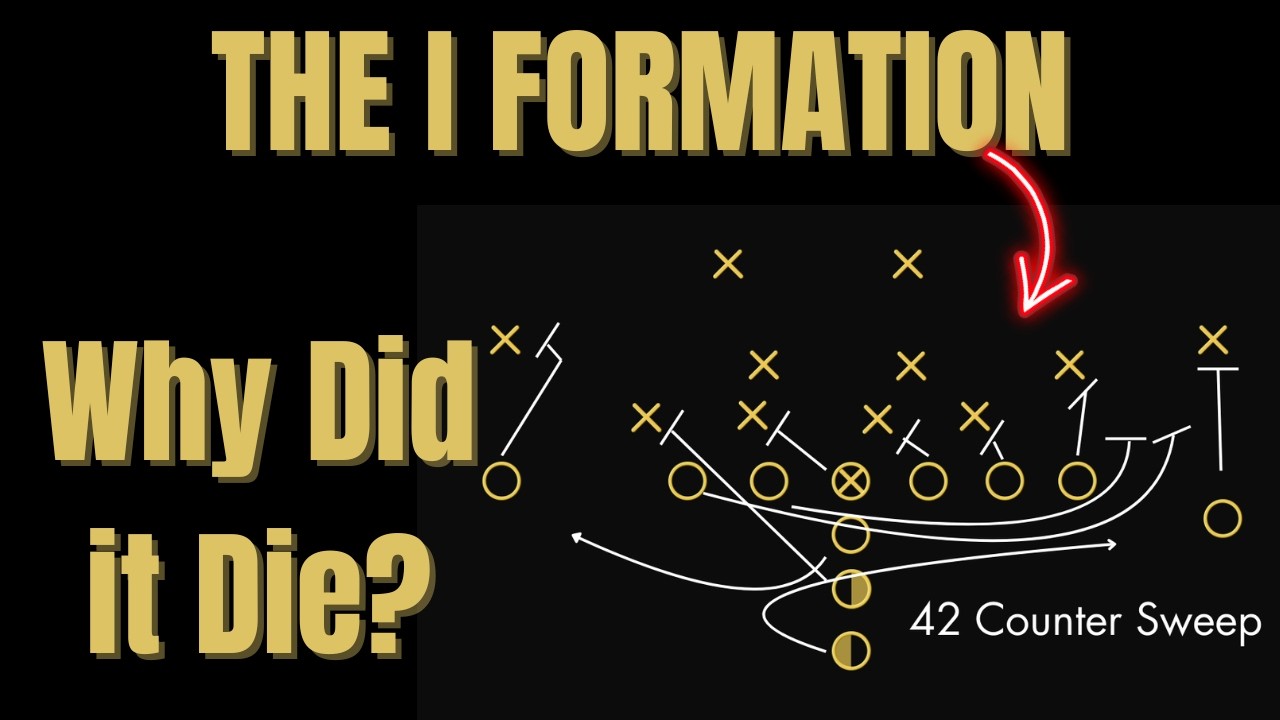
With the wing in place, Nelson rebuilt the best running play of the single wing, the power sweep. The fullback dove into the line. The quarterback reversed out and handed to the halfback. Both guards pulled and led him outside. Delaware called it 21. Everyone else eventually called it the buck sweep.
Then came the bootleg. The quarterback faked the sweep, hid the ball and ran the other way with the choice to run or throw. Over the years Nelson’s teams completed 57 of 85 bootleg passes for 17 touchdowns. He liked to say the play needed a great faker more than a great passer.
That idea held the whole offense together. Nelson and Westerman designed it in series, groups of plays that all began with the same first steps. A linebacker who guessed sweep got trapped. An end who squeezed down on the trap got beat around the corner. An end who chased the halfback watched the quarterback jog past with the ball on his hip.
In 1953 the NCAA abolished free substitution, and the two-platoon era ended overnight. Big programs stocked with specialists suddenly needed players who could go both ways. Nelson’s system needed about 18 good players, and size was the last thing he looked for. In 1955 Delaware went 8-1 with only two regulars back.
Nelson called the result a multiple offense disguised as a single offense. By his estimate it was about 80 percent single wing and 20 percent T.
Iowa, LSU and the 1958 Split
Evashevski had been Tom Harmon’s blocking back at Michigan, with Nelson beside him in the backfield. When Evashevski studied his 1956 roster, he found quick guards, big tackles who weren’t nimble and a backfield full of fast runners. Ploen was a natural ball handler but not a split-T option quarterback. The Wing-T fit almost perfectly.
Iowa built its new offense around the bootleg. In November the Hawkeyes shut out Minnesota 7-0. On November 17, Ohio State came to Iowa City riding a 17-game Big Ten winning streak. Iowa held Woody Hayes’s offense to 147 rushing yards and won 6-0 on a 17-yard touchdown pass from Ploen to end Jim Gibbons. The win clinched Iowa’s first Big Ten title since 1922. Two weeks later, Iowa beat Notre Dame 48-8.
Hayes did not forget. In 1957, Ohio State beat Iowa 17-13 in Columbus. In 1958, Iowa went 8-1-1 behind quarterback Randy Duncan and halfback Bob Jeter, losing only a 38-28 shootout to the Buckeyes. In the 1959 Rose Bowl, Jeter ran for a record 194 yards and Iowa beat California 38-12. The Football Writers Association named Iowa national champion.
The AP and coaches polls picked LSU, and LSU ran a version of the Wing-T too. Paul Dietzel split his roster into three units, including a defensive group of non-starters he called the Chinese Bandits. Billy Cannon and Johnny Robinson ran behind the offense. LSU went 11-0, beating Alabama 13-3 in Bear Bryant’s first game as Crimson Tide coach and Clemson 7-0 in the Sugar Bowl.
An offense born at a small school in Maine now held a share of two national titles in the same season.
When Defenses Caught Up
Success brings film study. Defensive coaches learned to crowd the Wing-T’s tight formations, slant their linemen and shoot linebackers through gaps before the guards could pull. Ends started staying home on the bootleg.
Nelson and Evashevski wrote that the initiative in football belongs to the defense. Their answer was to keep moving. They split receivers wide, flipped the strength of the formation from play to play and tightened line splits to about a foot. They added draws, screens and crossbuck counters. Darrell Royal won the 1963 national title at Texas running the Wing-T.
The most lasting addition was a new bootleg. On the waggle, both guards pulled with the quarterback toward the weak side. An end who waited for the quarterback now found a guard coming at him. Delaware also added a play called Sally, named for the fan dancer Sally Rand, and switched to a non-rhythmic snap count.
Tubby Raymond’s Delaware Wing-T
Nelson became Delaware’s athletic director in 1966, and Raymond took over. He had drawn most of the diagrams in Nelson’s books. Over 36 years he kept adding to the system until it was as much his as Nelson’s.
In 1968 he moved the waggle into the buck sweep series. The quarterback faked the sweep one way and came back the other with both guards in front. 129 Waggle became the signature pass play of the Delaware Wing-T.
Delaware led the nation’s small colleges in rushing in 1968, 1970 and 1971. The 1971 team averaged more than 515 yards a game and was voted small college national champion. The 1972 team went 10-0, beating Villanova 14-7 on the rainiest day of the season. Then the players voted to skip a fifth straight Boardwalk Bowl. Quarterback Scott Reihm later said the heart of the offense was deception.
By the late 1970s, Raymond split an end 12 to 15 yards wide and moved his strength around with shifts and motion. In 1978 he added the trap option. The 1979 team scored 546 points and won a 51-45 shootout at Youngstown State. A month later, Delaware beat the Penguins again, 38-21 in Albuquerque, for the Division II national championship. Rich Gannon ran the offense in the 1980s and became NFL MVP in 2002.
For years Raymond refused to run the triple option. He did not think he had the practice time. By the 1990s, faster defenses forced his hand, and the inside veer took about 30 percent of practice. His late-1990s teams lined up unbalanced on about 65 percent of snaps. That was the same line that drove Nelson away from the single wing. Raymond and Ted Kempski wrote that it could just as easily be called the Delaware option.
On November 10, 2001, Delaware beat Richmond 10-6 for Raymond’s 300th win. He retired the following February.
The Wing-T Today
Almost everything changed over that half century: the formations, the sweep blocking, the snap count, the option. A few things held. The quarterback threatened the corner on nearly every snap. All three backs carried, faked and blocked. Every play was built to look like another play.
The Wing-T still runs on high school fields across the country, usually for coaches with small rosters and undersized linemen. It also climbed back into the college game. Gus Malzahn started as an Arkansas high school coach with a copy of Raymond’s book, The Delaware Wing-T: An Order of Football, and ran it word for word. He later moved to the shotgun and a no-huddle pace, but the buck sweep stayed at the core. Malzahn called plays for Auburn’s 2010 national champions. As head coach in 2013, he rode Tre Mason and the buck sweep to an SEC title.
Any spread offense that fakes a handoff one way while the quarterback rolls the other, with both guards pulling in front of him, is running a play Delaware installed in 1968.
If you played the Wing-T, or had to stop the buck sweep or the waggle on a Friday night, tell me in the comments what position you played and what your coaches called these plays.