
Explore Videos by:

Play Video

Related Videos

Prelude to Disaster: College Football’s Brutal Decade Before the 1905 Crisis (1895–1904)

The years 1895 to 1904 in college football history was a period marked in chaos and fight for control as college football continued to evolve into the game we love today.
Show More

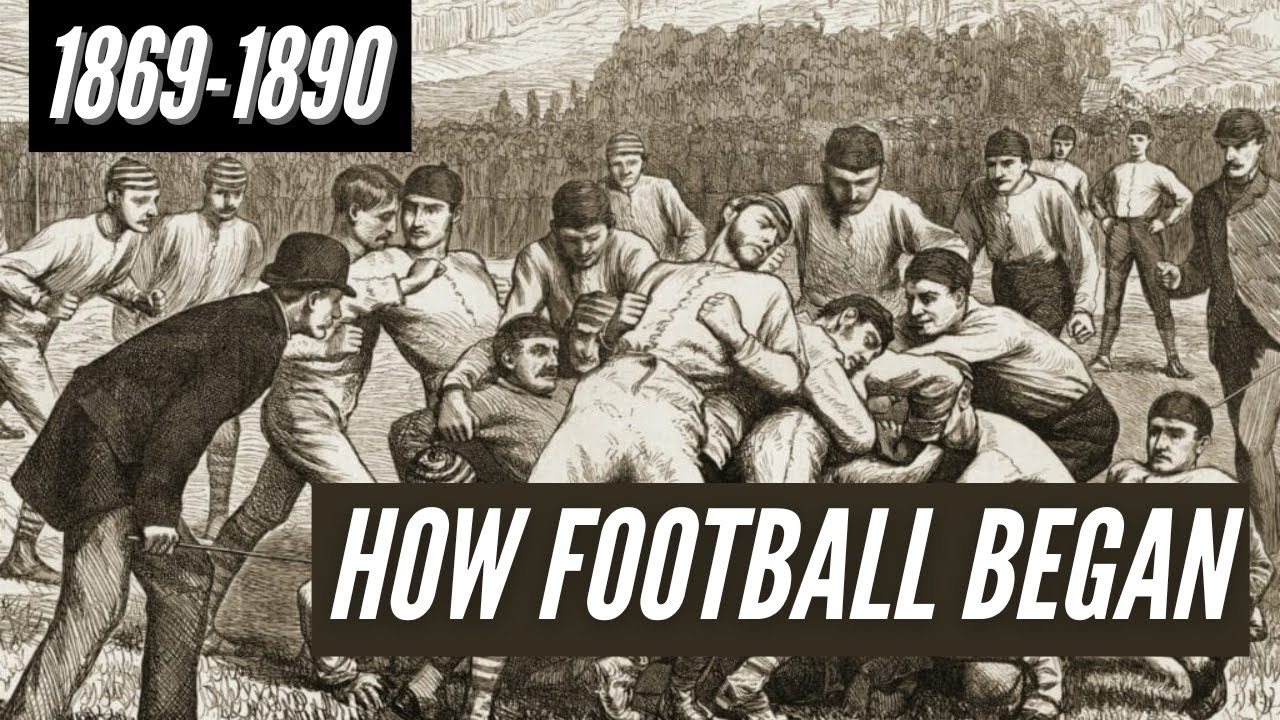
American football had survived its first great crisis. The flying wedge was gone. The Hampden Park bloodbath had shocked the nation. Rule changes had been promised. And yet, as the 1895 season kicked off, nothing had fundamentally changed. The mass plays remained. The violence remained. The governing chaos remained. And the forces that would produce the 1905 football crisis were already quietly assembling, season by season, injury by injury, death by death.

The history of American football between 1895 and 1904 is not a story of progress. It is a story of willful blindness — of a sport’s most powerful institutions convincing themselves that the problem was manageable, that the critics would tire, and that the game they loved could survive on its own terms without serious reform. They were wrong.

Why Was the Game So Violent?

To understand why early football violence reached such catastrophic levels in this period, you have to understand the conditions under which the game was played. There were no substitutions unless a player was seriously injured — and players played both offense and defense. There was no forward pass, which meant no incomplete passes to pause the action and give exhausted players a moment to breathe. There was no clear rule defining when the ball was dead. Players were expected to call themselves down, but in the chaos of a mass pile, a player who hadn’t called down was technically still in play — free to crawl for extra yards while defenders piled on to stop him.

Historian Park Davis recorded one such play from a 1903 game between Amherst and Harvard, in which a ball carrier dove for the ball and then crawled seven yards for a touchdown with a mountain of players on top of him. A Boston Globe account from the same year described players being pushed and pulled for 20 yards on a single carry, seemingly stopped but dragged forward by teammates until the defense simply couldn’t hold them anymore. This wasn’t football as we know it. It was something closer to organized combat with vague rules and overwhelmed officials.

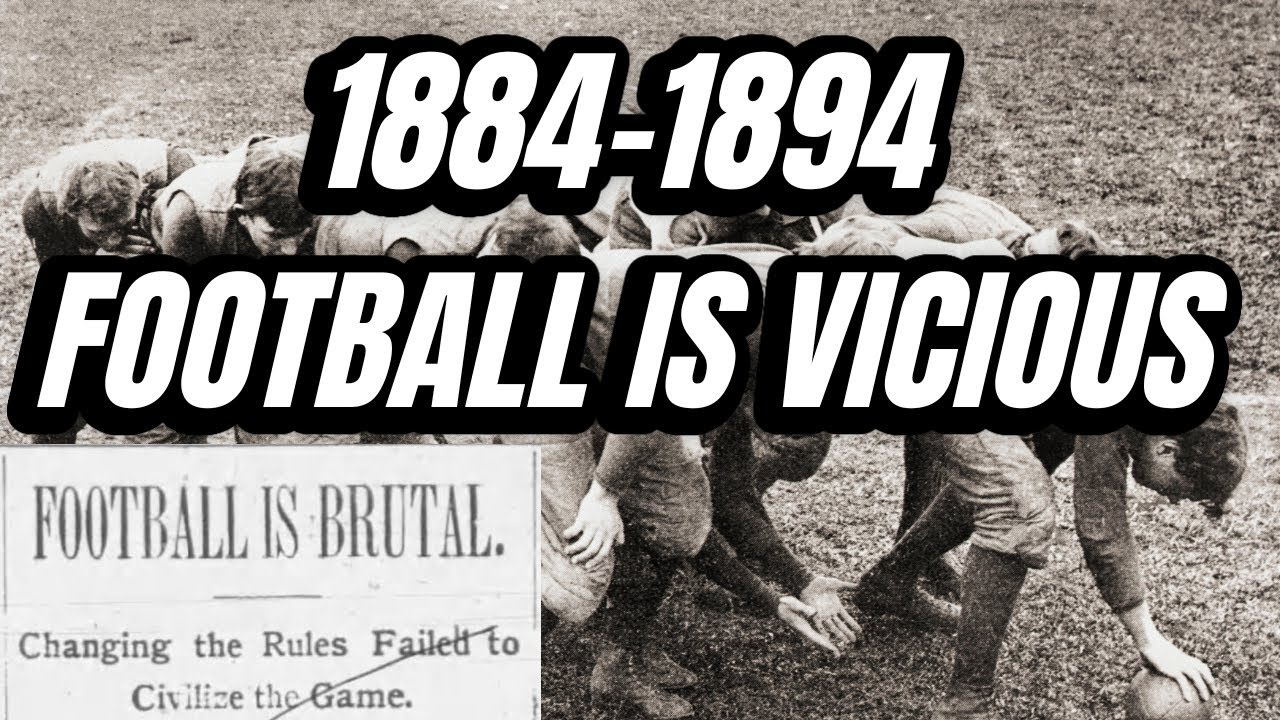
There was also no neutral zone on the line of scrimmage. Offensive and defensive linemen lined up brow to brow, and newspaper accounts regularly described the first moment of a play as little more than two lines of men beginning to slug each other. One account reported that 20 minutes of a 60-minute game he witnessed consisted entirely of fighting between two opposing linemen. Officials, meanwhile, were deeply reluctant to call penalties against home teams — because doing so might get them banned from officiating future games.

The Critics Grow Louder

Harvard president Charles Elliott had been railing against college football since the early 1890s, and he showed no signs of stopping. He attacked the game on multiple fronts: it distracted students from academic pursuits, it generated gate receipts that made money the driving force behind education, it produced what he called an unwholesome desire for victory, and it caused sprains, broken bones, concussions, and lost teeth at a rate he found unconscionable. In March 1903, Harvard’s faculty came within striking distance of abolishing the sport entirely — stopped only by the intervention of Professor Ira Hollis, who argued that reform, not abolition, was the answer.

The media piled on with a particular kind of dry, withering sarcasm. A 1904 piece in the Honolulu Advertiser described a player knocked unconscious, carried to the sideline on a board, and eventually hauled away in a patrol wagon — while thousands of spectators, including hundreds of women, stood by without reaction. The writer noted acidly that had the same incident occurred at a boxing match, everyone involved would have been arrested. A Puck Magazine illustration from 1899 captured the public mood perfectly: a mother horrified by a player crushed at the bottom of a pile is reassured by her football-enthusiast daughter that he doesn’t mind — he’s unconscious by this time.

The Defense of Football

Football’s defenders were just as vocal. Walter Camp, the father of American football, published Football Facts and Figures, a survey of former players that was, by any honest measure, a propaganda piece — but an effective one. Frederick Remington, the famous painter of the American West, contributed a letter dismissing critics as namby-pamby and urging anyone who didn’t like football to take up the card game Whist instead. A University of Illinois professor named Edwin Dexter conducted a survey of 58 colleges covering ten years of play and concluded that only about two percent of football players were injured seriously enough to miss class. The study was published widely and briefly quieted the most vocal critics.

But the Dexter study’s methodology was already being questioned before the ink was dry, and when the 1905 football crisis exploded, it was never seriously invoked in football’s defense. It had served its short-term purpose and nothing more.

Chaos in the Rules, Chaos on the Field

The governing structure of college football during this period was, to put it generously, a disaster. The 1895 season was played under as many as three different sets of rules simultaneously, because the rules committee had fractured along the fault line between schools that wanted to abolish mass plays entirely — Yale and Princeton — and those that wanted to keep them — Harvard, Penn, and Cornell. The outcry from schools outside the Big Four was so intense that the major programs were eventually forced back to the table, where they eliminated momentum plays but left the mass plays themselves untouched.

The pattern repeated throughout the decade. Rule changes were made — in 1903, for example, seven players were required to be on the line of scrimmage, though only in the middle of the field, with that number dropping to five near the goal line. But the changes were always incremental, always partial, always carefully designed to preserve the fundamental nature of the game as the Big Four understood it. The schools in what was then called the West — Chicago, Michigan, and others — were growing in football power and resenting Eastern control more with each passing season. The fault lines were everywhere.

The Disaster Arrives

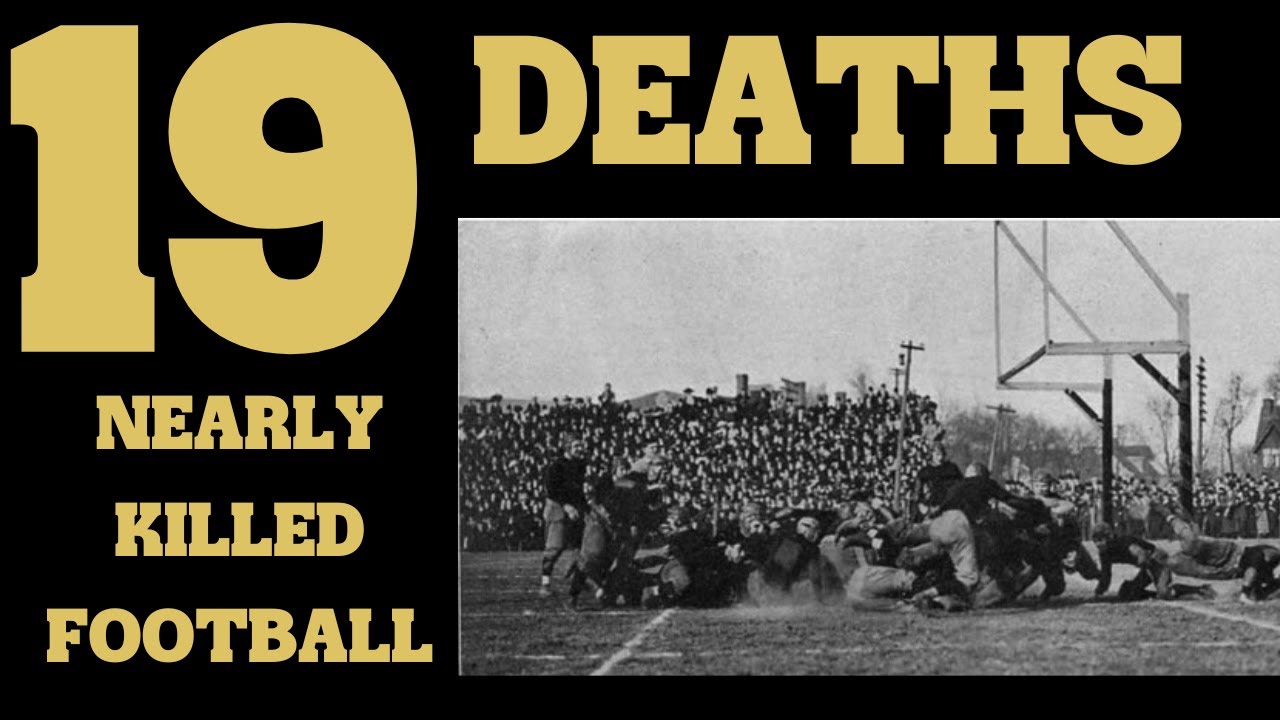
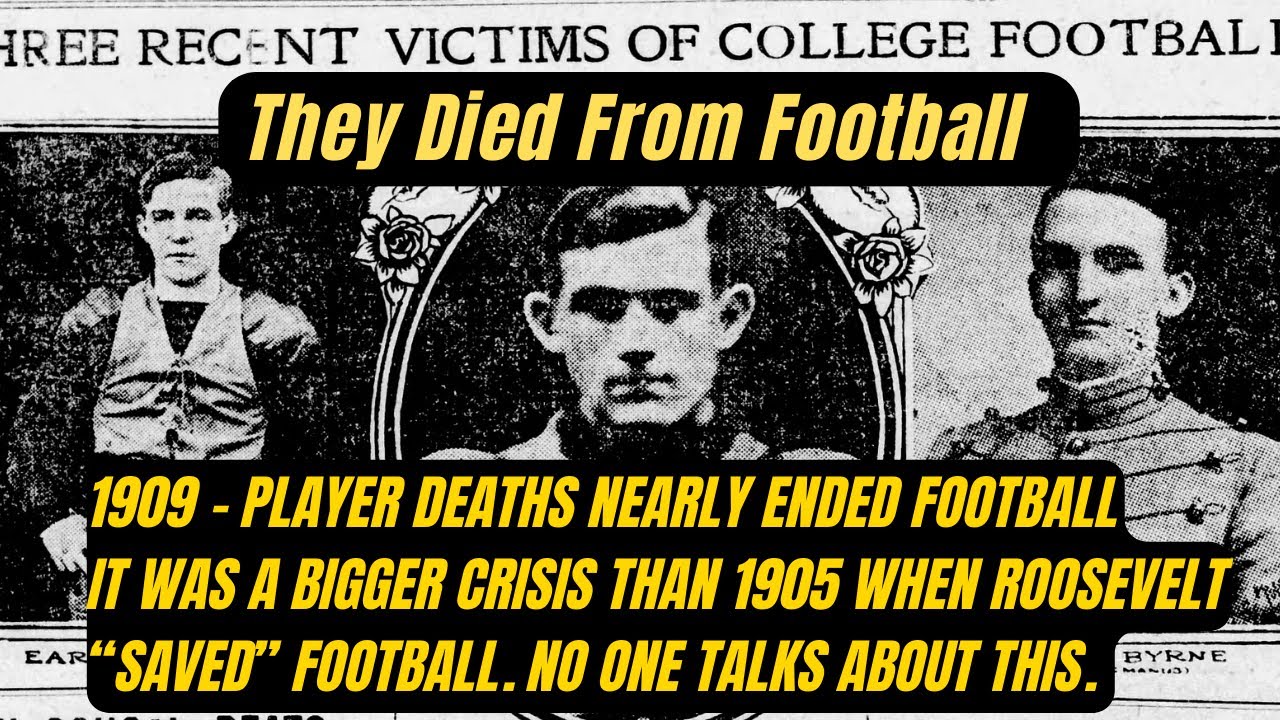
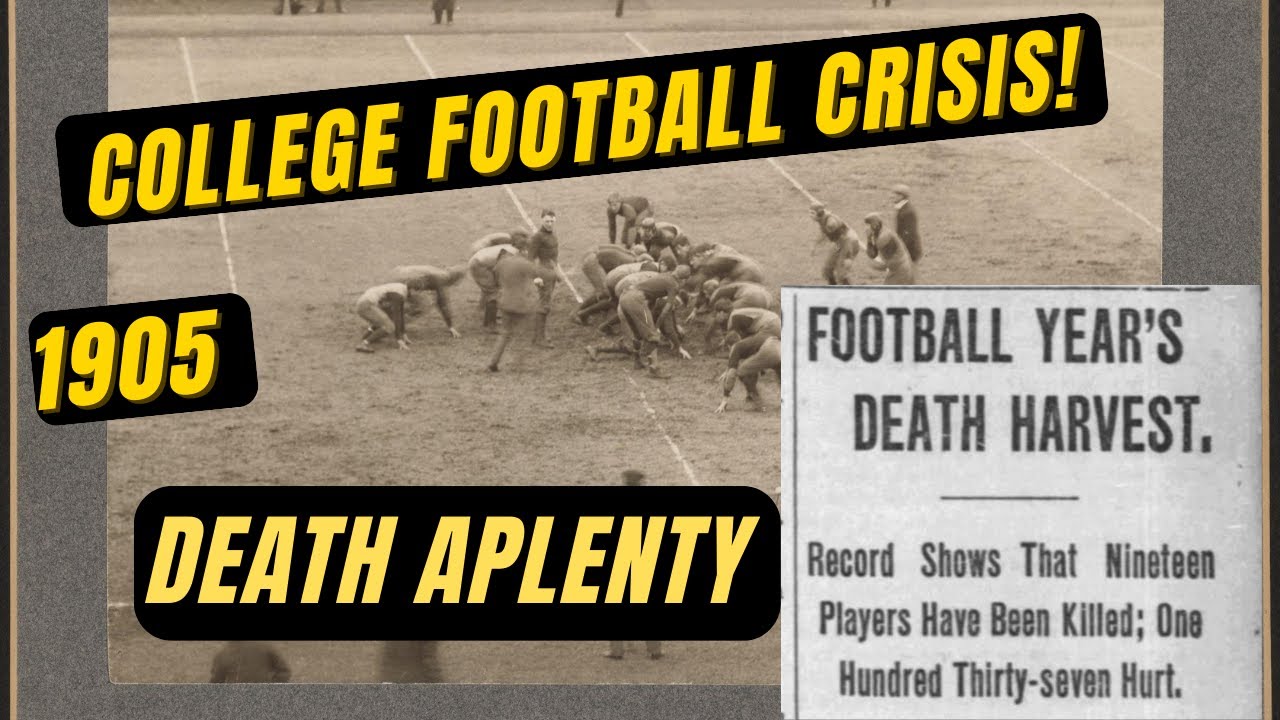
None of it was enough. At the end of the 1905 season, the Chicago Tribune published an article under the headline “Death Harvest,” reporting that 18 players had died playing football that year while 137 more had been seriously injured. The 1905 football crisis had arrived — and a decade of half-measures, propaganda, and institutional denial had left the sport with no credible defense.

The story of what happened next — including the intervention of President Theodore Roosevelt himself — is one of the most dramatic chapters in the history of American football. That’s the subject of the next video.

Hardcore College Football History covers the forgotten stories and foundational moments that shaped college football. Subscribe for more documentary-style deep dives into the history of the game.
American football had survived its first great crisis. The flying wedge was gone. The Hampden Park bloodbath had shocked the nation. Rule changes had been promised. And yet, as the 1895 season kicked off, nothing had fundamentally changed. The mass plays remained. The violence remained. The governing chaos remained. And the forces that would produce the 1905 football crisis were already quietly assembling, season by season, injury by injury, death by death.

The history of American football between 1895 and 1904 is not a story of progress. It is a story of willful blindness — of a sport’s most powerful institutions convincing themselves that the problem was manageable, that the critics would tire, and that the game they loved could survive on its own terms without serious reform. They were wrong.

Why Was the Game So Violent?

To understand why early football violence reached such catastrophic levels in this period, you have to understand the conditions under which the game was played. There were no substitutions unless a player was seriously injured — and players played both offense and defense. There was no forward pass, which meant no incomplete passes to pause the action and give exhausted players a moment to breathe. There was no clear rule defining when the ball was dead. Players were expected to call themselves down, but in the chaos of a mass pile, a player who hadn’t called down was technically still in play — free to crawl for extra yards while defenders piled on to stop him.

Historian Park Davis recorded one such play from a 1903 game between Amherst and Harvard, in which a ball carrier dove for the ball and then crawled seven yards for a touchdown with a mountain of players on top of him. A Boston Globe account from the same year described players being pushed and pulled for 20 yards on a single carry, seemingly stopped but dragged forward by teammates until the defense simply couldn’t hold them anymore. This wasn’t football as we know it. It was something closer to organized combat with vague rules and overwhelmed officials.

There was also no neutral zone on the line of scrimmage. Offensive and defensive linemen lined up brow to brow, and newspaper accounts regularly described the first moment of a play as little more than two lines of men beginning to slug each other. One account reported that 20 minutes of a 60-minute game he witnessed consisted entirely of fighting between two opposing linemen. Officials, meanwhile, were deeply reluctant to call penalties against home teams — because doing so might get them banned from officiating future games.

The Critics Grow Louder

Harvard president Charles Elliott had been railing against college football since the early 1890s, and he showed no signs of stopping. He attacked the game on multiple fronts: it distracted students from academic pursuits, it generated gate receipts that made money the driving force behind education, it produced what he called an unwholesome desire for victory, and it caused sprains, broken bones, concussions, and lost teeth at a rate he found unconscionable. In March 1903, Harvard’s faculty came within striking distance of abolishing the sport entirely — stopped only by the intervention of Professor Ira Hollis, who argued that reform, not abolition, was the answer.

The media piled on with a particular kind of dry, withering sarcasm. A 1904 piece in the Honolulu Advertiser described a player knocked unconscious, carried to the sideline on a board, and eventually hauled away in a patrol wagon — while thousands of spectators, including hundreds of women, stood by without reaction. The writer noted acidly that had the same incident occurred at a boxing match, everyone involved would have been arrested. A Puck Magazine illustration from 1899 captured the public mood perfectly: a mother horrified by a player crushed at the bottom of a pile is reassured by her football-enthusiast daughter that he doesn’t mind — he’s unconscious by this time.

The Defense of Football

Football’s defenders were just as vocal. Walter Camp, the father of American football, published Football Facts and Figures, a survey of former players that was, by any honest measure, a propaganda piece — but an effective one. Frederick Remington, the famous painter of the American West, contributed a letter dismissing critics as namby-pamby and urging anyone who didn’t like football to take up the card game Whist instead. A University of Illinois professor named Edwin Dexter conducted a survey of 58 colleges covering ten years of play and concluded that only about two percent of football players were injured seriously enough to miss class. The study was published widely and briefly quieted the most vocal critics.

But the Dexter study’s methodology was already being questioned before the ink was dry, and when the 1905 football crisis exploded, it was never seriously invoked in football’s defense. It had served its short-term purpose and nothing more.

Chaos in the Rules, Chaos on the Field

The governing structure of college football during this period was, to put it generously, a disaster. The 1895 season was played under as many as three different sets of rules simultaneously, because the rules committee had fractured along the fault line between schools that wanted to abolish mass plays entirely — Yale and Princeton — and those that wanted to keep them — Harvard, Penn, and Cornell. The outcry from schools outside the Big Four was so intense that the major programs were eventually forced back to the table, where they eliminated momentum plays but left the mass plays themselves untouched.

The pattern repeated throughout the decade. Rule changes were made — in 1903, for example, seven players were required to be on the line of scrimmage, though only in the middle of the field, with that number dropping to five near the goal line. But the changes were always incremental, always partial, always carefully designed to preserve the fundamental nature of the game as the Big Four understood it. The schools in what was then called the West — Chicago, Michigan, and others — were growing in football power and resenting Eastern control more with each passing season. The fault lines were everywhere.

The Disaster Arrives

None of it was enough. At the end of the 1905 season, the Chicago Tribune published an article under the headline “Death Harvest,” reporting that 18 players had died playing football that year while 137 more had been seriously injured. The 1905 football crisis had arrived — and a decade of half-measures, propaganda, and institutional denial had left the sport with no credible defense.

The story of what happened next — including the intervention of President Theodore Roosevelt himself — is one of the most dramatic chapters in the history of American football. That’s the subject of the next video.

Hardcore College Football History covers the forgotten stories and foundational moments that shaped college football. Subscribe for more documentary-style deep dives into the history of the game.

Leave a Reply

Your email address will not be published. Required fields are marked *