
Explore Videos by:

Play Video

Related Videos

The Birth of the Aerial Era: How the Forward Pass Survived 1907 and 1908

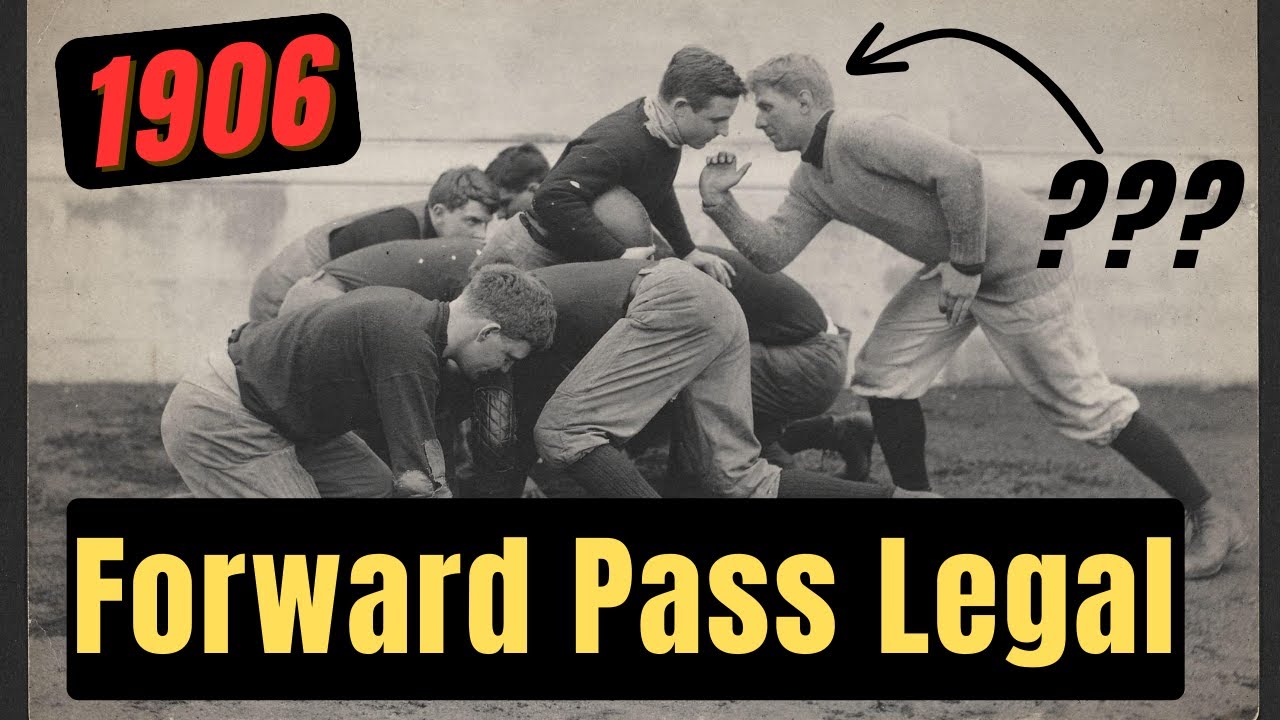
The forward pass was legalized in college football before the 1906 season.
Show More

The forward pass was legal. Nobody cared.

That’s the short version of what happened in the immediate aftermath of the 1906 rules changes. The most revolutionary rule in the history of American football had been written into the books, and the coaches who ran the sport’s most powerful programs looked at it the way established institutions always look at disruptive ideas — with suspicion, dismissal, and a firm preference for the way things had always been done. The forward pass was a gimmick. A desperation play. Something you might try if you were overmatched and had nothing to lose.

Then a small Catholic university in St. Louis and a Native American boarding school in rural Pennsylvania spent the next two years proving all of them wrong.

The First Pass

The forward pass history question of who threw first is one of those arguments that football historians have been having for over a century, and it isn’t entirely settled. Walter Camp may have thrown an illegal forward pass in the 1876 Yale-Princeton game while being tackled, flinging the ball to a teammate who scored — a play the referee allowed to stand after flipping a coin. John Heisman, for whom the famous trophy is named, claimed to have witnessed a forward pass in the 1895 Georgia-North Carolina game that was also illegal and also allowed to stand by a referee who said he simply hadn’t seen it.

The first legal forward pass is generally credited to Bradbury Robinson, a quarterback and halfback for St. Louis University, who threw one on September 5, 1906 in a game against Carroll College. His first attempt was incomplete — and under the rules of that year, an incomplete pass was a turnover, so the other team got the ball. Robinson completed a pass later in the game, throwing 20 yards to Jack Snyder, who caught it, noticed he was completely alone, and ran into the end zone. St. Louis won 22-0.

That same season, Yale beat Harvard using a 30-yard forward pass to reach the three-yard line, then scored on the next play. It should have sent a message to every major program in the country. Instead, most coaches filed it away as a curiosity and went back to their mass play systems.

Eddie Cochems and the Wright Brothers of the Forward Pass

The coach who came closest to truly understanding what the forward pass could be in 1906 was Eddie Cochems of St. Louis University. Historian David M. Nelson compared Cochems to the Wright brothers and Thomas Edison — a man who saw the future of the game clearly while everyone around him was still looking at the past. Cochems believed that coaches in his region, away from the Eastern establishment that had controlled football’s rules and culture for three decades, were more open to the possibilities of the new passing game.

His results backed that up. St. Louis won 39-0 in one game, completing 8 of 10 passes and averaging 20 yards per completion. Playing an Iowa team that had beaten them 31-10 the previous year, Cochems used the forward pass to devastating effect, building an offense that nobody in the Midwest had seen before. Amos Alonzo Stagg, the famous University of Chicago coach, later tried to minimize Cochems’ contributions to forward pass history. The more you read about Stagg, the more he sounds like a man constitutionally opposed to giving credit to anyone else for anything.

Carlisle 1907: The Season That Should Have Changed Everything

If Cochems was the theorist of the forward pass, Pop Warner and the Carlisle Indian Industrial School were its most spectacular practitioners. Carlisle had been founded in 1879 as the first federally funded off-reservation boarding school for Native Americans — an institution with a deeply complicated and troubling history, built on a philosophy of forced assimilation. On the football field, however, Carlisle was something else entirely: a small, underfunded school that year after year found ways to beat programs with vastly more resources, more players, and more institutional support.

In 1907, Warner’s team didn’t just use the forward pass. They weaponized it. Against Penn — one of the premier programs in the nation, previously unscored upon that season — Carlisle completed 8 of 16 passes, gained 402 yards to Penn’s 76, and won 26-6. Against Minnesota, one of the dominant teams in what was then called the West, Carlisle won 12-10 on two touchdowns that came after long runs following pass completions. Against Harvard, they won 23-15 on four touchdown passes ranging from 5 to 30 yards. Against Amos Alonzo Stagg’s University of Chicago team, they won 18-5.

Carlisle finished 1907 at 10-1, outscoring opponents 267-62. Their only loss came against a Princeton team on a muddy field — a Princeton team that had specifically studied Carlisle’s passing attack and devised a defensive strategy to stop it. Which brings us to the problem.

The Forward Pass is Doomed — Or Is It?

On November 10, 1907, the New York Times published a piece under the headline “The Forward Pass Doomed, Says Expert.” In hindsight, knowing what the forward pass became, the headline reads as absurd. But the expert making the case wasn’t entirely wrong about the immediate situation.

The problem was a rules loophole that threatened to strangle the passing game in its infancy. Under the 1906 and 1907 rules, only the two players at the ends of the offensive line — essentially tight ends — were eligible to catch a forward pass. The rules committee had also determined that when a foul occurred on a play where a forward pass was either illegally thrown or incomplete, the forward pass penalty superseded all other penalties. The result was that defensive players could simply grab and hold the eligible receivers, preventing them from getting anywhere near the ball, and face no meaningful punishment for doing so. The pass would fall incomplete, the offense would lose yardage, and the defense would suffer no consequences for what amounted to legalized interference.

Princeton had figured this out before their game against Carlisle and used it ruthlessly. Every eligible receiver was covered by a Princeton defender who was free to grab and hold him by any means necessary. The forward pass had a fatal design flaw, and the expert in the Times was right that it couldn’t survive in that form.

The Rule That Saved the Aerial Game

In 1908, the rules committee addressed the loophole with the first rule resembling what we now call pass interference. While the ball was in the air on a forward pass, defensive players could not use their hands or arms on eligible receivers except to push them aside while going for the ball themselves. Neither side could hold or tackle a player who did not have the ball. It was a narrow, imperfect rule — but it was enough to keep the passing game viable.

What it couldn’t fix was the larger problem developing on the field. Because the threat of the forward pass now forced defensive secondaries to play deeper, the tackle position on the defensive line was being left increasingly exposed. Teams — particularly the powerful Eastern programs — began faking passes to hold the secondary back, then running mass plays directly at the isolated tackle. The pushing and pulling of ball carriers that the 1906 rules had failed to eliminate was back in full force. The forward pass had opened up the game in one direction and inadvertently closed it in another.

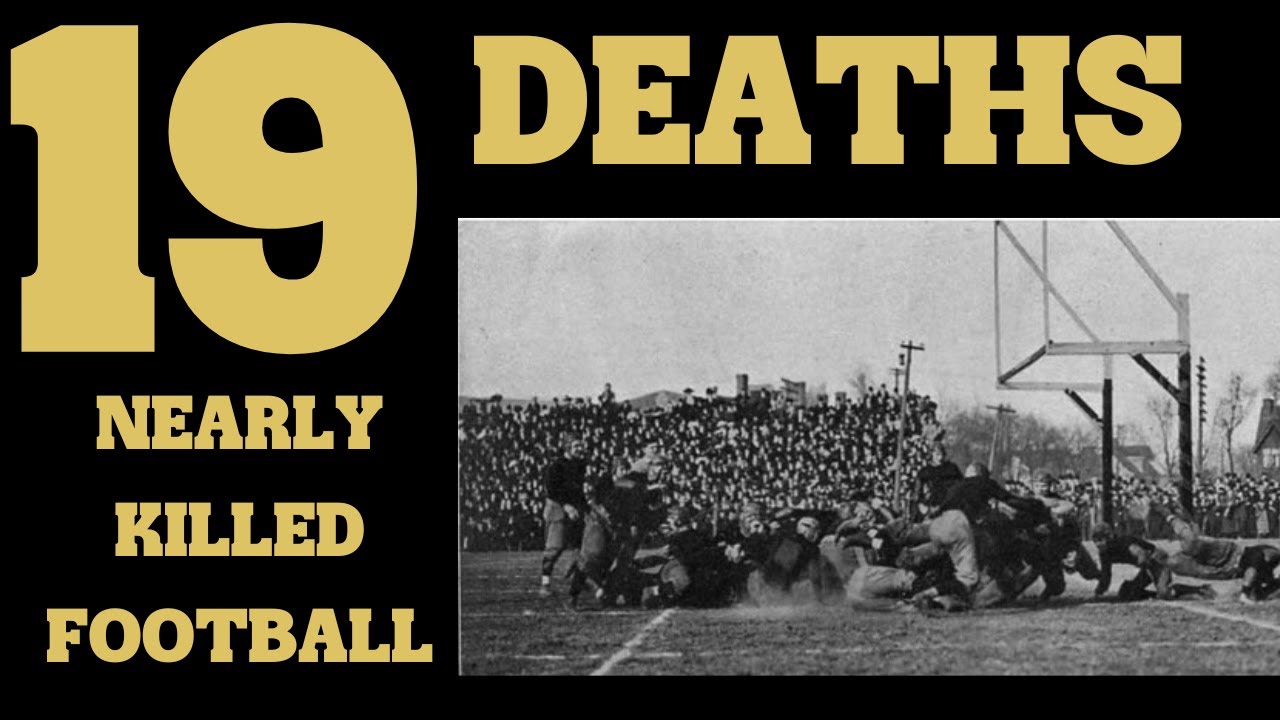
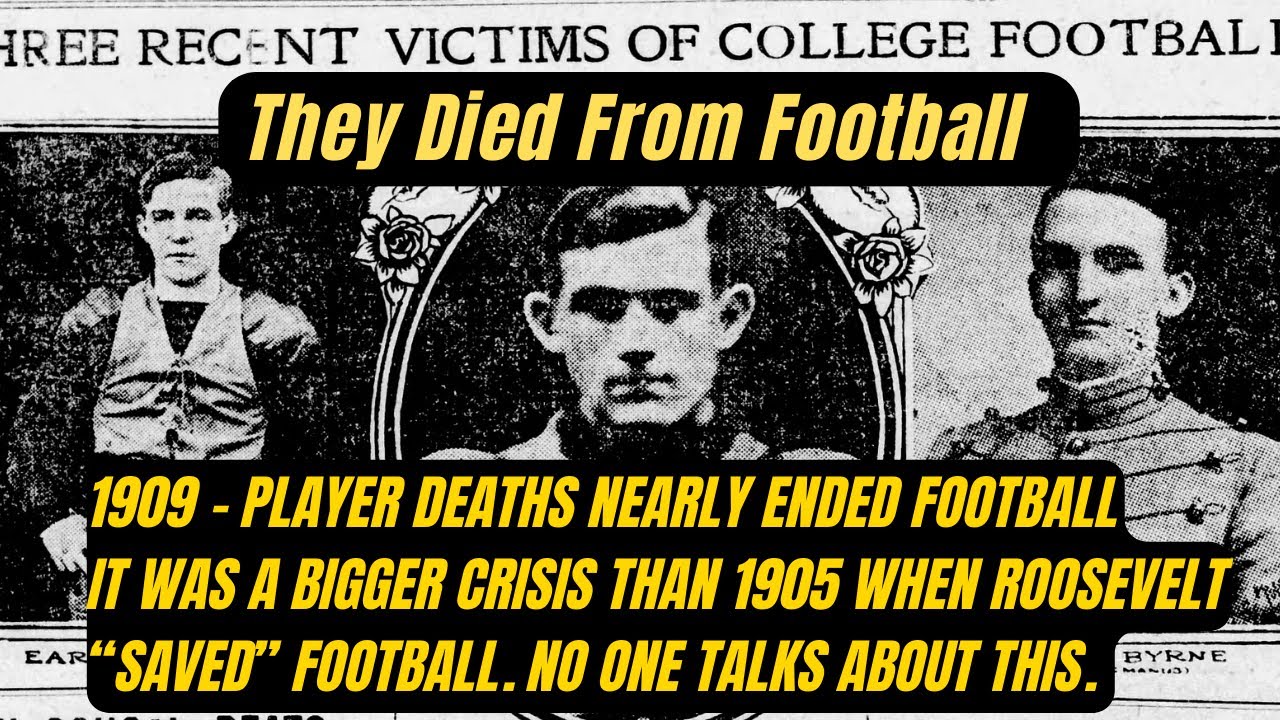
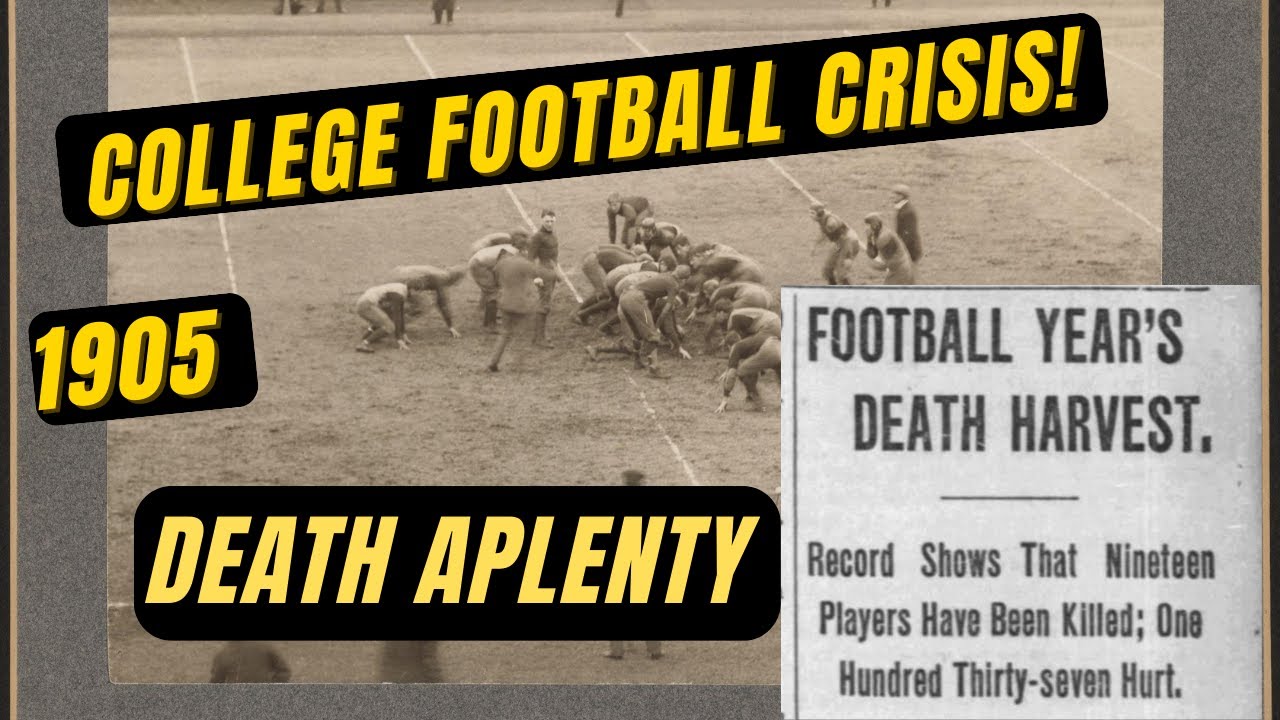
By 1908, the collision between the new passing era and the old mass play culture was producing the same results it always had. Deaths and serious injuries were climbing again. The 1909 football crisis was coming — and it would be every bit as severe as what had happened in 1905.

That story is the subject of the next video.

Hardcore College Football History covers the forgotten stories and foundational moments that shaped college football. Subscribe for more documentary-style deep dives into the history of the game.
The forward pass was legal. Nobody cared.

That’s the short version of what happened in the immediate aftermath of the 1906 rules changes. The most revolutionary rule in the history of American football had been written into the books, and the coaches who ran the sport’s most powerful programs looked at it the way established institutions always look at disruptive ideas — with suspicion, dismissal, and a firm preference for the way things had always been done. The forward pass was a gimmick. A desperation play. Something you might try if you were overmatched and had nothing to lose.

Then a small Catholic university in St. Louis and a Native American boarding school in rural Pennsylvania spent the next two years proving all of them wrong.

The First Pass

The forward pass history question of who threw first is one of those arguments that football historians have been having for over a century, and it isn’t entirely settled. Walter Camp may have thrown an illegal forward pass in the 1876 Yale-Princeton game while being tackled, flinging the ball to a teammate who scored — a play the referee allowed to stand after flipping a coin. John Heisman, for whom the famous trophy is named, claimed to have witnessed a forward pass in the 1895 Georgia-North Carolina game that was also illegal and also allowed to stand by a referee who said he simply hadn’t seen it.

The first legal forward pass is generally credited to Bradbury Robinson, a quarterback and halfback for St. Louis University, who threw one on September 5, 1906 in a game against Carroll College. His first attempt was incomplete — and under the rules of that year, an incomplete pass was a turnover, so the other team got the ball. Robinson completed a pass later in the game, throwing 20 yards to Jack Snyder, who caught it, noticed he was completely alone, and ran into the end zone. St. Louis won 22-0.

That same season, Yale beat Harvard using a 30-yard forward pass to reach the three-yard line, then scored on the next play. It should have sent a message to every major program in the country. Instead, most coaches filed it away as a curiosity and went back to their mass play systems.

Eddie Cochems and the Wright Brothers of the Forward Pass

The coach who came closest to truly understanding what the forward pass could be in 1906 was Eddie Cochems of St. Louis University. Historian David M. Nelson compared Cochems to the Wright brothers and Thomas Edison — a man who saw the future of the game clearly while everyone around him was still looking at the past. Cochems believed that coaches in his region, away from the Eastern establishment that had controlled football’s rules and culture for three decades, were more open to the possibilities of the new passing game.

His results backed that up. St. Louis won 39-0 in one game, completing 8 of 10 passes and averaging 20 yards per completion. Playing an Iowa team that had beaten them 31-10 the previous year, Cochems used the forward pass to devastating effect, building an offense that nobody in the Midwest had seen before. Amos Alonzo Stagg, the famous University of Chicago coach, later tried to minimize Cochems’ contributions to forward pass history. The more you read about Stagg, the more he sounds like a man constitutionally opposed to giving credit to anyone else for anything.

Carlisle 1907: The Season That Should Have Changed Everything

If Cochems was the theorist of the forward pass, Pop Warner and the Carlisle Indian Industrial School were its most spectacular practitioners. Carlisle had been founded in 1879 as the first federally funded off-reservation boarding school for Native Americans — an institution with a deeply complicated and troubling history, built on a philosophy of forced assimilation. On the football field, however, Carlisle was something else entirely: a small, underfunded school that year after year found ways to beat programs with vastly more resources, more players, and more institutional support.

In 1907, Warner’s team didn’t just use the forward pass. They weaponized it. Against Penn — one of the premier programs in the nation, previously unscored upon that season — Carlisle completed 8 of 16 passes, gained 402 yards to Penn’s 76, and won 26-6. Against Minnesota, one of the dominant teams in what was then called the West, Carlisle won 12-10 on two touchdowns that came after long runs following pass completions. Against Harvard, they won 23-15 on four touchdown passes ranging from 5 to 30 yards. Against Amos Alonzo Stagg’s University of Chicago team, they won 18-5.

Carlisle finished 1907 at 10-1, outscoring opponents 267-62. Their only loss came against a Princeton team on a muddy field — a Princeton team that had specifically studied Carlisle’s passing attack and devised a defensive strategy to stop it. Which brings us to the problem.

The Forward Pass is Doomed — Or Is It?

On November 10, 1907, the New York Times published a piece under the headline “The Forward Pass Doomed, Says Expert.” In hindsight, knowing what the forward pass became, the headline reads as absurd. But the expert making the case wasn’t entirely wrong about the immediate situation.

The problem was a rules loophole that threatened to strangle the passing game in its infancy. Under the 1906 and 1907 rules, only the two players at the ends of the offensive line — essentially tight ends — were eligible to catch a forward pass. The rules committee had also determined that when a foul occurred on a play where a forward pass was either illegally thrown or incomplete, the forward pass penalty superseded all other penalties. The result was that defensive players could simply grab and hold the eligible receivers, preventing them from getting anywhere near the ball, and face no meaningful punishment for doing so. The pass would fall incomplete, the offense would lose yardage, and the defense would suffer no consequences for what amounted to legalized interference.

Princeton had figured this out before their game against Carlisle and used it ruthlessly. Every eligible receiver was covered by a Princeton defender who was free to grab and hold him by any means necessary. The forward pass had a fatal design flaw, and the expert in the Times was right that it couldn’t survive in that form.

The Rule That Saved the Aerial Game

In 1908, the rules committee addressed the loophole with the first rule resembling what we now call pass interference. While the ball was in the air on a forward pass, defensive players could not use their hands or arms on eligible receivers except to push them aside while going for the ball themselves. Neither side could hold or tackle a player who did not have the ball. It was a narrow, imperfect rule — but it was enough to keep the passing game viable.

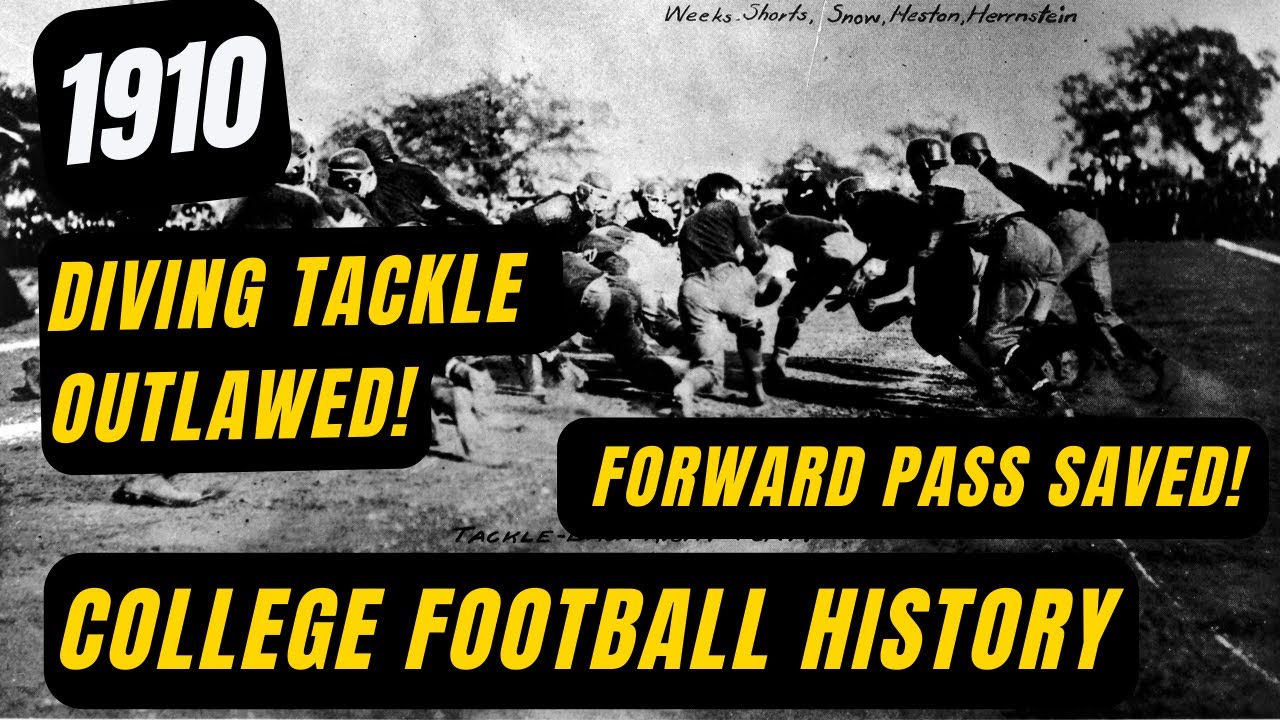
What it couldn’t fix was the larger problem developing on the field. Because the threat of the forward pass now forced defensive secondaries to play deeper, the tackle position on the defensive line was being left increasingly exposed. Teams — particularly the powerful Eastern programs — began faking passes to hold the secondary back, then running mass plays directly at the isolated tackle. The pushing and pulling of ball carriers that the 1906 rules had failed to eliminate was back in full force. The forward pass had opened up the game in one direction and inadvertently closed it in another.

By 1908, the collision between the new passing era and the old mass play culture was producing the same results it always had. Deaths and serious injuries were climbing again. The 1909 football crisis was coming — and it would be every bit as severe as what had happened in 1905.

That story is the subject of the next video.

Hardcore College Football History covers the forgotten stories and foundational moments that shaped college football. Subscribe for more documentary-style deep dives into the history of the game.

Leave a Reply

Your email address will not be published. Required fields are marked *